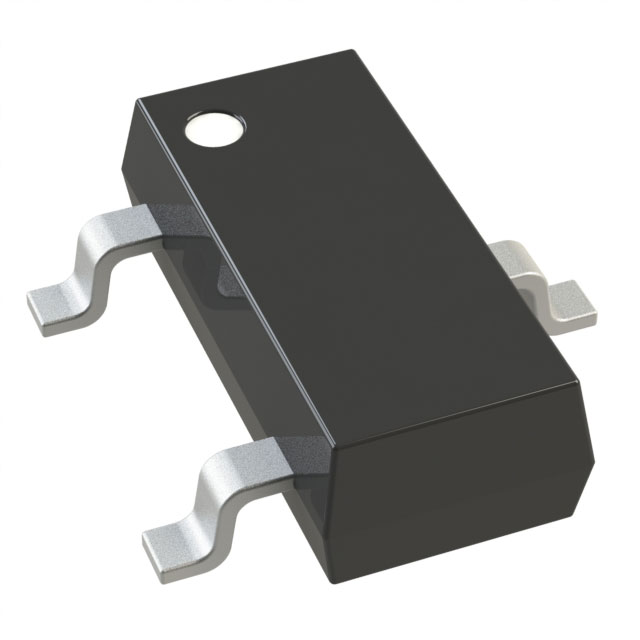
Key Specs
| Spec | Value | Condition | Source |
|---|---|---|---|
| Control Features | - | Digi-Key | |
| Current Quiescent IQ | 800 µA | Digi-Key | |
| Current Supply (Max) | 6.7 mA | Digi-Key | |
| Grade | Automotive | Digi-Key | |
| Input Voltage (Max) | 60V | Digi-Key | |
| Mounting Type | Surface Mount | Digi-Key | |
| Number Of Regulators | 1 | Digi-Key | |
| Operating Temperature Range | -65°C ~ 150°C | Digi-Key | |
| Output Configuration | Positive | Digi-Key | |
| Output Current (Max) | 89mA | Digi-Key | |
| Output Type | Fixed | Digi-Key | |
| Output Voltage (Max) | - | Digi-Key | |
| Output Voltage (Min) | 5V | Digi-Key | |
| Package Case | TO-236-3, SC-59, SOT-23-3 | Digi-Key | |
| Protection Features | - | Digi-Key | |
| Psrr | 46dB (100Hz) | Digi-Key | |
| Qualification | AEC-Q101 | Digi-Key | |
| Supplier Device Package | SOT-23-3 | Digi-Key | |
| Voltage Dropout (Max) | - | Digi-Key |
When To Use
-
Automotive 12V rail power-up @ 89mA: The 60V maximum input voltage rating covers transient load dumps on automotive 12V rails with ample margin. The 800 µA quiescent current balances efficiency without risking thermal shutdown, unlike a linear regulator which would overheat at this current and voltage range.
-
Industrial sensor node powered from 24V supply @ 50mA: The fixed 5V output and automotive-grade AEC-Q101 qualification ensure reliable operation over -65°C to 150°C temperature extremes common in industrial environments. Switching to a synchronous buck controller without this qualification risks latch-up or early failure in harsh thermal cycles.
-
Distributed 5V logic rail in compact SOT-23 package @ 80mA: The small TO-236-3, SC-59 package fits tight board space while delivering up to 89mA output current with stable PSRR of 46dB at 100Hz, ensuring clean supply rails for sensitive digital circuits. Using a high-current synchronous buck with external FETs here would be overkill, adding unnecessary complexity and board area.
When Not To Use
-
5V @ 500mA embedded processor rail: The 89mA max output current rating is too low for this load. Use a multi-phase buck controller instead to handle the higher current demand safely.
-
Battery-powered sensor with μA standby current: The 800 µA quiescent current is excessive for ultra-low power sleep modes. Choose a low-IQ PFM buck to minimize battery drain during idle periods.
-
5V output with less than 1V dropout margin: The datasheet does not specify dropout voltage, and the fixed output configuration is not suited for low-dropout regulation. Use an LDO regulator for low noise and minimal dropout voltage in such scenarios.
Application Notes
-
The SW (switching) node must be routed with minimal loop area to reduce EMI and voltage spikes; keep the input capacitor and output capacitor as close as possible to the device pins.
-
Noise-sensitive pins, especially the feedback and enable pins (pin numbers 2 and 3), should be shielded by ground guard traces to avoid coupling from the switching node.
-
Avoid running sensitive analog traces near the SW node, as the 46dB PSRR at 100Hz does not guarantee immunity at higher frequencies or transient switching noise.
-
Use a low-ESR ceramic output capacitor rated for the expected ripple currents to maintain stability; higher ESR can cause output voltage oscillations not apparent from static specs.
-
Thermal vias under the SOT-23-3 package improve heat dissipation within the 150°C max operating temperature but must be balanced against board mechanical constraints.
Gotchas
-
[Startup sequence voltage drop]: Assuming the part will start cleanly at input voltages near 5V can cause failure if the input supply sags below 5V during startup. The fixed 5V output configuration may cause the regulator to oscillate or never reach regulation, showing intermittent output voltage dips. Fix by ensuring input voltage ramp is monotonic and remains above 5V + dropout margin during startup.
-
[Output capacitor ESR interaction]: Using a tantalum or electrolytic output capacitor with high ESR can destabilize the internal control loop, causing output voltage ringing or oscillations visible on the scope as periodic voltage spikes. Fix with a low-ESR ceramic capacitor (X7R or better) as close as possible to the output pin.
-
[Thermal derating above 125°C]: While the device is rated to 150°C, continuous operation above 125°C requires derating the maximum output current below 89mA to avoid latent damage. Ignoring this leads to gradual shifts in output voltage and premature failure. Fix by consulting the full thermal derating curve and designing for lower current at elevated temperatures.
-
[Ground reference routing error]: Connecting the device ground pin to a noisy or high-impedance ground plane can cause erratic switching behavior and output voltage ripple due to ground bounce. Symptoms include output voltage noise correlated with load current changes. Fix by routing ground directly to a low-impedance PCB ground plane with a separate return path for high-current loops.