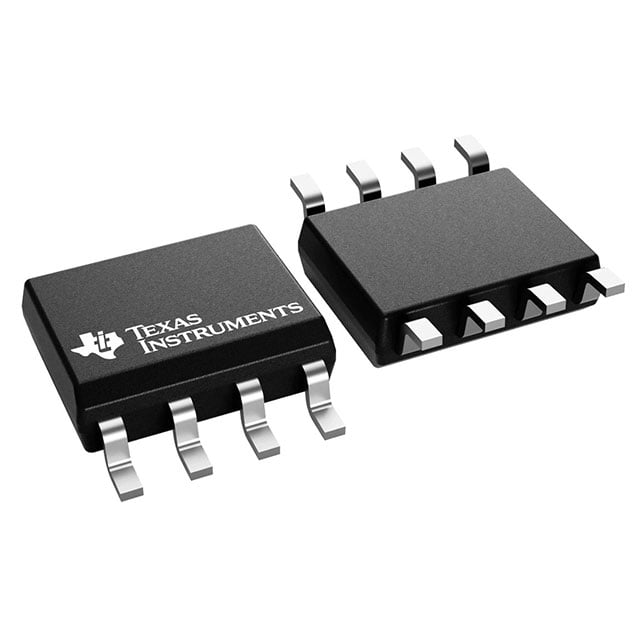
UA78L05ACDR vs ZXTR2105F-7: Linear Regulator Component Comparison
Quick verdict
For low-current, automotive-grade, and high-temperature applications requiring wide input voltage tolerance, the ZXTR2105F-7 is the better fit due to its AEC-Q101 qualification and -65°C to 150°C rating. For general-purpose, moderate current (up to 100mA) linear regulation with built-in protection features and a slightly higher max input voltage margin, the UA78L05ACDR is preferable.
Spec comparison table
| Spec | UA78L05ACDR | ZXTR2105F-7 | Notes |
|---|---|---|---|
| Input voltage max | 20 V | 60 V | ZXTR2105F-7 supports 3x higher input voltage, better for high-voltage or automotive inputs. |
| Output voltage min | 5 V | 5 V | Equal fixed 5V output. |
| Output current max | 100 mA | 89 mA | UA78L05ACDR supports ~12% higher max output current. |
| Operating temperature range | 0°C to 125°C | -65°C to 150°C | ZXTR2105F-7 covers wider, especially lower temperatures—critical for automotive/industrial. |
| Package | 8-SOIC (3.9 mm width) | SOT-23-3 (TO-236-3, SC-59) | Smaller SOT-23-3 package for ZXTR2105F-7 is better for space-constrained designs. |
| PSRR | 49 dB @ 120Hz | 46 dB @ 100Hz | UA78L05ACDR offers slightly better PSRR, beneficial in noisy environments. |
| Voltage dropout max | 1.7 V @ 40mA | Not specified | UA78L05ACDR dropout known; ZXTR2105F-7 dropout not specified—caution in low dropout designs. |
| Quiescent current (Iq) | Not specified | 800 µA | ZXTR2105F-7 quiescent current is low, beneficial for battery-powered or low-power systems. |
| Protection features | Over Current, Over Temperature, Reverse Polarity, Short Circuit | None specified | UA78L05ACDR includes multiple protections, increasing design robustness. |
| Mounting type | Surface mount | Surface mount | Both surface mount, no difference. |
| Number of regulators | 1 | 1 | Equal. |
| Output configuration | Positive fixed | Positive fixed | Equal. |
| Grade/Qualification | Not specified | Automotive (AEC-Q101 qualified) | ZXTR2105F-7 rated for automotive use, improving reliability in harsh environments. |
Design trade-offs
The UA78L05ACDR and ZXTR2105F-7 are both fixed 5V linear regulators designed for low to moderate output currents, but their differing specs reflect distinct target applications and design priorities.
The UA78L05ACDR’s maximum input voltage of 20V limits its use in circuits with higher supply voltages or automotive systems with voltage spikes, where the ZXTR2105F-7’s 60V rating provides a wider margin. This makes the ZXTR2105F-7 more resilient in harsh input conditions but note the UA78L05ACDR’s integrated protection features (overcurrent, overtemperature, reverse polarity, short circuit) reduce external component count and improve fault tolerance, which the ZXTR2105F-7 lacks, requiring additional external protections.
Thermally, the UA78L05ACDR’s 100mA max current rating and known dropout voltage of 1.7V at 40mA imply significant power dissipation at higher loads (e.g., ~0.17W at 100mA and 1.7V dropout), necessitating careful thermal management, especially in its 8-SOIC package. The ZXTR2105F-7, with a slightly lower max current of 89mA and unspecified dropout voltage, likely exhibits similar thermal dissipation, but its smaller SOT-23-3 package has less thermal mass and might require stricter PCB thermal design.
The UA78L05ACDR’s PSRR at 49dB (120 Hz) is marginally better than ZXTR2105F-7’s 46dB (100 Hz), which can matter in sensitive analog or RF circuits where supply ripple rejection is critical. The ZXTR2105F-7’s lower quiescent current (800 µA) makes it more suitable for battery-powered and low-power applications, whereas the UA78L05ACDR’s quiescent current is unspecified but generally expected to be higher in older 78xx designs.
From a layout perspective, the UA78L05ACDR’s 8-SOIC package is larger but easier to hand-solder and thermally manage, while the ZXTR2105F-7’s SOT-23-3 package saves board space but requires precise placement and possibly thermal vias or copper pours to keep junction temperature in check.
Cost-wise, ZXTR2105F-7’s automotive qualification (AEC-Q101) generally commands a price premium but provides peace of mind for automotive and industrial applications. The UA78L05ACDR, being a more traditional regulator with built-in protection, may be more cost-effective in consumer or industrial-grade designs without extreme environmental demands.
Use-case fit
Choose UA78L05ACDR when…
- Your design requires up to 100mA load current with built-in protections against overcurrent, reverse polarity, and short circuits.
- Input voltage never exceeds 20V and you want a regulator with proven, robust protection features integrated.
- You design general-purpose industrial or consumer electronics operating between 0°C and 125°C.
- You need slightly better PSRR to reduce supply noise in sensitive analog or mixed-signal circuits.
- PCB space is less constrained, and you prefer an 8-SOIC package for easier thermal dissipation and assembly.
Choose ZXTR2105F-7 when…
- Your application requires operation over a wide temperature range (-65°C to 150°C), such as automotive or harsh industrial environments.
- Input voltage can spike up to 60V, requiring a regulator with high voltage tolerance.
- Low quiescent current (800 µA) is critical for battery-powered or energy-sensitive designs.
- Board space is at a premium, and you need a compact SOT-23-3 package.
- You require an AEC-Q101 automotive-qualified component for compliance and reliability in vehicles.
Drop-in compatibility
The UA78L05ACDR is packaged in an 8-SOIC (8-pin) format, while the ZXTR2105F-7 uses a 3-pin SOT-23-3 package. The pin count and package type differ significantly, so these parts are not pin-compatible nor footprint-compatible. Substituting one for the other would require PCB redesign, particularly due to differences in pin assignments, package size, and thermal characteristics.
No data is provided regarding identical pinouts or drop-in replacement status, so substitution is not straightforward.
Alternatives to consider
- LM1117-5.0 (Texas Instruments): Low dropout linear regulator with higher current capability (up to 800mA) and low dropout voltage, useful for designs requiring more output current.
- MIC5205-5.0 (Microchip): Low quiescent current and low dropout regulator in a small SOT-23 package, suitable for battery-powered applications.
- TLV1117-5.0 (Texas Instruments): Automotive-grade low dropout regulator with higher current capacity and extended temperature range, suitable for automotive and industrial use cases.