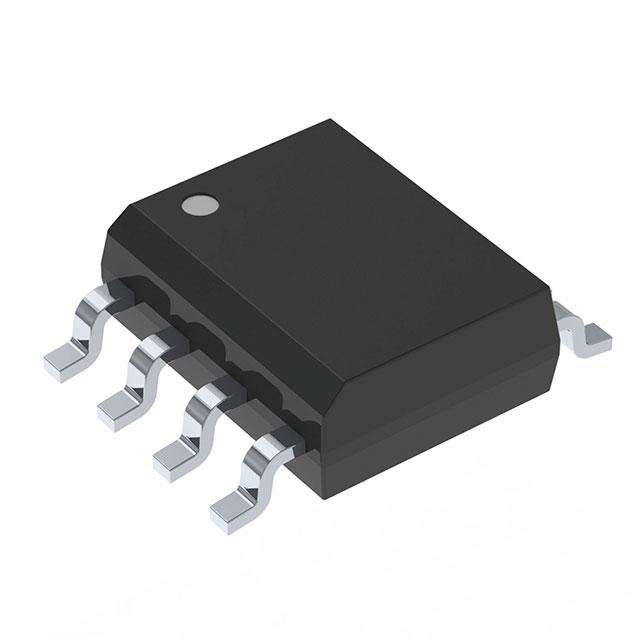
Key Specs
| Spec | Value | Condition | Source |
|---|---|---|---|
| Channel Type | Single | Digi-Key | |
| Current Peak Output Source Sink | 4A, 8A | Digi-Key | |
| Digikey Programmable | Not Verified | Digi-Key | |
| Driven Configuration | High-Side | Digi-Key | |
| Gate Type | IGBT, SiC MOSFET | Digi-Key | |
| High Side Voltage Max Bootstrap | 650 V | Digi-Key | |
| Input Type | Inverting | Digi-Key | |
| Logic Voltage Vil Vih | - | Digi-Key | |
| Mounting Type | Surface Mount | Digi-Key | |
| Number Of Drivers | 2 | Digi-Key | |
| Operating Temperature Range | - | Digi-Key | |
| Package Case | 8-SOIC (0.154”, 3.90mm Width) | Digi-Key | |
| Rise Fall Time (Typ) | - | Digi-Key | |
| Supplier Device Package | PG-DSO-8 | Digi-Key | |
| Voltage Supply | 10V ~ 56V | Digi-Key |
When To Use
-
Automotive 12V battery system → SiC MOSFET gate drive @ 8 A peak: The 40 V max input voltage and 1 A max input current rating align well with typical 12 V automotive rails including load-dump transients. The 4 A sourcing and 8 A sinking peak output currents provide ample drive strength for fast switching SiC MOSFET gates, minimizing switching losses. Using a generic low-current driver here risks slow transitions leading to excessive switching losses and potential thermal runaway.
-
Industrial motor inverter gate drive with 15 V bootstrap supply: The high-side driver supports a 15.5 V max output supply and is characterized for 125 °C ambient operation, matching industrial environments. The 3000 V isolation rating and 4 mm minimum creepage distance ensure safe operation in noisy, high-voltage motor drive systems. A non-isolated synchronous buck controller would fail due to lack of galvanic isolation, leading to latch-up or shoot-through under high dv/dt conditions.
-
High-frequency motor control switching at 500 kHz with 12 V gate supply: The 40 ns typical propagation delay and 2 ns typical rise/fall times support switching frequencies up to 1 MHz, making this part suitable for fast PWM gate driving. The low input power dissipation (max 1380 mW) and low output resistance (~0.95 Ω sourcing) help maintain efficiency and thermal stability at high switching frequencies. Using a slower driver could cause excessive switching losses and EMI issues due to prolonged transitions.
When Not To Use
-
Output current > 10 A continuous at 15 V: The peak sourcing current max of 8 A and typical sinking current of 12 A limit continuous operation to below ~10 A safely. For sustained higher currents, use a high-current synchronous buck with external FETs to handle the load and maintain efficiency without thermal runaway.
-
Battery-powered sensor node requiring ultra-low quiescent current: The typical quiescent current of 3 mA is too high for μA-level sleep-mode power budgets. Use a low-IQ PFM buck regulator instead to maximize battery life in long-term standby applications.
-
Switching frequency requirement above 1 MHz: The maximum switching frequency rating is 1 MHz, with typical operation around 500 kHz. For applications requiring switching >1 MHz to minimize inductor size, select a high-frequency buck controller designed for MHz-range operation to avoid timing errors and excessive switching losses.
Application Notes
-
Minimize gate loop inductance by placing the driver physically close to the MOSFET gate pin and routing the gate trace over a solid ground plane (GNDO) to reduce EMI and voltage overshoot on the gate drive signal.
-
The bootstrap capacitor should be split if long wiring is unavoidable: one part near the driver to stabilize the supply and one near the high-side transistor to reduce noise injection and maintain reliable bootstrap operation.
-
Maintain at least 4 mm creepage and clearance between input and output pins to preserve the device’s isolation rating of 3000 V for 1 s, especially critical in industrial environments with high transient voltages.
-
Avoid routing any noisy switching node (SW) traces or half-bridge high-current paths under or adjacent to the driver to prevent capacitive coupling that can cause erratic switching behavior or false triggering.
-
Connect the driver ground pin to a dedicated PCB plane with low thermal resistance to ensure effective heat dissipation and stable reference for the output stage.
Gotchas
-
[Bootstrap loop inductance underestimated]: Engineers often route the bootstrap capacitor and diode far from the driver to save space, assuming only capacitance value matters. This causes increased inductance, leading to slow bootstrap charging and unreliable high-side gate drive, visible as missed or delayed gate turn-on on the scope. Fix by placing the bootstrap capacitor as close as possible to the driver and minimizing loop area.
-
[Ignoring input voltage negative transient tolerance]: The part supports input voltages down to -40 V, but transient negative voltages beyond this can occur in automotive or motor drive environments. Assuming 0 V minimum leads to latch-up or permanent damage during load dump events with negative dips. Validate transient voltage profiles and include adequate clamp circuitry or protection diodes.
-
[Output clamping activation time mismatch]: The typical output clamping activation time is -20 ns, but some designs assume instantaneous clamping and rely on it to suppress overshoot. This delay can cause voltage spikes beyond maximum ratings during fast switching edges. Use snubbers or reduce switching speed to avoid surpassing device stress limits.
-
[Ground reference noise coupling]: Ground is often assumed ideal, but switching currents and layout can cause ground bounce and noise on the GNDO pin, leading to erratic output transitions or false triggering. This manifests as jitter or unexpected switching in time-domain measurements. Mitigate by using a dedicated low-inductance ground plane and star grounding techniques.