Comparison: Infineon 1EDB9275FXUMA1 vs 2EDF9275FXUMA1
1. Quick verdict
For high-side single-channel, inverting gate drive applications—especially with IGBTs or SiC MOSFETs—the 1EDB9275FXUMA1 is the preferred choice due to its high peak sink/source currents and robust isolation. For integrated half-bridge drive in non-inverting configurations, the 2EDF9275FXUMA1 offers a more compact dual-channel solution optimized for faster switching frequencies up to 2 MHz and simplified layout, making it the better fit for synchronous buck or bridged topologies.
2. Spec comparison table
| Spec | 1EDB9275FXUMA1 | 2EDF9275FXUMA1 | Notes |
|---|---|---|---|
| Driven configuration | High-Side | Half-Bridge | Half-bridge driver integrates both high and low side channels; single high side only. |
| Channel type | Single | Independent (dual) | 2EDF9275FXUMA1 supports two independent drivers, useful for half-bridge. |
| Number of drivers | 2 (single channel but dual drivers internally) | 2 | Both have two drivers, but 2EDF9275FXUMA1 supports half-bridge topology inherently. |
| Gate type | IGBT, SiC MOSFET | IGBT, SiC MOSFET | Both support the same gate types. |
| Voltage supply range | 10 V to 56 V | 20 V nominal, 6 V min, 16 V max | 1EDB9275FXUMA1 supports wider supply voltage range, better for variable supplies. |
| Input type | Inverting | Non-Inverting | Inverting vs non-inverting affects logic interface design. |
| High-side voltage max bootstrap | 650 V | 650 V | Equivalent. |
| Peak output source current | Typ 5.4 A, Max 5 A | Max 4 A | 1EDB9275FXUMA1 offers higher peak sourcing current, better for driving large gate loads. |
| Peak output sink current | Typ 9.8 A, Max 9 A | Max 8 A | 1EDB9275FXUMA1 has higher peak sinking current, crucial for fast turn-off. |
| Switching frequency (typ) | 500 kHz (max 1 MHz) | 2 MHz | 2EDF9275FXUMA1 supports significantly higher switching frequency. |
| Rise/Fall time (typ) | Rise: 8.3 ns, Fall: 4.5 ns | Rise: 6.5 ns, Fall: 4.5 ns | 2EDF9275FXUMA1 has faster rise time, aiding high-frequency switching. |
| Operating temperature range | Not explicitly defined, junction -40°C to 150°C | -40°C to 125°C | 1EDB9275FXUMA1 has a higher max junction temperature rating; better for high-temp apps. |
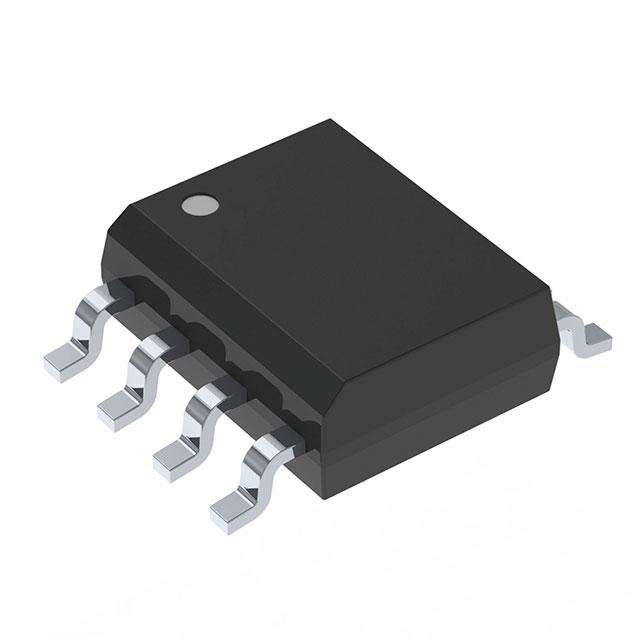
| Package type | PG-DSO-8 (8-pin SOIC) | PG-DSO-16-11 (16-pin SOIC) | 2EDF9275FXUMA1 is physically larger with more pins due to half-bridge integration. |
| Input voltage range | 3 V min to 15 V max | 8.5 V min to 14 V max | 1EDB9275FXUMA1 supports lower input voltages, more flexible for logic levels. |
| Input current max | 1 A | 50 mA | 2EDF9275FXUMA1 has much lower input current; more efficient input interface. |
| Undervoltage lockout (UVLO) levels | Output UVLO typical: 8 V; Input UVLO typical: 8.8 V | UVLO output thresholds: 4 V, 8 V, 13 V; Input UVLO typical: 3.5 V | 2EDF9275FXUMA1 offers selectable UVLO thresholds, improving design flexibility. |
| Common mode transient immunity (CMTI) | >300 V/ns (max) | 150 V/ns (max) | 1EDB9275FXUMA1 has superior noise immunity, important in noisy environments. |
| Isolation voltage rating | Max 4242 V (100% test for 1s) | Max 6840 V (production test 1s) | 2EDF9275FXUMA1 has higher isolation voltage, suitable for higher voltage isolation needs. |
| Thermal resistance junction-to-case (typ) | 54 K/W | 50 °C/W | 2EDF9275FXUMA1 has slightly better thermal resistance, aiding heat dissipation. |
| Quiescent current (typ) | 3 mA | 1.6 mA (VDDI), 1.4 mA (VDDA) | 2EDF9275FXUMA1 consumes less quiescent current, beneficial for low-power designs. |
| Input voltage hysteresis (typ) | 0.9 V | 0.8 V | Slightly tighter hysteresis on 2EDF9275FXUMA1, reducing noise-triggered switching. |
| Logic input threshold (typ) | ~2.2 V (LH), 1.3 V (HL) | 2.0 V (typ) | Comparable, but 2EDF9275FXUMA1 supports multiple logic thresholds. |
| Package clearance/creepage (typ) | 4.0 mm | 8.0 mm | 2EDF9275FXUMA1 offers double the clearance/creepage, better for high-voltage isolation. |
| Switching current (typ) | 3 A | Not specified | 1EDB9275FXUMA1 specifies switching current, enabling better load design. |
| Input-to-output propagation delay (typ) | 40-45 ns | 37 ns | 2EDF9275FXUMA1 has slightly faster propagation delay. |
| Input pulse width minimum (typ) | 19 ns | 18 ns | Comparable. |
| ESD rating (HBM) | Not specified | 2 kV | 2EDF9275FXUMA1 provides explicit ESD ratings. |
| Package dimensions | 8-pin SOIC, 0.154” width | 16-pin SOIC, 0.154” width | 2EDF9275FXUMA1 is wider due to extra pins. |
| Mounting type | Surface mount | Surface mount | Both suitable for standard SMT processes. |
3. Design trade-offs
The 1EDB9275FXUMA1 targets high-side single-channel applications with an inverting input stage, which can complicate logic interfacing but offers robust peak output currents—up to 9.8 A sinking and 5.4 A sourcing typical. This makes it well-suited for driving larger IGBTs or SiC MOSFETs requiring aggressive gate charge/discharge. Its wide supply voltage range (10–56 V) also accommodates systems with variable or higher supply rails, which is advantageous in industrial or automotive environments. The higher maximum junction temperature rating (150°C) further supports harsh thermal environments.
In contrast, the 2EDF9275FXUMA1 integrates two independent non-inverting drivers in a half-bridge configuration, streamlining designs for synchronous buck converters or motor drives where complementary control of high and low side switches is essential. Its switching frequency capability up to 2 MHz is double that of the 1EDB9275FXUMA1, allowing higher frequency operation and potentially smaller passive components. The 2EDF9275FXUMA1 also has lower quiescent current and input current, beneficial for battery-powered or low-power systems. However, its supply voltage range is narrower (6–16 V typical), which may limit use in some high-voltage or variable rail contexts.
From a layout perspective, the 1EDB9275FXUMA1’s smaller 8-pin package is easier to fit in tight spaces but mandates careful PCB design to maintain isolation and minimize parasitic inductances, especially given its higher peak currents. The 2EDF9275FXUMA1’s larger 16-pin footprint provides more robust isolation spacing (8 mm clearance/creepage vs 4 mm), easing high-voltage PCB layout constraints but increasing board area and cost.
Thermal management is slightly better with the 2EDF9275FXUMA1 due to its lower junction-to-case thermal resistance (50 °C/W vs 54 K/W) and dual-channel integration reducing the need for multiple drivers. The 1EDB9275FXUMA1’s higher peak drive currents come with increased power dissipation, requiring more careful thermal design especially at high switching frequencies or continuous high-current operation.
Firmware and signal interfacing differ notably: the 1EDB9275FXUMA1 uses an inverting input and has higher input current demands (up to 1 A max), which can affect gate signal conditioning and isolation barrier design.