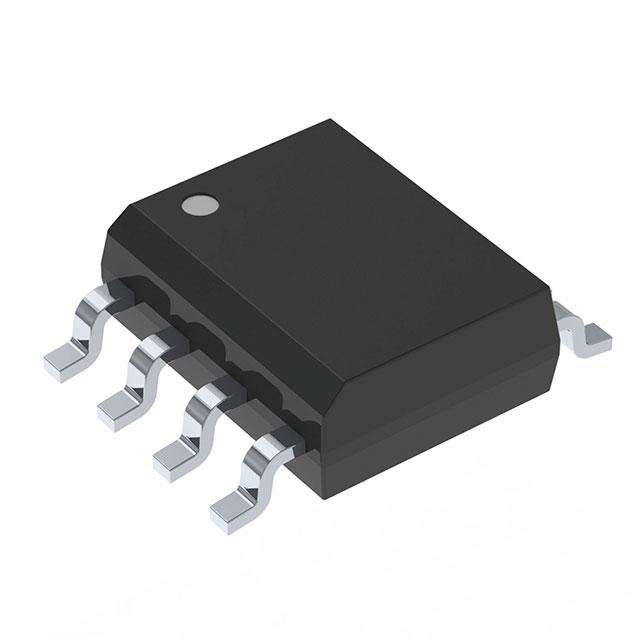
Key Specs
| Spec | Value | Condition | Source |
|---|---|---|---|
| Channel Type | Single | Digi-Key | |
| Current Peak Output Source Sink | 4A, 4A | Digi-Key | |
| Digikey Programmable | - | Digi-Key | |
| Driven Configuration | High-Side | Digi-Key | |
| Gate Type | IGBT, SiC MOSFET | Digi-Key | |
| Grade | - | Digi-Key | |
| High Side Voltage Max Bootstrap | 650 V | Digi-Key | |
| Input Type | Non-Inverting | Digi-Key | |
| Logic Voltage Vil Vih | 0.8V, 2.4V | Digi-Key | |
| Mounting Type | Surface Mount | Digi-Key | |
| Number Of Drivers | 1 | Digi-Key | |
| Operating Temperature Range | -40°C ~ 125°C (TJ) | Digi-Key | |
| Package Case | 8-SOIC (0.154”, 3.90mm Width) | Digi-Key | |
| Qualification | - | Digi-Key | |
| Rise Fall Time (Typ) | 12ns, 12ns | Digi-Key | |
| Supplier Device Package | PG-DSO-8 | Digi-Key | |
| Voltage Supply | 10V ~ 22V | Digi-Key |
When To Use
-
Use the 1ED2127S65FXUMA1 in high-voltage motor drives where a blocking voltage of up to +650 V and a high-side floating well supply voltage up to +700 V are required. Its built-in short-circuit protection (BSD) and over-current protection (OCP) make it suitable for protecting IGBT and SiC MOSFET power stages in industrial inverter applications.
-
Use in renewable energy inverters where the operating temperature range of -40°C to +125°C and industrial qualification level are critical for reliable outdoor operation.
-
Avoid using this device in applications requiring logic I/O voltages exceeding +5 V or supply voltages beyond +25 V, as these exceed the absolute maximum ratings and may cause permanent damage. For higher logic voltage requirements, consider gate drivers with higher logic voltage tolerance.
-
Not suitable for applications demanding switching frequencies faster than 80 ns minimum, due to the maximum switching frequency rating. For higher frequency operation, choose a driver with faster propagation delay and switching capabilities.
When Not To Use
-
Low voltage, low dropout linear regulation for noise-sensitive analog circuits: The 650 V blocking voltage and driver architecture are overkill, and the quiescent current of up to 400 µA is too high for low-power analog. Use an LDO regulator instead, which provides low noise and low dropout voltage.
-
Battery-powered sensor with μA-level sleep current: The typical 270 µA quiescent supply current is excessive for coin cell or ultra-low power applications. Use a low-IQ PFM buck regulator optimized for μA sleep modes to maximize battery life.
-
Output current >4 A continuous in server power rails: The 4 A peak source/sink current rating limits continuous current capability in high-power server rails. Use a multi-phase buck controller designed for higher current with load sharing and thermal management.
Application Notes
-
The high-side floating gate drive output pin switches at voltages up to +650 V and must be routed with the smallest possible loop area to minimize parasitic inductance and reduce switching noise.
-
The current sense (CS) pin is noise-sensitive due to its low voltage measurement range (typical 240 mV). Use shielded or twisted pair wiring and place the CS input filter components close to the device to ensure accurate current sensing and reliable short-circuit protection.
-
At typical operating conditions (ambient temperature up to +125 °C and switching frequency up to 80 ns), the device power dissipation is limited to 0.625 W max. A suitable heatsink or thermal management strategy is recommended to maintain junction temperature within safe limits and ensure long-term reliability.
-
The bootstrap capacitor and diode must be selected and placed close to the device to maintain the bootstrap voltage within the specified range (floating gate drive output voltage max +5 V) during switching transitions.
-
Ensure the low-side supply voltage remains within -22 V to +22 V to avoid undervoltage lockout or damage, and use proper undervol
Gotchas
-
Incorrect Bootstrap Diode Selection: Using a diode with insufficient reverse voltage rating or slow recovery leads to incomplete bootstrap voltage charging. This causes the high-side gate drive voltage to drop below the required +5 V max, resulting in incomplete MOSFET or IGBT turn-on and increased conduction losses.
Fix: Use a diode rated above +650 V with fast recovery characteristics to ensure stable bootstrap voltage. -
Exceeding Absolute Maximum Voltages on Floating Pins: Applying voltages beyond -0.3 V to +6.5 V on the floating gate drive output or floating CS input pins causes device damage or malfunction.
Fix: Ensure external circuit design maintains these voltages within specified limits, including adequate transient suppression and filtering. -
Neglecting Supply Decoupling: Omitting or undersizing decoupling capacitors on low-side supply pins causes voltage dips and noise spikes during switching events, leading to erratic operation or false fault triggering.
Fix: Place low-ESR capacitors rated for at least 25 V close to supply pins to maintain stable voltage during high di/dt switching.