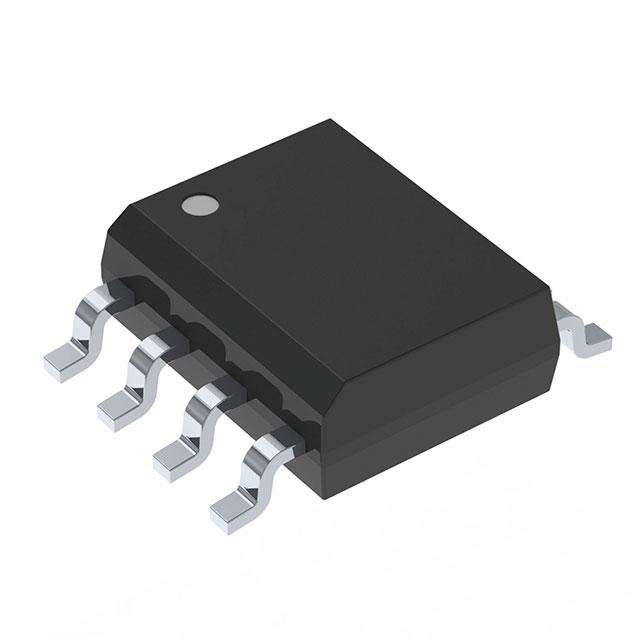
Key Specs
| Spec | Value | Condition | Source |
|---|---|---|---|
| Channel Type | Single | Digi-Key | |
| Current Peak Output Source Sink | 4A, 4A | Digi-Key | |
| Digikey Programmable | - | Digi-Key | |
| Driven Configuration | High-Side | Digi-Key | |
| Gate Type | SiC MOSFET | Digi-Key | |
| Grade | - | Digi-Key | |
| High Side Voltage Max Bootstrap | 650 V | Digi-Key | |
| Input Type | Non-Inverting | Digi-Key | |
| Logic Voltage Vil Vih | 0.8V, 2.4V | Digi-Key | |
| Mounting Type | Surface Mount | Digi-Key | |
| Number Of Drivers | 1 | Digi-Key | |
| Operating Temperature Range | -40°C ~ 125°C (TJ) | Digi-Key | |
| Package Case | 8-SOIC (0.154”, 3.90mm Width) | Digi-Key | |
| Qualification | - | Digi-Key | |
| Rise Fall Time (Typ) | 12ns, 12ns | Digi-Key | |
| Supplier Device Package | PG-DSO-8 | Digi-Key | |
| Voltage Supply | 7.2V ~ 22V | Digi-Key |
When To Use
Use the 1ED2147S65FXUMA1 gate driver in high-side applications requiring a blocking voltage offset of +650 V and a supply voltage range of 7.2 V to 22 V. It is ideal for driving SiC MOSFETs in power electronics systems that demand fast switching with typical propagation delays of 55 ns and output currents of ±4 A. Suitable applications include industrial motor drives and renewable energy inverters where the operating temperature range from −40°C to 125°C and a maximum junction temperature of 150°C are critical. The device’s integrated bootstrap diode with low resistance supports efficient bootstrap capacitor charging, making it well-suited for medium-voltage systems up to 650 V.
When Not To Use
Do not use the 1ED2147S65FXUMA1 in low-voltage or low-power applications where the maximum blocking voltage of 650 V and the typical output peak current of 4 A are excessive, as this may lead to unnecessary complexity and cost. Avoid using this driver in applications requiring adjustable fault clear timers, as this feature is not supported (adjustable_fault_clear_timer: null). For low-voltage MOSFETs with gate thresholds below 0.25 V or for devices requiring input voltages outside the specified input voltage max of 10.0 V / 8.7 V, consider alternative drivers designed specifically for low-voltage or logic-level MOSFETs. Additionally, for applications requiring switching frequencies or timing parameters not specified here, a driver with clearly defined switching frequency support should be selected.
Application Notes
-
The switching node (SW) must have minimal parasitic inductance and be routed with short, wide traces to minimize voltage overshoot and ringing during high dV/dt switching events.
-
Pins related to current sense (CS) are noise-sensitive; routing CS traces away from high-current paths and switching nodes is critical to prevent false fault triggers due to EMI coupling.
-
The bootstrap diode resistance is low but still requires a correctly sized bootstrap capacitor; undersizing leads to insufficient gate charge and degraded switching performance.
-
Guard routing around the input pin HIN reduces susceptibility to common-mode noise given its non-inverting input type and max input voltage of 10 V / 8.7 V typical.
-
The device’s internal fault clear time is typ. −10 µs, so external fault timing circuits should allow sufficient margin to avoid premature re-enabling after fault events.
Gotchas
-
Mistake: Connecting the bootstrap capacitor with insufficient voltage rating or incorrect polarity.
Failure Mode: The bootstrap capacitor fails prematurely, causing loss of high-side supply voltage and driver malfunction.
Fix: Use a ceramic capacitor rated above 650 V, verify correct polarity, and place it as close as possible to the bootstrap and supply pins. -
Mistake: Driving the input pin (HIN) with voltage levels outside the specified input voltage max (10.0 V / 8.7 V max) or below input voltage min (3–5 V typical).
Failure Mode: Input stage damage or unreliable switching due to overvoltage or undervoltage conditions.
Fix: Ensure input signals are conditioned to remain within the specified input voltage range using proper level shifting or buffering. -
Mistake: Omitting supply decoupling capacitors or placing them far from the driver pins.
Failure Mode: Increased switching noise, propagation delay variability, and possible device resets or latch-up.
Fix: Place recommended 1 µF and 100 nF ceramic capacitors close to VCC and VBS pins to stabilize supply voltages. -
Mistake: Using an incorrect current sense resistor value or poor tolerance on the CS pin.
Failure Mode: Fault detection thresholds are not met, leading to missed overcurrent events or false triggering.