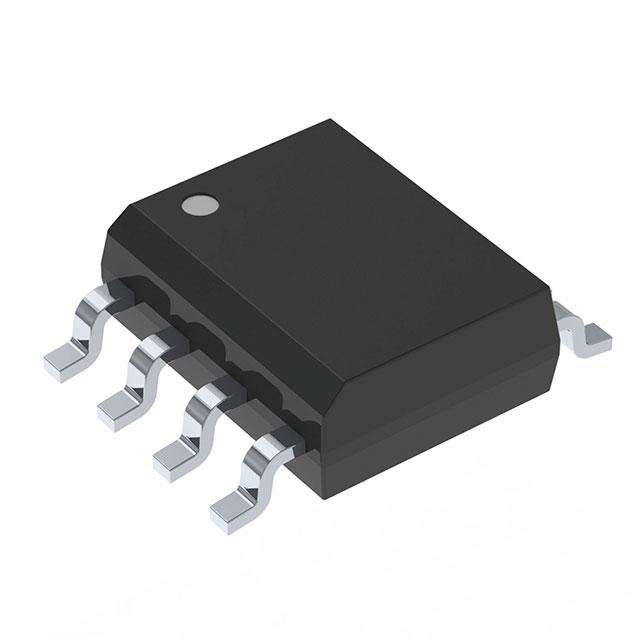
Comparison: Infineon 1ED2147S65FXUMA1 vs STMicroelectronics STGAP2SICSNCTR
Quick verdict
For high-voltage SiC MOSFET gate driving with integrated desaturation and fault handling, the Infineon 1ED2147S65FXUMA1 is a better fit, offering up to 650 V bootstrap voltage, fault clear timers, and robust current sourcing/sinking at 4 A. For galvanically isolated, capacitive-coupled gate drive applications requiring very high isolation voltage (up to 4800 V peak) and simpler isolation barrier integration, the STGAP2SICSNCTR is preferable, especially in designs with stringent isolation requirements and up to 1700 V rail voltage.
Spec comparison table
| Spec | 1ED2147S65FXUMA1 | STGAP2SICSNCTR | Notes |
|---|---|---|---|
| Technology | Integrated SiC MOSFET high-side gate driver | Capacitive Coupling gate driver | ST uses capacitive isolation, Infineon uses integrated gate driver IC. |
| Number of Channels | 1 | 1 | Equivalent. |
| Package | PG-DSO-8 (8-SOIC, 3.9 mm width) | 8-SOIC (0.154”, 3.9 mm width) | Physically similar packages; check pinout before substitution. |
| Blocking/Voltage Rating | 650 V max bootstrap voltage | 1700 V high voltage rail | ST supports higher voltage rail; Infineon limited to 650 V bootstrap. |
| Isolation Voltage | Not specified (no galvanic isolation) | 4800 V peak (typical), 3394 Vrms | ST offers strong galvanic isolation for safety-critical applications. |
| Supply Voltage Range | 7.2 V to 22 V | 3.1 V to 5.5 V (logic supply) | Infineon supports wider supply range; ST limited to 5.5 V typical. |
| Peak Output Current (Source/Sink) | ±4 A (typical) | 4 A source typical, sink current not specified | Both provide similar peak sourcing current; Infineon specifies both source and sink. |
| Propagation Delay (typical) | 55 ns (turn-on/off) | 75 ns (turn-on/off) | Infineon is faster by ~20 ns, beneficial in high-frequency switching. |
| Rise/Fall Times (typical) | 12 ns / 12 ns | 30 ns / 30 ns | Infineon has significantly faster switching edges. |
| Switching Frequency Max | Not specified | 1 MHz max | ST specifies max switching frequency; Infineon does not specify. |
| Input Logic Voltage Thresholds | VIL = 0.8 V, VIH = 2.4 V | VIL = 0.29–0.37 × VDD, VIH = 0.62–0.70 × VDD | Infineon uses fixed thresholds; ST uses proportional thresholds consistent with supply. |
| Input Current Max | Not specified | 20 mA (max) | ST input current max specified; Infineon not specified. |
| CS (Current Sense) Features | Integrated CS shutdown, blanking time 170–350 ns, shutdown delay 250–410 ns | Not specified | Infineon supports desaturation and current sense shutdown; ST does not. |
| Fault Handling | Fault clear timer, internal fault clear time ~10 µs | Safe state output specified | Infineon has programmable fault clear; ST has safe state output but less detail. |
| ESD Protection | HBM 1.0 kV, Human Body Model 2.0 kV | HBM 2 kV | ST has slightly higher ESD rating. |
| Operating Temperature Range | −40°C to 125°C (TJ) | −40°C to 125°C (TJ) | Equivalent. |
| Storage Temperature Range | Not specified | −40°C to 125°C | ST specifies storage range; Infineon not specified. |
| Isolation Resistance | Not specified | >10^9 Ω | ST specifies high isolation resistance due to capacitive coupling. |
| Creepage Distance | Not specified | 4 mm | ST provides creepage distance for isolation standards. |
| UVLO Thresholds (VCC, VBS) | UVLO at 7.2–10 V (varies by MOSFET/IGBT) | VH UVLO turn-on 14.6–16.4 V, turn-off 13.9–15.7 V | Infineon supports wider voltage range; ST has tighter VH UVLO window. |
| Safe Operating Area | V = 15 V (upper limit) | Not specified | Infineon specifies safe operating area voltage limit. |
| Current Rating (IGBT/MOSFET) | 40 A | 100 mA max (absolute max input current) | Infineon rated for higher continuous current driving capability. |
| Gate Type | SiC MOSFET | Not specified | Infineon explicitly targets SiC MOSFETs. |
| Input Type | Non-inverting | Not specified | Infineon input is non-inverting; ST datasheet does not clarify. |
| Thermal Resistance | Not specified | Rth package 123 °C/W | ST specifies thermal resistance; Infineon does not. |
| Quiescent Current | Not specified | VDD: 1.0–1.3 mA; VH: 1.3–1.8 mA | ST provides quiescent current data; Infineon does not. |
| De-glitch Filter Time | Not specified | 20–40 ns | ST includes deglitch filter time specification. |
| Safe State Output Voltage | Not specified | SafeClp clamp voltage ~2.2–2.3 V | ST provides safe state clamping feature. |
| ESD Rating (Human Body Model) | 2.0 kV | 2.0 kV | Equivalent. |
Design trade-offs
The Infineon 1ED2147S65FXUMA1 is designed as a high-side SiC MOSFET driver optimized for direct bootstrap operation up to 650 V, featuring integrated current sensing with desaturation detection, fault clear timers, and a robust ±4 A peak drive capability. This makes it well-suited for high-speed switching applications with SiC devices where precise fault detection and protection are critical. Its propagation delay and rise/fall times (typ. 55 ns and 12 ns respectively) support switching frequencies beyond typical silicon MOSFET drivers, helping reduce switching losses and improve efficiency at high frequencies. The integrated current sense and shutdown features require careful PCB layout to minimize noise coupling on the CS pin but provide a valuable hardware safety mechanism.
In contrast, the STGAP2SICSNCTR uses capacitive coupling technology to provide galvanic isolation with a high isolation voltage rating of 4800 V peak. It supports operation up to 1700 V rail voltages, which is significantly higher than the Infineon driver’s bootstrap voltage rating. However, the ST part operates at a lower logic supply voltage range (3.1–5.5 V typical) and has slower switching edges (rise/fall times of 30 ns), which may limit efficiency gains at very high switching frequencies. The ST device does not integrate desaturation or current sense shutdown but provides safe state outputs and a robust isolation barrier, making it more appropriate for applications requiring strict insulation and safety certifications (UL, VDE).
Thermally, ST provides package thermal resistance data (123 °C/W), which is quite high for a SOIC package indicating limited heat dissipation capability; the Infineon datasheet does not specify thermal resistance but the higher peak current rating implies more careful thermal management. The ST device’s lower quiescent current and standby modes support power-sensitive designs, whereas the Infineon part’s quiescent current is unspecified but expected to be higher due to integrated protection and sensing features.
From a layout standpoint, the Infineon driver requires careful placement of bootstrap and sense components, as well as tight coupling of the CS pin to minimize noise-induced false shutdowns. The ST device requires attention to creepage and clearance distances due to its isolation barrier and capacitive coupling, along with placement of recommended decoupling capacitors close to supply pins for stable operation.
Cost-wise, capacitive coupling devices like the ST part typically come at a premium for the isolation rating and certification, whereas the Infineon device’s integration of sensing and protection features can reduce BOM cost by eliminating discrete components but may be more expensive than a simpler isolated driver without integrated fault detection.
Use-case fit
Choose 1ED2147S65FXUMA1 when…
- Driving high-voltage SiC MOSFETs up to 650 V bootstrap voltage in hard-switching applications requiring fast switching edges (12 ns rise/fall times) for efficiency.
- Implementing advanced fault protection