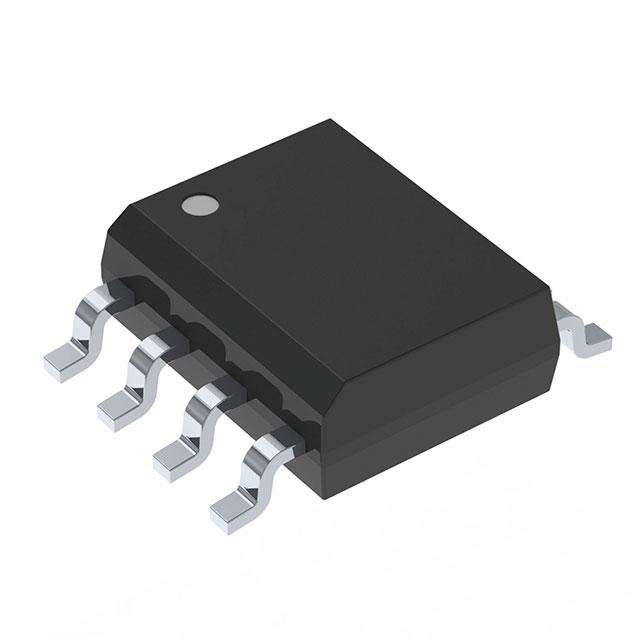
Comparison: Infineon 1ED21471S65FXUMA1 vs 1ED2127S65FXUMA1 High-Side Gate Drivers
Quick verdict
For applications requiring fast desaturation-based short-circuit protection with minimal fault clear time (sub-100 ns) and high transient immunity (50 V/ns), the 1ED21471S65FXUMA1 is the preferred choice. It suits high-speed IGBT or SiC MOSFET gate drive in demanding industrial or automotive environments.
For designs prioritizing integrated bootstrap diode, longer fault clear times (~10 µs), and established industrial qualification with more relaxed transient immunity (3–5 V/ns), the 1ED2127S65FXUMA1 offers a better balance between protection features and design simplicity.
Spec comparison table
| Spec | 1ED21471S65FXUMA1 | 1ED2127S65FXUMA1 | Notes |
|---|---|---|---|
| Allowable voltage offset supply transient max | 50 V/ns | 3–5 V/ns | 1ED21471S65FXUMA1 handles much faster dv/dt, better for high-speed switching environments. |
| Ambient temperature range (TJ) | -40°C to +125°C | -40°C to +125°C | Identical operating temperature range. |
| Blocking voltage offset | +650 V | +650 V | Equal voltage blocking capability. |
| Channel type | Single | Single | Same channel count. |
| Charged device model ESD | Class C3 (1.0 kV) | Class C3 (1.0 kV) | Same ESD robustness. |
| CS blanking time (HO rising to CS) | 260 ns (typ) | 260 ns (typ) | Equal blanking time. |
| CS input open drain RDS(on) | -20 Ω (min) at 20 mA | Not specified | Slightly lower resistance in 1ED21471 means more robust CS sensing. |
| CS input positive-going threshold | 1.69–1.87 V | Not specified | 1ED21471 provides defined CS thresholds, aiding precise current sensing. |
| Current peak output source/sink | ±4 A | ±4 A | Equal peak gate drive capability. |
| Dynamic turn-off fall time (typ) | 12 ns | 12 ns | Same switching speed. |
| Turn-off/on propagation delay (typ) | 80 ns | 80 ns | Equal propagation delay. |
| Floating CS voltage range | -0.3 V to +6.5 V | -0.3 V to +6.5 V | Same limits. |
| Floating gate drive output voltage range | -0.3 V to +0.3 V | -0.3 V to +0.3 V | Identical limits. |
| Floating gate drive output voltage (typ) | ~0 V | ~0 V | No difference. |
| Floating well offset voltage | ±650 V | 0 V to +650 V | 1ED2127 minimum offset voltage is 0 V, may limit some negative offset scenarios. |
| High-side floating well supply voltage max | 675 V | 700 V | 1ED2127 supports slightly higher supply voltage. |
| High-side floating well supply voltage min | -0.3 V | +672 V | 1ED21471 supports negative voltages; 1ED2127 is limited to positive offset supply. |
| High-side supply voltage range | ±22 V | ±22 V | Equal supply voltage range. |
| HVIC sinking/sourcing current | Not specified | Not specified | No clear difference. |
| Human body model ESD | Class 2 (2.0 kV) | Class 2 (2.0 kV) | Equal. |
| Input type | Non-inverting | Non-inverting | Same input logic. |
| Input voltage range | 220 mV to 650 V | 220 mV to 650 V | Identical input voltage range. |
| Junction temperature max | 150 °C | 150 °C | Equal thermal limits. |
| Lead temperature min/max (soldering) | -260 °C | -260 °C | Same soldering limits. |
| Logic IO voltage range | -0.3 V to 6.5 V | 0 V to 5 V | 1ED21471 allows negative logic signals (down to -0.3 V), 1ED2127 limited to 0 V min. |
| Logic voltage VIH/VIL | 2.4 V / 0.8 V | 2.4 V / 0.8 V | Same input thresholds. |
| Low-level output voltage drop (typ) | 0.26 V | 0.26 V | Equal. |
| High-level output voltage drop (typ) | 0.46 V | 0.46 V | Equal. |
| Moisture Sensitivity Level | MSL2 (260 °C) | MSL2 (260 °C) | Same. |
| Mounting type | Surface mount | Surface mount | Same package style. |
| Number of drivers | 1 | 1 | Same. |
| Package type | PG-DSO-8 | PG-DSO-8 | Same package. |
| Package max power dissipation | 625 mW | 625 mW | Equal thermal dissipation limits. |
| Peak output current turn-on/off max | 4 A | 4 A | Equal drive strength. |
| Propagation delay (typ) | 80 ns | 80 ns | Same speed. |
| Quiescent supply current (typ) | 350 µA | 270 µA | 1ED2127 slightly more efficient at idle. |
| Fault clear time (typ) | < 100 ns | 10 µs | 1ED21471 clears faults roughly 100x faster, critical for short-circuit protection. |
| Built-in short-circuit protection | Yes (de-sat detection) | Yes (BSD) with bootstrap diode | 1ED2127 integrates bootstrap diode, 1ED21471 does not; 1ED21471 has faster fault response. |
| Over-current protection detection time | Not explicitly specified | 450 ns | 1ED2127 specified OCP detection time; 1ED21471 likely faster but less explicitly defined. |
| Switching frequency max (typ) | Implied high (50 V/ns dv/dt) | 80 ns switching time (typ) | 1ED21471 suited for higher frequency/high dv/dt. |
| Under-voltage lockout thresholds (typ) | 6.8 V to 7.4 V | 6.2 V to 8.0 V (typ) | Similar UVLO thresholds. |
Design trade-offs
The 1ED21471S65FXUMA1 is clearly optimized for high-speed switching environments where transient immunity and short-circuit protection reaction times are critical. Its ability to withstand 50 V/ns transient dv/dt on the offset supply means it can be paired with fast SiC MOSFETs or IGBTs switching at high frequencies without risk of false triggering or damage. The catch: this requires careful PCB layout to manage parasitic inductances and ensure clean bootstrap supply rails. The very short fault clear time (<100 ns) enables more aggressive protection schemes, reducing device stress but requiring the control firmware to handle rapid fault events.
In contrast, the 1ED2127S65FXUMA1 offers integrated bootstrap diode functionality, simplifying external component count and layout. This can improve overall system reliability and reduce BOM cost. Its dv/dt immunity is limited to 3–5 V/ns, making it less suitable for very fast switching devices or aggressive gate drive waveforms. The longer fault clear times (~10 µs) may be acceptable in medium-speed industrial drives where short-circuit conditions are less frequent or can be tolerated for longer durations. The 1ED2127 also features a slightly lower quiescent current (270 µA vs 350 µA), which can add up to modest efficiency gains in always-on or standby-heavy applications.
From a thermal standpoint, both devices share the same package and power dissipation limits (~625 mW max), so thermal management considerations are similar. However, the faster switching speeds and higher transient immunity of the 1ED21471 may translate to higher switching losses in the gate driver stage, depending on the MOSFET gate charge and switching frequency. Cost-wise, the 1ED2127, with integrated bootstrap diode and longer fault clear time, is likely to be less expensive at volume, but this depends on supplier pricing and specific order quantities.
The logic IO voltage range difference (1ED21471 supports down to -0.3 V, 1ED2127 only to 0 V) can be relevant in systems with bipolar logic or where ground referencing varies. The 1ED21471’s wider logic input range offers more flexibility in interface design.
Use-case fit
Choose 1ED21471S65FXUMA1 when:
- Driving SiC MOSFETs or IGBTs switching at very high frequencies (>100 kHz) with fast dv/dt (up to 50 V/ns) events expected.
- Your design requires ultra-fast fault detection and clear times (<100 ns) to protect devices from short-circuits or desaturation events.
- Operating in harsh electromagnetic environments where high transient immunity is essential.
- Your firmware and control system can handle fast fault signals and requires precise current sensing with defined CS thresholds.
- You need logic input tolerance including negative voltages down to -0.3 V for interface flexibility.