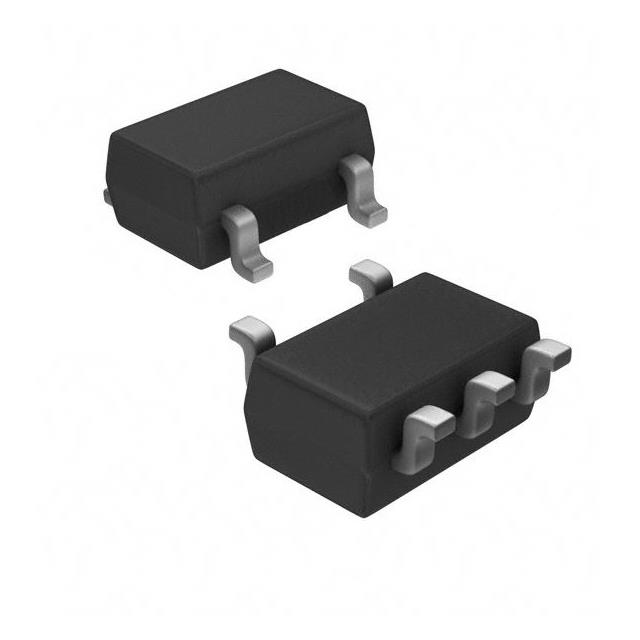
TAR5SB33(TE85L,F) vs ZXTR2105F-7: Linear Regulator Component Comparison
Quick verdict
For general-purpose 3.3 V linear regulation with currents up to 200 mA, the TAR5SB33(TE85L,F) offers higher current capacity, low dropout, and enable control, making it the stronger choice in typical consumer or industrial applications. For automotive or high-voltage input use cases requiring extended temperature range and AEC-Q101 qualification, the ZXTR2105F-7 is preferable despite its lower max current (89 mA) and reduced PSRR.
Spec comparison table
| Spec | TAR5SB33(TE85L,F) | ZXTR2105F-7 | Notes |
|---|---|---|---|
| Control features | Enable | None | Enable pin on TAR5SB33 adds flexibility for power sequencing; ZXTR2105F-7 lacks this. |
| Quiescent current (Iq) | 850 µA | 800 µA | Slightly lower quiescent current on ZXTR2105F-7 reduces no-load power slightly. |
| Max input voltage | 15 V | 60 V | ZXTR2105F-7 supports 4x higher input voltage, suitable for automotive/high-voltage. |
| Mounting type | Surface Mount | Surface Mount | Both are SMT, common for compact PCB designs. |
| Number of regulators | 1 | 1 | Equal. |
| Operating temperature range | -40°C to 85°C | -65°C to 150°C | ZXTR2105F-7 covers automotive-grade, extended temp range vs. industrial range for TAR. |
| Output configuration | Positive | Positive | Equal. |
| Max output current | 200 mA | 89 mA | TAR5SB33 supports more than double max current, enabling higher load capability. |
| Output type | Fixed (3.3 V) | Fixed (5 V) | Different output voltages; TAR5SB33 fixed at 3.3 V, ZXTR2105F-7 at 5 V. |
| Output voltage min | 3.3 V | 5 V | TAR5SB33 suited for 3.3 V rails; ZXTR2105F-7 for 5 V rails. |
| Package case | SC-74A (SOT-753) | TO-236-3 (SOT-23-3) | ZXTR2105F-7 is smaller footprint, better for space-constrained layouts. |
| Protection features | Over Current, Over Temperature | None | TAR5SB33 offers built-in protection, improving robustness. |
| PSRR | 70 dB @ 1 kHz | 46 dB @ 100 Hz | TAR5SB33 has significantly better ripple rejection, beneficial for noisy inputs. |
| Supplier device package | SMV | SOT-23-3 | Different packages; ZXTR2105F-7 is more compact. |
| Voltage dropout max | 0.2 V @ 50 mA | Not specified | TAR5SB33 dropout voltage is low and specified, enabling better low-dropout operation. |
| Max supply current | Not specified | 6.7 mA | ZXTR2105F-7 max supply current very low; likely means max load current is limited. |
| Qualification | Not specified | AEC-Q101 | ZXTR2105F-7 is qualified for automotive applications, TAR5SB33 is not. |
Design trade-offs
The TAR5SB33(TE85L,F) targets moderate current linear regulation at 3.3 V with a 200 mA capability and low dropout voltage (0.2 V at 50 mA). Its enable pin allows firmware or hardware-controlled power sequencing, useful in complex systems managing multiple rails. The built-in overcurrent and thermal protection improve fault tolerance, reducing risk of damage under fault conditions. However, the device’s maximum input voltage of 15 V limits its use in high-voltage or automotive environments.
The ZXTR2105F-7 is designed for automotive-grade applications, evident in its AEC-Q101 qualification and extended operating temperature range (-65°C to 150°C). Its maximum input voltage rating of 60 V suits harsh environments with wide supply variations or load dumps. However, its maximum output current is limited to 89 mA, less than half the TAR5SB33’s capability, restricting it to lower-power loads. The lower PSRR (46 dB at 100 Hz) means it provides less noise filtering, which could impact sensitive analog or RF circuits.
From a layout perspective, the ZXTR2105F-7’s smaller SOT-23-3 package enables more compact board design and potentially lower parasitic inductances. The TAR5SB33’s SC-74A (SOT-753) package is larger but accommodates higher current dissipation. Thermal considerations favor the TAR5SB33 for loads near 200 mA since it can handle heat dissipation better; the ZXTR2105F-7 may require derating or additional thermal management at currents near its limit.
Efficiency differences between these linear regulators will be similar, as both are fixed linear devices; the dropout voltage specification on the TAR5SB33 indicates better low-voltage overhead performance, which slightly improves efficiency at low voltage differentials. The ZXTR2105F-7’s unspecified dropout voltage and low maximum current suggest designers should verify dropout and efficiency in their specific circuit.
Cost at volume is not specified here, but generally, automotive-qualified parts like ZXTR2105F-7 carry a price premium. The enable feature and protection circuitry in the TAR5SB33 may add marginal cost but improve usability and design robustness.
Use-case fit
Choose TAR5SB33(TE85L,F) when…
- You need a fixed 3.3 V regulator capable of supplying up to 200 mA loads, such as powering microcontrollers or sensors in consumer/industrial applications.
- Your input voltage is below 15 V, with a focus on low dropout voltage and efficient voltage regulation.
- You require an enable pin for power sequencing or software-controlled power management.
- Your design benefits from built-in overcurrent and thermal protection to improve system reliability.
- You need high PSRR (70 dB at 1 kHz) to suppress supply noise in sensitive analog or RF circuits.
Choose ZXTR2105F-7 when…
- Your design operates in automotive or harsh environments requiring AEC-Q101 qualification and wide temperature range (-65°C to 150°C).
- Your input voltage can reach up to 60 V, such as in vehicle power rails with load dump conditions.
- Your load current requirements are modest (below 89 mA), such as powering small sensors or logic devices.
- PCB real estate is limited, and you need the smallest possible regulator package (SOT-23-3).
- You do not require an enable pin or advanced protection features but prioritize automotive-grade reliability.
Drop-in compatibility
The TAR5SB33(TE85L,F) and ZXTR2105F-7 have different packages (SC-74A/SOT-753 vs. SOT-23-3) and different output voltages (3.3 V vs. 5 V fixed). There is no indication they are pin-compatible or footprint-compatible. The TAR5SB33 includes an enable pin, which ZXTR2105F-7 lacks, so substitution would require PCB and schematic changes. Without redesign, these parts are not drop-in replacements for each other.
Alternatives to consider
- MIC5205-3.3YM5-TR (Microchip): Low dropout, 150 mA regulator with enable pin and small SOT-23 package, suitable for 3.3 V applications with moderate current.
- LM1117-3.3 (Texas Instruments): Popular 800 mA linear regulator with fixed 3.3 V output, suitable when higher current is needed but with larger package and higher dropout.
- TLV70433 (Texas Instruments): Low quiescent current (approx. 17 µA) regulator with enable pin, useful for battery-powered applications requiring ultra-low standby current.