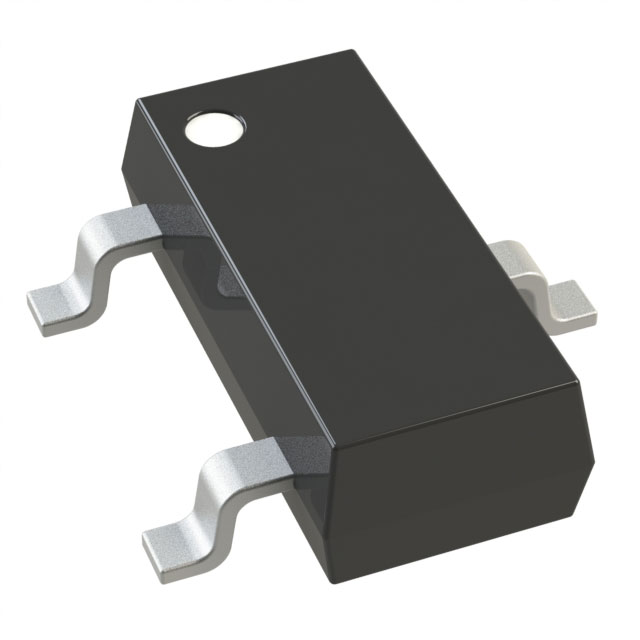
ZXTR2105F-7 vs MCP1700T-3302E/MAY Linear Regulators: Component Comparison
Quick verdict
For automotive and high-voltage input applications requiring moderate current (up to ~90mA) and extended temperature range, the ZXTR2105F-7 is the better choice due to its 60V input rating and AEC-Q101 qualification. For low-voltage, low-quiescent-current, and higher load current (up to 250mA) applications with tight dropout requirements and integrated protection, the MCP1700T-3302E/MAY is superior.
Spec comparison table
| Spec | ZXTR2105F-7 | MCP1700T-3302E/MAY | Notes |
|---|---|---|---|
| Control features | None specified | Over Current, Over Temperature, Short Circuit | MCP1700T offers built-in protection, important for robustness; ZXTR2105F lacks this. |
| Quiescent current (Iq) | 800 µA | 4 µA | MCP1700T is significantly lower, critical for battery-powered or low-power designs. |
| Max supply current | 6.7 mA | Not specified | ZXTR2105F max supply current is low; unclear for MCP1700T, likely not a limiting factor. |
| Grade | Automotive | Not specified | ZXTR2105F is AEC-Q101 qualified for automotive use; MCP1700T not automotive grade. |
| Max input voltage | 60 V | 6 V | ZXTR2105F supports much higher input voltages, suitable for harsh or high-voltage rails. |
| Mounting type | Surface Mount | Surface Mount | Both are SMT; no difference. |
| Number of regulators | 1 | 1 | Both single-output devices. |
| Operating temperature range | -65°C to 150°C | -40°C to 125°C | ZXTR2105F supports wider temperature range, better for extreme environments. |
| Output configuration | Positive | Positive | Both fixed positive regulators. |
| Max output current | 89 mA | 250 mA | MCP1700T supports almost 3× higher load current. |
| Output type | Fixed | Fixed | Both fixed voltage outputs. |
| Output voltage | 5 V | 3.3 V | ZXTR2105F fixed at 5 V; MCP1700T fixed at 3.3 V. |
| Package case | TO-236-3 (SOT-23-3, SC-59) | 6-DFN (2x2) Exposed Pad | MCP1700T’s exposed pad improves thermal dissipation in a smaller footprint. |
| Protection features | None specified | Over Current, Over Temperature, Short Circuit | MCP1700T has integrated protections, important for fault conditions. |
| PSRR (100 Hz) | 46 dB | 44 dB | ZXTR2105F slightly better PSRR at low frequency, marginal difference. |
| Qualification | AEC-Q101 | None specified | ZXTR2105F suited for automotive qualification requirements. |
| Voltage dropout max | Not specified | 0.35 V @ 250 mA | MCP1700T dropout specified, useful for low-voltage headroom design; ZXTR2105F unknown. |
Design trade-offs
The most striking difference between these regulators is their input voltage rating and maximum output current. ZXTR2105F-7 supports an input voltage up to 60 V with a modest maximum output current of 89 mA, making it suitable for automotive and industrial applications where input rails can be high and transient voltages are common. Its AEC-Q101 qualification and extended temperature range (-65°C to 150°C) further emphasize its fit for harsh environments. However, the ZXTR2105F has a relatively high quiescent current of 800 µA, which can be a significant power drain in battery-powered systems or energy-conscious designs.
In contrast, the MCP1700T-3302E/MAY targets low-voltage systems with a maximum input of 6 V and a higher output current capability of 250 mA, making it more appropriate for general embedded systems and portable electronics. Its extremely low quiescent current of 4 µA allows for much better efficiency during idle or light load conditions, which can extend battery life substantially. This regulator also specifies a maximum dropout voltage of 0.35 V at full load, enabling use in low-headroom scenarios where the input voltage is only slightly above the output.
Thermal considerations differ as well; MCP1700T’s 6-DFN package with an exposed pad facilitates better thermal dissipation than the smaller SOT-23-3 used by the ZXTR2105F, which is limited in its power dissipation capacity. This difference is relevant when operating near maximum current or in constrained thermal environments.
From a protection standpoint, the MCP1700T offers integrated overcurrent, overtemperature, and short-circuit protections, enhancing system reliability and potentially reducing external protection components. The ZXTR2105F lacks documented protection features, so external safeguards are recommended, especially in automotive or industrial applications.
Layout sensitivity will favor the MCP1700T in applications requiring tight thermal management and compact PCB real estate, while the ZXTR2105F’s wider operating temperature and input voltage range come with the trade-off of higher quiescent current and limited output current. Cost at volume is not specified here, but generally, automotive-qualified parts like ZXTR2105F may carry a premium compared to general-purpose regulators like MCP1700T.
Use-case fit
Choose ZXTR2105F-7 when…
- Designing automotive electronics requiring regulators that withstand up to 60 V input transients and AEC-Q101 qualification.
- Operating in extreme temperature environments beyond typical industrial ranges, from -65°C up to 150°C.
- Supplying moderate load currents (up to ~90 mA) from a high-voltage rail, such as 12 V or 24 V automotive or industrial power lines.
- System design can tolerate higher quiescent current and lacks stringent low-power sleep requirements.
- The application requires a fixed 5 V output voltage with minimal external components.
Choose MCP1700T-3302E/MAY when…
- Designing battery-powered or portable devices where ultra-low quiescent current (4 µA) is critical for extending battery life.
- Requiring up to 250 mA output current with low dropout (0.35 V at max load) from a 3.3 V fixed output.
- The input voltage rail is limited to 6 V or less (e.g., USB power, Li-ion battery stacks).
- Integrated protection features (overcurrent, overtemperature, short-circuit) are needed to simplify system design and improve reliability.
- PCB space is constrained and thermal dissipation is important, leveraging the compact 6-DFN package with exposed pad.
Drop-in compatibility
There is no indication from the datasheets that the ZXTR2105F-7 and MCP1700T-3302E/MAY are pin- or footprint-compatible. The ZXTR2105F comes in a SOT-23-3 package (TO-236-3, SC-59), while the MCP1700T uses a 6-pin DFN (2x2 mm) with an exposed thermal pad. The pinouts and package outlines differ significantly, so substituting one for the other would require PCB layout changes and possibly schematic modifications.
Additionally, the fixed output voltages differ (5 V vs. 3.3 V), so direct replacement is not possible without adjusting the system voltage requirements.
Alternatives to consider
- MIC5205 (Microchip) — Low dropout regulator with low quiescent current and moderate current capability, suitable for general-purpose 3.3 V or 5 V regulation.
- TLV702 (Texas Instruments) — Ultra-low quiescent current LDO with integrated protection, available in small packages for portable applications.
- LM2937 (Texas Instruments) — Automotive-grade 5 V regulator with higher current capability and extended temperature range, alternative for high-voltage input applications.