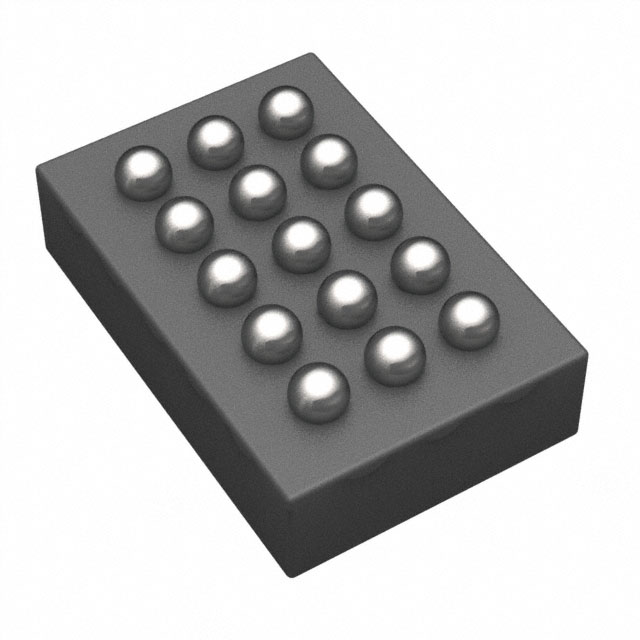
Key Specs
| Spec | Value | Condition | Source |
|---|---|---|---|
| Battery Chemistry | Lithium Ion/Polymer | Digi-Key | |
| Fault Protection | Over Current, Over Temperature, Over/Under Voltage, Short Circuit | Digi-Key | |
| Function | Fuel Gauge | Digi-Key | |
| Interface | I2C | Digi-Key | |
| Mounting Type | Surface Mount | Digi-Key | |
| Number Of Cells | 1 | Digi-Key | |
| Operating Temperature Range | -40°C ~ 85°C (TA) | Digi-Key | |
| Package Case | 15-WFBGA, WLBGA | Digi-Key | |
| Supplier Device Package | 15-WLP (1.91x2.45) | Digi-Key |
When To Use
Use the MAX17330X22+T when designing a fuel gauge solution for single-cell Lithium Ion or Lithium Polymer battery-powered devices requiring precise battery state monitoring with integrated fault protection (over current, over temperature, over/under voltage, and short circuit). Its surface-mount 15-WFBGA package and I2C interface make it ideal for compact, space-constrained applications such as portable medical devices, handheld instruments, or wearable electronics operating across a wide temperature range (-40°C to 85°C).
Do not use this device in multi-cell battery stacks or applications requiring higher cell counts, as it supports only a single cell. For multi-cell battery management, consider dedicated multi-cell fuel gauge ICs or battery management systems designed for higher cell counts.
When Not To Use
-
Multi-cell battery packs (>1 cell): The device supports only a single cell; multi-cell stacks require a multi-phase buck controller or dedicated multi-cell fuel gauge to handle higher voltages and balancing functions.
-
High current loads beyond battery gauge scope: When output current demands exceed what a single-cell fuel gauge can safely monitor or protect, a high-current synchronous buck with external FETs is necessary for accurate current sensing and efficient power delivery.
-
Applications needing galvanic isolation between battery and load: This device has no isolation features; an isolated flyback converter is required to prevent ground loops and enable safe fault isolation.
Application Notes
The current sense node switching occurs at the sense resistor connected in series with the battery, so minimizing the loop area around the sense resistor and its connections is critical to reduce noise and improve measurement accuracy. The device’s I2C pins (SDA and SCL) are noise-sensitive; therefore, routing these lines away from high-current switching nodes and using proper pull-up resistors is essential for reliable communication.
Due to the low power consumption and efficient design, no additional heatsink is required at typical operating points within the specified temperature range (-40°C to 85°C ambient). However, ensure adequate PCB thermal design to dissipate heat generated by the sense resistor and maintain device junction temperature within limits.
Gotchas
-
[Fault threshold interaction with temperature derating]: The over-current and over/under voltage fault thresholds shift with temperature, but this is only detailed in the thermal derating graphs, not the main spec table. Without compensating for this, the device may prematurely enter fault at cold or hot extremes, causing unexpected shutdowns. Fix by validating fault thresholds across the device’s full temperature range during characterization.
-
[I2C bus hang on power-up sequencing]: If the battery voltage ramps slowly or the device is powered before the I2C master is ready, the
MAX17330X22+Tcan hold the SDA line low indefinitely, causing bus hang. The symptom is no I2C ACK and stalled communication. Fix by ensuring the I2C master initializes before battery voltage reaches the device’s minimum operating voltage or by adding a reset sequence to the bus. -
[Output capacitor ESR affecting fuel gauge accuracy]: Using low ESR ceramic capacitors on the sense node can cause instability in current measurement and false fault indications due to resonance with internal sampling circuits. Fix by adding a small value (10–22 mΩ) resistor in series with the sense input or selecting capacitors with appropriate ESR.
-
[SW node layout causing EMI and false faults]: Routing the SW node trace too close to the device’s analog ground or I2C lines can inject switching noise, leading to erratic fuel gauge readings and spurious fault flags. Fix by maintaining a minimum 5 mm clearance and using a dedicated ground plane under the SW node.