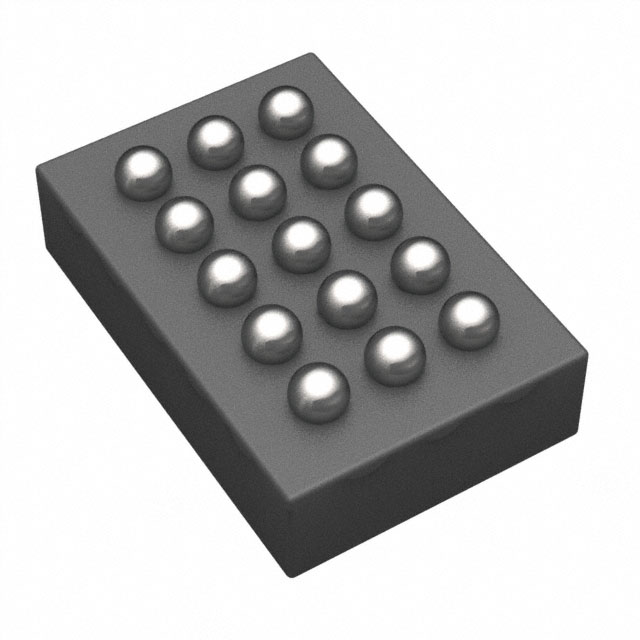
MAX17330X22+T vs MAX17320G12+ Component Comparison
Quick verdict
For single-cell lithium-ion/polymer battery management with a compact footprint and I2C interface, the MAX17330X22+T is preferable due to its smaller package and simpler cell count. For multi-cell (1 to 4 cells) applications requiring daisy-chaining or simpler wiring, the MAX17320G12+ with its 1-Wire interface and wider cell support is the better choice.
Spec comparison table
| Spec | MAX17330X22+T | MAX17320G12+ | Notes |
|---|---|---|---|
| Battery Chemistry | Lithium Ion/Polymer | Lithium Ion/Polymer | Identical chemistry support; no difference. |
| Fault Protection | Over Current, Over Temperature, Over/Under Voltage, Short Circuit | Over Current, Over Temperature, Over/Under Voltage, Short Circuit | Identical fault protections. |
| Function | Fuel Gauge | Fuel Gauge | Same function. |
| Interface | I2C | 1-Wire | I2C provides faster and multi-device bus support; 1-Wire simplifies wiring but is slower. |
| Mounting Type | Surface Mount | Surface Mount | Both surface mount; no difference. |
| Number of Cells | 1 | 1 to 4 | MAX17320G12+ supports up to 4 cells, offering more flexibility for multi-cell packs. |
| Operating Temperature | -40°C to 85°C | -40°C to 85°C | Identical operating range. |
| Package Case | 15-WFBGA, WLBGA (15-WLP, 1.91x2.45 mm) | 24-WFQFN Exposed Pad (24-TQFN, 4x4 mm) | MAX17330X22+T has a smaller package, beneficial for space-constrained designs. |
| Supplier Device Package | 15-WLP (1.91x2.45 mm) | 24-TQFN (4x4 mm) | Smaller package of MAX17330X22+T reduces PCB area but may complicate thermal dissipation. |
Design trade-offs
The MAX17330X22+T’s 15-WLP package is significantly smaller (1.91x2.45 mm) compared to the MAX17320G12+’s 24-TQFN (4x4 mm). This size difference impacts PCB real estate and thermal management. While the smaller package benefits compact product designs, the reduced exposed pad area limits thermal dissipation, which can be critical in high-current or high-temperature environments. The larger 24-TQFN package on the MAX17320G12+ can more effectively spread heat, potentially improving reliability under sustained load.
The communications interface is a major design consideration. The MAX17330X22+T uses I2C, which offers higher data rates, multi-master capability, and easier integration into systems already using I2C peripherals. This facilitates more complex battery management schemes and diagnostics. In contrast, the MAX17320G12+ employs a 1-Wire interface, reducing wiring complexity and pin count but limiting communication speed and bus topology. This can simplify PCB routing in space-constrained systems or where minimal wiring is critical.
Support for multiple cells (1 to 4) on the MAX17320G12+ enables direct integration with multi-cell battery packs without additional external multiplexing or multiple ICs. This is advantageous for medium-complexity battery packs but adds complexity to the IC’s internal measurement and balancing algorithms. The MAX17330X22+T is limited to single-cell packs, which simplifies firmware and calibration but restricts its use in higher voltage stacks.
From a firmware perspective, the difference in communication protocols demands different driver implementations and timing considerations. I2C requires managing bus arbitration and clock stretching, while 1-Wire needs strict timing control for its single data line. Firmware engineers must also consider error handling differences; I2C’s built-in ACK/NACK simplifies robust communication, whereas 1-Wire requires additional software error checking.
Cost at volume is not explicitly provided but can be inferred: the smaller package and simpler cell count of the MAX17330X22+T may reduce BOM costs for single-cell devices, while the MAX17320G12+’s larger package and multi-cell support likely increase cost but reduce system complexity for multi-cell designs.
Use-case fit
Choose MAX17330X22+T when…
- Designing compact single-cell lithium-ion or polymer battery packs where PCB space is at a premium.
- The system architecture already includes I2C buses, allowing straightforward integration without adding a new bus protocol.
- Higher-speed communication for advanced battery diagnostics or firmware updates is required.
- Thermal dissipation is limited, but battery current and power dissipation are modest, making the smaller package acceptable.
- Cost reduction is a priority for single-cell applications with minimal external components.
Choose MAX17320G12+ when…
- Managing battery packs with 2 to 4 cells in series, reducing the need for multiple ICs or external multiplexers.
- The design benefits from reduced wiring complexity and pin count, especially in space-constrained or cost-sensitive environments where 1-Wire simplifies harnessing.
- Thermal management is a concern, and the larger package with exposed pad provides better heat dissipation.
- The system requires a simpler physical layer interface for the fuel gauge, supporting daisy-chain or multi-drop configurations.
- Firmware resources are constrained and simpler timing-critical 1-Wire drivers are preferred over full I2C stacks.
Drop-in compatibility
There is no indication these parts are pin-compatible or footprint-compatible. The MAX17330X22+T uses a 15-WLP package with a very different footprint and pinout than the 24-TQFN package of the MAX17320G12+. Additionally, their communication interfaces differ (I2C vs 1-Wire), which means PCB routing and firmware require significant changes. Substituting one for the other would necessitate redesign of the PCB and firmware stack.
Alternatives to consider
- MAX17261: Single-cell fuel gauge with advanced Impedance Track™ algorithm, suitable for high-accuracy SOC measurement in compact packages.
- BQ27441-G1 (Texas Instruments): Single-cell fuel gauge with I2C interface, notable for its wide adoption and strong software ecosystem.
- LTC2942 (Analog Devices): Multicell battery gas gauge with integrated current sense and voltage measurement, useful for higher cell count applications beyond 4 cells.