MAX17330X22+T vs MAX17320G22+ — Battery Fuel Gauge IC Comparison
Quick verdict
For single-cell lithium-ion/polymer applications with tight space constraints and minimal PCB area, the MAX17330X22+T offers a more compact package and integrated protection, making it the better choice. In contrast, the MAX17320G22+ supports 1 to 4 cells and suits designs requiring multi-cell monitoring and more flexible battery configurations despite a larger footprint.
Spec comparison table
| Spec | MAX17330X22+T | MAX17320G22+ | Notes |
|---|---|---|---|
| Battery Chemistry | Lithium Ion/Polymer | Lithium Ion/Polymer | Both support same chemistries; no differentiation. |
| Fault Protection | Over Current, Over Temperature, Over/Under Voltage, Short Circuit | Over Current, Over Temperature, Over/Under Voltage, Short Circuit | Identical fault protection features. |
| Function | Fuel Gauge | Fuel Gauge | Equivalent functionality. |
| Interface | I2C | I2C | Same communication interface; no advantage. |
| Mounting Type | Surface Mount | Surface Mount | Both surface mount; no distinction. |
| Number of Cells | 1 | 1 to 4 | MAX17320G22+ supports multi-cell stacks up to 4 cells, offering broader application. |
| Operating Temperature Range | -40°C to 85°C | -40°C to 85°C | Identical operating ranges. |
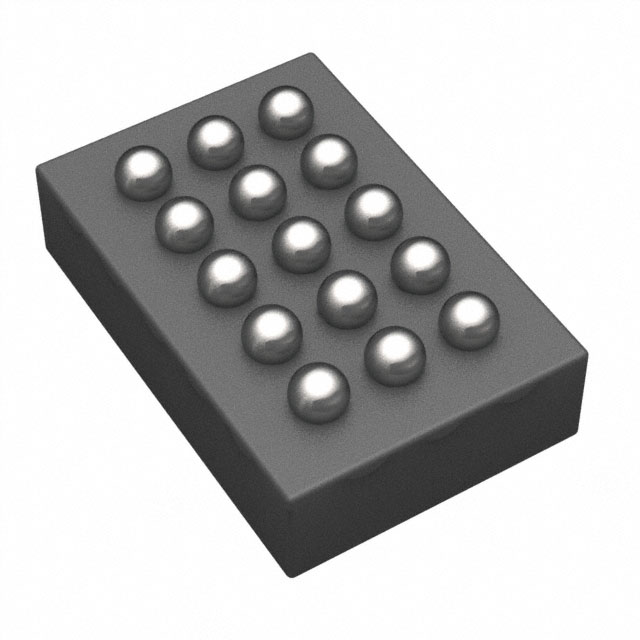
| Package Case | 15-WFBGA, WLBGA (15-WLP, 1.91x2.45 mm) | 24-WFQFN Exposed Pad (24-TQFN, 4x4 mm) | MAX17330X22+T’s smaller WLP package reduces PCB footprint, beneficial for compact designs. |
| Supplier Device Package | 15-WLP (1.91x2.45 mm) | 24-TQFN (4x4 mm) | Smaller package for MAX17330X22+T reduces board area and potentially BOM cost. |
Design trade-offs
The most immediate design difference is package size and cell count capability. The MAX17330X22+T’s 15-WLP package measures 1.91 x 2.45 mm, significantly smaller than the MAX17320G22+’s 24-TQFN at 4 x 4 mm. This size reduction benefits ultra-compact designs such as wearables or IoT sensors where PCB area is at a premium. However, WLP packages typically require more precise board fabrication processes and careful layout to ensure reliable solder joints and thermal dissipation.
The MAX17320G22+ supports monitoring of 1 to 4 cells, which is critical for multi-cell battery packs commonly found in power tools, drones, or portable medical devices. This flexibility comes at the cost of a larger package and likely increased complexity in firmware to handle cell balancing and multi-cell voltage measurement. The MAX17330X22+T is limited to single-cell packs, making it simpler but less versatile.
Thermally, the exposed pad on the 24-TQFN of the MAX17320G22+ favors heat sinking and better thermal management, which may be necessary in higher current multi-cell packs. The MAX17330X22+T’s WLP package lacks a dedicated exposed pad, so thermal design must rely on careful PCB layer stacking and copper pour to dissipate heat, especially if operating near the upper temperature limit or high current.
Both devices share fault protection features including over-current, over/under voltage, over-temperature, and short circuit, so from a protection standpoint, neither has an advantage. The shared I2C interface simplifies firmware migration between parts but the multi-cell capability of MAX17320G22+ requires more complex firmware logic.
Cost-wise, smaller packages like WLP may reduce BOM cost and board area but increase assembly complexity and yield risk. The MAX17320G22+’s larger TQFN package is more straightforward to assemble and inspect but increases PCB real estate and possibly unit cost.
Use-case fit
Choose MAX17330X22+T when…
- Designing a compact single-cell lithium-ion/polymer battery-powered device where PCB space is highly constrained (e.g., wearables, slim IoT nodes).
- You require a minimal BOM cost and are prepared to handle WLP assembly and thermal layout considerations.
- Your application does not require multi-cell monitoring and thus benefits from simpler firmware and hardware.
- The device operates within a standard temperature range (-40°C to 85°C) and does not require enhanced thermal dissipation.
- You want integrated fault protection without the overhead of multi-cell voltage balancing.
Choose MAX17320G22+ when…
- Your battery pack consists of 2 to 4 lithium-ion/polymer cells, requiring multi-cell voltage monitoring and balancing.
- PCB area is less constrained, and you prefer a package (24-TQFN) that eases assembly and inspection.
- Thermal management is critical due to higher current or multi-cell stack, benefiting from the exposed pad for heat sinking.
- Firmware complexity for multi-cell monitoring is acceptable or needed for your application (e.g., power tools, multi-cell drones).
- You require a fuel gauge IC that can scale with battery configurations without redesigning hardware.
Drop-in compatibility
There is no indication that the MAX17330X22+T and MAX17320G22+ are pin- or footprint-compatible. The MAX17330X22+T is in a 15-WLP package (1.91 x 2.45 mm), while the MAX17320G22+ uses a 24-TQFN package (4 x 4 mm), with differing pin counts and likely pinouts. Substituting one for the other would require a PCB redesign and firmware adjustment due to the difference in supported cell counts and package types. Datasheets do not specify pin compatibility; treat these as distinct parts from a hardware perspective.
Alternatives to consider
- MAX17261: Multi-cell fuel gauge with integrated protection, suitable for designs requiring up to 3 cells with advanced fuel gauging algorithms.
- BQ27441-G1 (Texas Instruments): Single-cell fuel gauge with extensive fuel gauge algorithm support and host communication flexibility.
- LTC2943 (Analog Devices): Battery gas gauge with current, voltage, and temperature measurement, suitable for custom protection schemes.