MAX17303G+ vs MAX17330X22+T: Battery Fuel Gauge ICs Comparison
1. Quick verdict
For applications prioritizing comprehensive battery protection with integrated programmable fault thresholds and detailed fuel gauge accuracy on a 1-cell Li-ion/polymer pack, the MAX17303G+ is the better choice due to its extensive register configurability and proven ModelGauge m5 algorithm. Conversely, the MAX17330X22+T suits highly compact designs requiring a smaller footprint with similar basic fuel gauge and protection functionality but without the broad configurability of the MAX17303G+.
2. Spec comparison table
| Spec | MAX17303G+ | MAX17330X22+T | Notes |
|---|---|---|---|
| Function | Fuel Gauge | Fuel Gauge | Both serve as fuel gauge ICs; no difference in function. |
| Battery Chemistry | Lithium Ion/Polymer | Lithium Ion/Polymer | Identical chemistry support. |
| Number of Cells | 1 | 1 | Both support single-cell packs. |
| Fault Protection | Over Current, Over Temperature, Over/Under Voltage, Short Circuit | Over Current, Over Temperature, Over/Under Voltage, Short Circuit | Equivalent protection types. |
| Interface | I2C | I2C | Same interface; ease of integration equal. |
| Operating Temperature Range | -40°C to 85°C (TA) | -40°C to 85°C (TA) | Identical temperature range. |
| Mounting Type | Surface Mount | Surface Mount | Both are surface mount devices. |
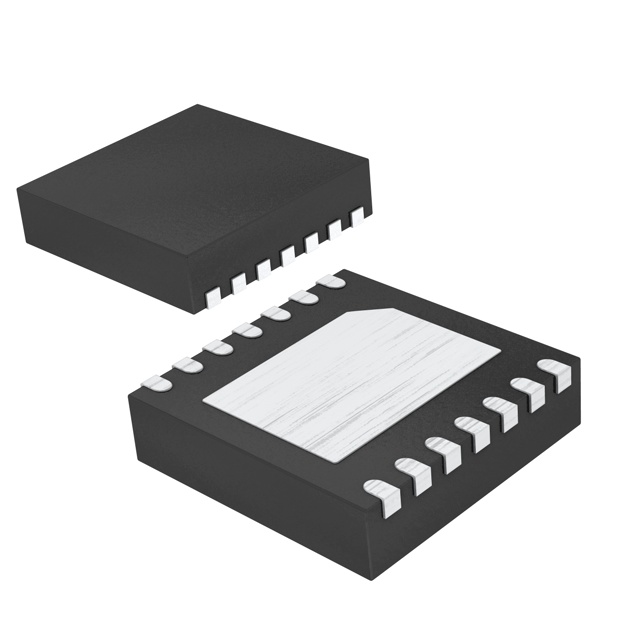
| Package Case | 14-WFDFN Exposed Pad | 15-WFBGA, WLBGA | MAX17303G+ is 14-TDFN (3x3mm), MAX17330X22+T is smaller 15-WLP (1.91x2.45mm). Smaller package may reduce board area. |
| Supplier Device Package | 14-TDFN (3x3) | 15-WLP (1.91x2.45) | Smaller package for MAX17330X22+T benefits compact designs. |
| Typical Operating Current (Active) | 24µA | Not specified | MAX17303G+ current well documented; unknown for MAX17330X22+T. |
| Hibernate Current | 18µA | Not specified | Detailed low-power modes documented only for MAX17303G+. |
| Ship Mode Current | 5µA | Not specified | MAX17303G+ offers very low ship current. |
| Deep Ship Current | 0.5µA / 0.02µA | Not specified | MAX17303G+ supports very low power deep ship modes. |
| Memory Size | 122 Bytes (typical) | Not specified | Larger documented memory in MAX17303G+ allows more configuration and logging. |
| Absolute Max Input Voltage | 40V | Not specified | MAX17303G+ supports up to 40V; unknown for MAX17330X22+T. |
| Absolute Max Output Current | 100mA | Not specified | MAX17303G+ max output current known; unknown for MAX17330X22+T. |
| Input Voltage Range | 4.5V min to 4.2V max | Not specified | MAX17303G+ specifies input voltage range; unknown for MAX17330X22+T. |
| Output Current Range | 10mA min to 100mA max | Not specified | MAX17303G+ output current range detailed; unknown for MAX17330X22+T. |
| Switching Frequency | 500kHz min, 2MHz typical, 5MHz max | Not specified | MAX17303G+ switching frequency known; unknown for MAX17330X22+T. |
| Package Pitch | 0.5mm | Not specified | MAX17303G+ package pitch detailed; smaller pitch in MAX17330X22+T likely due to smaller package. |
| SHA-256 Authentication | Supported | Not specified | MAX17303G+ supports SHA-256 authentication for security; unknown for MAX17330X22+T. |
| Temperature Measurement | Supports thermistor input on TH pin | Not specified | MAX17303G+ supports external thermistor; MAX17330X22+T details not provided. |
| Register Configurability | Extensive programmable voltage/current/temperature thresholds | Not specified | MAX17303G+ offers detailed programmable protections; unknown for MAX17330X22+T. |
| Firmware Task Execution Time | Active: 351ms; Hibernate: 1.4s (typical) | Not specified | Known for MAX17303G+; no data for MAX17330X22+T. |
| Package Dimensions | 3mm x 3mm (typical) | 1.91mm x 2.45mm (typical) | MAX17330X22+T is significantly smaller, benefiting compact designs. |
| Operating Voltage Min | 2.16V (min), 2.3V typical | Not specified | MAX17303G+ supports operation down to 2.16V; unknown for MAX17330X22+T. |
| Design Capacity Range | 200mAh to 1200mAh typical | Not specified | MAX17303G+ supports a range of capacities; unknown for MAX17330X22+T. |
| Protection Threshold Programming | Supported | Not specified | MAX17303G+ allows programmable thresholds for overcurrent, overvoltage, undervoltage, temperature, etc. |
| Pushbutton Wakeup Function | Supported | Not specified | MAX17303G+ supports pack wakeup via pushbutton; unknown for MAX17330X22+T. |
3. Design trade-offs
The primary differentiator is the level of configurability and detailed protection features available on the MAX17303G+. Its extensive set of programmable registers for voltage, current, temperature thresholds, and timers allow developers fine control over battery protection and fuel gauge behavior. This configurability benefits designs requiring precise battery management and safety but increases firmware complexity and configuration validation effort.
The MAX17303G+’s package is a 14-TDFN (3x3 mm) with an exposed pad, which facilitates thermal dissipation, important in applications where the IC must handle current sensing and protection functions without overheating. Its detailed current measurement timing and low-power modes (hibernate, ship, deep ship) provide designers with options to optimize power consumption in various operational states—a crucial factor in battery-powered products with tight energy budgets.
In contrast, the MAX17330X22+T’s smaller 15-WLP package (1.91 x 2.45 mm) reduces board area and may suit designs where PCB real estate is at a premium. The trade-off is limited publicly available data on its current consumption, memory size, protection configurability, and firmware task timing, suggesting it may be a more streamlined or integrated solution with fewer user-accessible settings. This can simplify firmware but at the cost of reduced flexibility for protection tuning and battery model customization.
From a layout perspective, the exposed pad on MAX17303G+ eases thermal design, while the WLP package on MAX17330X22+T requires careful PCB thermal planning and may pose challenges in rework or prototyping. The MAX17303G+’s more comprehensive register map demands more robust I2C driver software, including handling of numerous alert and fault registers. The MAX17330X22+T may have simpler firmware integration but could lack advanced fault logging or sophisticated state-of-charge algorithms.
Cost-wise, the smaller package and presumably simpler feature set of the MAX17330X22+T may translate to lower BOM and assembly costs, especially in high-volume compact devices. The MAX17303G+, with its advanced features and larger footprint, is likely more expensive but justified where battery safety and accuracy are critical.
4. Use-case fit
Choose MAX17303G+ when…
- You need precise, programmable battery protection thresholds (current, voltage, temperature) for safety-critical applications.
- Your design requires advanced fuel gauge accuracy with ModelGauge m5 algorithm and SHA-256 authentication for battery pack security.
- The application demands multiple low-power modes including deep ship and ship modes to extend battery shelf life.
- Thermal management is a concern and the exposed pad package aids heat dissipation.
- Firmware can accommodate complex configuration and fault handling to maximize battery life and safety.
Choose MAX17330X22+T when…
- Board space is highly constrained, and the smaller 1.91 x 2.45 mm WLP package is necessary.
- Basic fuel gauge and protection are sufficient without extensive programmable thresholds.
- You require a simpler firmware interface with possibly fewer configuration parameters.
- The application is cost-sensitive and can trade off advanced configurability for package size and cost.
- Thermal loads are low or managed elsewhere, reducing the need for exposed pad heat sinking.
5. Drop-in compatibility
Based on the data, the MAX17303G+ and MAX17330X22+T are not pin-compatible or footprint-compatible. The MAX17303G+ uses a 14-TDFN (3x3 mm) package with an exposed pad, while the MAX17330X22