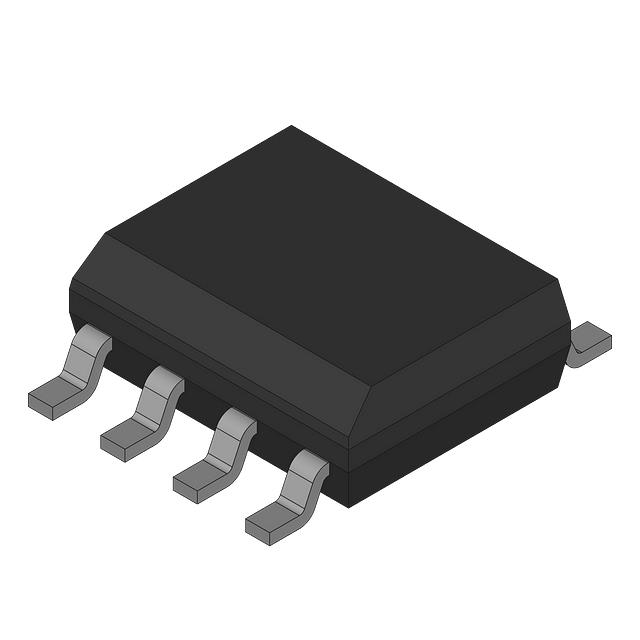
Key Specs
| Spec | Value | Condition | Source |
|---|---|---|---|
| Current Startup | 100 µA | Digi-Key | |
| Mode | Continuous Conduction (CCM) | Digi-Key | |
| Mounting Type | Through Hole | Digi-Key | |
| Operating Temperature Range | -40°C ~ 125°C | Digi-Key | |
| Package Case | 8-DIP (0.300”, 7.62mm) | Digi-Key | |
| Supplier Device Package | PG-DIP-8-12 | Digi-Key | |
| Switching Frequency (Typ) | 65kHz | Digi-Key | |
| Voltage Supply | 10.2V ~ 21V | Digi-Key |
When To Use
Use the ICE1PCS02G in applications requiring isolated power conversion with a supply voltage between 10.2 V and 21 V, such as offline power supplies for industrial control systems. Its 65 kHz switching frequency and Continuous Conduction Mode operation make it suitable for efficient energy transfer and low electromagnetic interference.
Avoid using this device in high-frequency applications above 100 kHz or in systems requiring surface-mount packages, as the device is only available in an 8-DIP Through Hole package. For high-frequency or compact designs, consider Infineon’s surface-mount power controllers with higher switching frequencies and smaller packages.
When Not To Use
-
Battery-powered sensor node on coin cell: The 100µA startup current is too high for μA sleep-mode battery life targets. Use a low-IQ PFM buck instead.
-
High-current server rail 12V → 1V @ 20A: The continuous conduction mode and package limit safe continuous current far below this load. Use a multi-phase buck controller for current sharing and thermal management.
-
Compact handheld device requiring >500kHz switching: The 65kHz switching frequency is too low to minimize inductor size and output ripple at high frequencies. Use a high-frequency buck controller to achieve smaller magnetics and faster transient response.
Application Notes
The switching node connected to the external switching transistor drain pin is the primary high-speed switching node and must have the smallest possible loop area to reduce EMI and voltage spikes. The current sense input pin is noise-sensitive and requires careful routing with proper filtering to ensure accurate current measurement.
Due to the device’s operating temperature range of -40°C to 125°C and typical power dissipation at 65 kHz switching frequency, a heatsink is generally not required for typical load conditions but should be considered if operating near the upper temperature limit or at maximum load currents.
Through Hole mounting in an 8-DIP package facilitates easy prototyping but requires attention to thermal management and component placement for optimal performance.
Gotchas
-
Startup Current Misconfiguration:
- Mistake: Using a startup resistor value that does not provide the required 100 µA startup current.
- Failure Mode: The device fails to start or enters unstable operation.
- Fix: Calculate and select the startup resistor to ensure the correct startup current is supplied, considering the supply voltage range of 10.2 V to 21 V.
-
Incorrect Current Sense Resistor Value:
- Mistake: Using a current sense resistor that is too low or too high for the Continuous Conduction Mode operation.
- Failure Mode: The device either overcurrent trips prematurely or allows excessive current, potentially damaging the device or load.
- Fix: Choose the current sense resistor value according to the load current and device specifications for CCM, verifying proper current sensing and protection.
-
Improper PCB Layout Around Switching Node:
- Mistake: Routing large loop areas around the switching node or neglecting snubber components.
- Failure Mode: Increased voltage spikes and electromagnetic interference leading to device stress or malfunction.
- Fix: Minimize the loop area at the switching node, place snubber components close to the device pins, and follow recommended PCB layout guidelines.