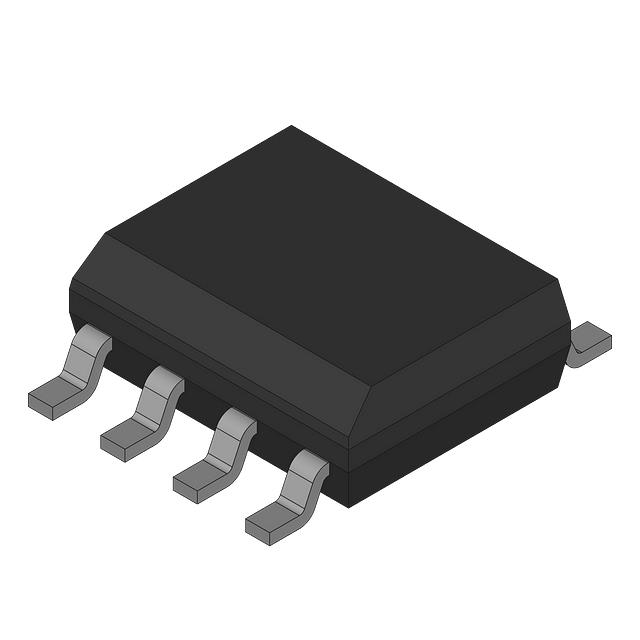
ICE1PCS02G vs INN3670C-H605-TL: Component Comparison for Power Electronics Engineers
Quick verdict
For continuous conduction mode (CCM) PFC front-ends running around 65 kHz with through-hole assembly, the ICE1PCS02G is the straightforward choice due to its low startup current and simple integration. For isolated offline flyback converters targeting up to 100 W with synchronous rectification and integrated switches, the INN3670C-H605-TL offers more comprehensive protection and integrated functionality, making it ideal for compact, surface-mount designs in isolated power supplies.
Spec comparison table
| Spec | ICE1PCS02G | INN3670C-H605-TL | Notes |
|---|---|---|---|
| Current Startup | 100 µA | Not specified | ICE1PCS02G’s low startup current reduces losses during startup; unknown for INN3670C-H605-TL |
| Mode | Continuous Conduction Mode (CCM) | Flyback, Secondary Side Synchronous Rectification (SR) | Different topologies; ICE1PCS02G for PFC CCM front-end, INN3670C for isolated flyback |
| Mounting Type | Through Hole | Surface Mount | Through-hole easier for prototyping, surface mount better for high-volume automated assembly |
| Operating Temperature | -40°C to 125°C | -40°C to 105°C (TA) | ICE1PCS02G supports higher max temperature, allowing more headroom in harsh environments |
| Package / Case | 8-DIP (0.300”, 7.62 mm) | 24-PowerSMD Module (InSOP-24D), 0.425” x 10.8 mm, 17 leads | INN3670C’s larger lead count and package size reflect integrated functionality |
| Switching Frequency (typ) | 65 kHz | 60 kHz | Minor difference, both suitable for medium-frequency power conversion |
| Voltage Supply | 10.2 V to 21 V | Not specified | ICE1PCS02G has explicit supply voltage range, helpful for system-level power budgeting |
| Control Features | Not specified | Frequency Control, Soft Start | INN3670C-H605-TL offers more sophisticated control for smoother startup and frequency tuning |
| Fault Protection | Not specified | Current Limiting, Overload, Over Temperature, Over Voltage, Short Circuit | INN3670C provides extensive protection, reducing external circuitry and increasing robustness |
| Internal Switches | No | Yes | INN3670C integrates power switches, simplifying design and reducing component count |
| Output Isolation | No | Isolated | INN3670C designed for isolated power supplies; ICE1PCS02G is for non-isolated PFC stages |
| Power Rating | Not specified | 100 W | INN3670C targets mid-power range flyback applications; ICE1PCS02G power rating depends on external MOSFET |
| Voltage Breakdown | Not specified | 750 V | INN3670C suitable for high-voltage flyback applications; ICE1PCS02G voltage rating depends on external devices |
Design trade-offs
The ICE1PCS02G is a dedicated CCM PFC controller designed to operate at a fixed switching frequency of 65 kHz and a supply voltage range of 10.2 V to 21 V. Its low startup current of 100 µA reduces losses during the power-up phase, which is critical for efficiency in standby modes. The through-hole PG-DIP-8 package simplifies prototyping and repair but increases board area and limits switching speed improvements related to layout parasitics. The 125°C max operating temperature rating gives more thermal margin, beneficial for industrial or harsh-environment power supplies.
In contrast, the INN3670C-H605-TL is a highly integrated flyback converter IC with onboard power switches and synchronous rectification control, optimized for isolated offline power supplies up to 100 W at around 60 kHz. The InSOP-24D surface-mount package with 17 leads allows tighter integration but demands careful PCB layout to manage switching noise and thermal dissipation. Its comprehensive fault protection suite (current limit, OVP, OTP, short circuit) reduces external component count and increases system reliability, a key consideration in consumer and industrial power adapters.
Thermally, the ICE1PCS02G’s simple control IC dissipates less heat internally but relies on external MOSFETs whose losses dominate thermal design. The INN3670C-H605-TL’s internal switches mean the IC itself handles significant power dissipation, requiring careful thermal management, likely including thermal vias and copper areas under the package. The different mounting types also influence thermal paths: through-hole parts generally rely on lead conduction and surrounding copper, while surface-mount devices benefit from PCB copper planes and heatsinking.
From a firmware standpoint, the INN3670C-H605-TL’s frequency control and soft-start features provide more flexibility to optimize transient response and minimize inrush current, which can simplify EMI filtering and improve power quality. The ICE1PCS02G, focused on CCM PFC, typically requires external circuitry to implement start-up sequencing and fault handling. Cost-wise, the ICE1PCS02G will often be less expensive per unit, especially in low to medium volumes, due to its simpler function and legacy through-hole packaging, while the INN3670C-H605-TL trades higher integration and protection features for a higher unit cost but potentially lower overall system BOM.
Use-case fit
Choose ICE1PCS02G when…
- Designing a discrete PFC stage for an offline power supply where continuous conduction mode is required, and the system uses external MOSFETs.
- Prototyping or servicing legacy equipment where through-hole parts simplify debugging and replacement.
- Operating in environments requiring extended temperature range up to 125°C, such as industrial or automotive power supplies.
- You need a fixed switching frequency PFC controller with a low startup current to optimize efficiency during power-up.
- Board space is less constrained, and cost sensitivity favors simpler ICs without integrated switches or advanced protection.
Choose INN3670C-H605-TL when…
- Developing compact, isolated offline flyback converters up to 100 W where integration of power switches reduces component count and PCB size.
- A surface-mount design is mandatory for automated manufacturing and tight layouts.
- You require built-in fault protection (overload, overvoltage, overtemperature, short circuit) to increase system robustness without extra external components.
- Frequency control and soft start are needed to optimize EMI performance and reduce inrush current.
- The application demands synchronous rectification on the secondary side to improve efficiency at medium power levels.
Drop-in compatibility
These parts are not pin-compatible or footprint-compatible. The ICE1PCS02G is an 8-pin through-hole DIP device designed for CCM PFC control without internal power switches, whereas the INN3670C-H605-TL is a 17-lead surface-mount InSOP-24D module integrating power switches for flyback topology. Substituting one for the other would require a complete redesign of the power stage, PCB layout, and likely the control firmware. No direct drop-in replacement is possible.
Alternatives to consider
- UCC28070 (Texas Instruments): A CCM PFC controller with adjustable switching frequency and built-in protections, suitable for designs needing more flexibility than ICE1PCS02G.
- LNK304 (Power Integrations): An integrated flyback converter IC with internal switch and protection, targeting low to medium power isolated supplies similar to INN3670C-H605-TL but in smaller packages.
- NCP1654 (ON Semiconductor): A CCM PFC controller with programmable switching frequency and advanced control features, providing a middle ground between simple and highly integrated devices.