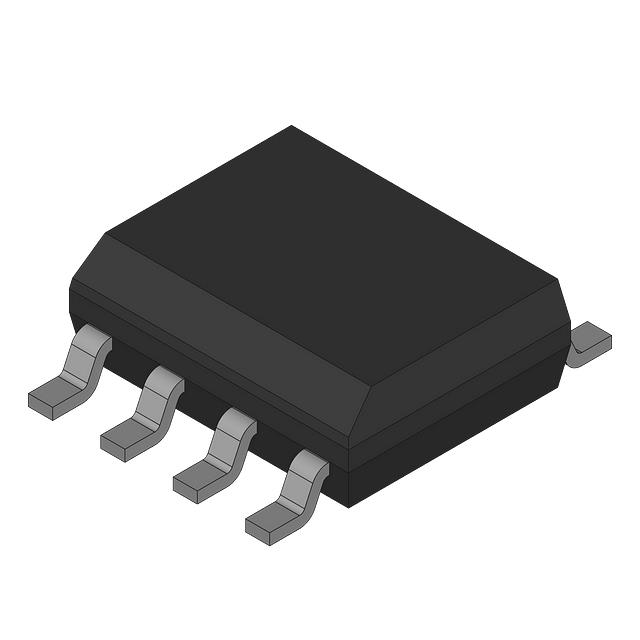
ICE1PCS02G vs ICE2PCS02GXUMA1: PFC Controller IC Comparison
Quick verdict
For through-hole prototyping or legacy designs requiring a DIP package and ultra-low startup current, the ICE1PCS02G is preferable. For modern, space-constrained, surface-mount designs with a wider supply voltage range, the ICE2PCS02GXUMA1 is a better fit despite its higher startup current.
Spec comparison table
| Spec | ICE1PCS02G | ICE2PCS02GXUMA1 | Notes |
|---|---|---|---|
| Current startup | 100 µA | 450 µA | Lower startup current (ICE1PCS02G) reduces stress on auxiliary winding startup and losses. |
| Mode | Continuous Conduction Mode (CCM) | Continuous Conduction Mode (CCM) | Identical operation mode; no differentiation here. |
| Mounting type | Through Hole | Surface Mount | Through-hole (ICE1PCS02G) simplifies prototyping; surface mount (ICE2PCS02GXUMA1) saves PCB space. |
| Operating temperature | -40°C ~ 125°C | -40°C ~ 125°C (TJ) | Equivalent operating range; junction temperature rating for ICE2PCS02GXUMA1 may imply better junction monitoring. |
| Package / case | 8-DIP (0.300”, 7.62mm width) | 8-SOIC (0.154”, 3.90mm width) | Smaller SOIC package (ICE2PCS02GXUMA1) reduces PCB area by ~50%. |
| Supplier device package | PG-DIP-8-12 | PG-DSO-8 | Different packages; footprint incompatible. |
| Switching frequency typ | 65 kHz | 65 kHz | Same switching frequency, allowing similar EMI filter designs. |
| Voltage supply | 10.2V ~ 21V | 11V ~ 25V | ICE2PCS02GXUMA1 supports a wider supply voltage window, beneficial for higher bus voltages. |
Design trade-offs
The most immediate design consideration is package and mounting type. ICE1PCS02G’s through-hole DIP package is advantageous in low-volume or hand-assembled boards, or where mechanical robustness is critical. Conversely, ICE2PCS02GXUMA1’s SOIC surface-mount package saves significant PCB area and supports automated assembly, better suited for production builds prioritizing compactness.
Startup current is a key parameter for designs with limited auxiliary winding power or tight energy budgets during startup. ICE1PCS02G’s 100 µA startup current is less than a quarter of ICE2PCS02GXUMA1’s 450 µA, reducing stress on startup circuitry and improving cold-start reliability in low power designs. However, the higher startup current of ICE2PCS02GXUMA1 may be acceptable in designs with robust startup power or where faster controller activation is desired.
The supply voltage range of the ICE2PCS02GXUMA1 extends up to 25 V, compared to 21 V for the ICE1PCS02G. This wider voltage tolerance provides more headroom for designs with higher auxiliary supply voltages or wider line variations, potentially increasing design margin in universal input applications or those with less regulated auxiliary rails.
Thermally, both ICs share an identical operating temperature range (-40°C to 125°C), though ICE2PCS02GXUMA1’s datasheet specifies junction temperature (TJ), implying slightly more detailed thermal characterization. The smaller SOIC package may have less thermal dissipation capability than the larger DIP, which can affect layout considerations, such as copper pad size and thermal vias placement.
Switching frequency is fixed at 65 kHz for both devices, so EMI filter design and transformer switching losses will be comparable. Gate drive requirements are not explicitly different, but the higher supply voltage range on ICE2PCS02GXUMA1 could imply different gate driver voltage margins, which must be considered in MOSFET selection and drive circuitry.
Cost-wise, through-hole devices like the ICE1PCS02G tend to be more expensive at volume due to older packaging and lower integration density. The ICE2PCS02GXUMA1, with its surface-mount package, is generally cheaper at scale and aligns better with modern automated assembly lines.
Use-case fit
Choose ICE1PCS02G when…
- Designing or prototyping on legacy or through-hole PCBs where DIP packages are preferred or required.
- Startup current must be minimized to reduce stress on auxiliary winding or to improve cold-start reliability in low power PFC stages.
- Mechanical robustness and easy manual replacement are priorities.
- Operating auxiliary supply voltage does not exceed 21 V.
- Board space is not a primary constraint, prioritizing ease of handling over compactness.
Choose ICE2PCS02GXUMA1 when…
- Designing compact, surface-mount PFC stages for volume production with limited PCB area.
- Auxiliary supply voltage can vary up to 25 V, requiring a wider input voltage range for the controller.
- Automated assembly and cost reduction at scale are important.
- Higher startup current is acceptable or auxiliary power budget is sufficient.
- Thermal management is addressed through careful PCB layout due to smaller package size.
Drop-in compatibility
The two parts are not pin-compatible due to different package types: ICE1PCS02G uses an 8-DIP (PG-DIP-8-12), while ICE2PCS02GXUMA1 comes in an 8-SOIC (PG-DSO-8). The footprints differ significantly in pad size, pitch, and layout, so substitution requires PCB redesign. Electrical pin functions may be similar, but no explicit pin-to-pin compatibility is documented in the provided data.
Alternatives to consider
- Infineon ICE2PCS01G: Similar CCM PFC controller with potentially different voltage and current startup specs; suitable for comparing startup characteristics.
- Texas Instruments UCC28019: A CCM PFC controller with integrated features and wider supply voltage range, common in space-constrained designs.
- ON Semiconductor NCP1654: CCM PFC controller with flexible switching frequency and enhanced protections, useful for higher power designs.
This comparison aims to clarify the practical implications of choosing between these two CCM PFC controllers, focusing on packaging, startup current, voltage range, and design integration complexity.