ICE1PCS02G vs L4984DTR: PFC Controller IC Comparison
Quick verdict
For legacy or through-hole designs prioritizing simplicity and ease of prototyping, the ICE1PCS02G is the better choice due to its DIP-8 package and well-defined 65kHz switching frequency. For compact, thermally demanding, or modern surface-mount designs requiring a wider operating temperature range and lower startup current, the L4984DTR offers an edge despite the lack of a fixed switching frequency specification.
Spec comparison table
| Spec | ICE1PCS02G | L4984DTR | Notes |
|---|---|---|---|
| Current startup | 100 µA | 65 µA | L4984DTR has lower startup current, beneficial for lower power loss during startup. |
| Mode | Continuous Conduction (CCM) | Continuous Conduction (CCM) | Both support CCM, so no differentiation here. |
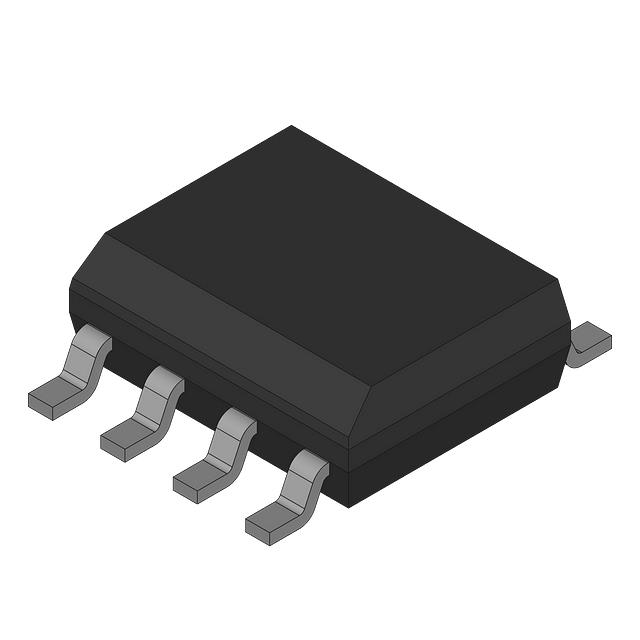
| Mounting type | Through Hole | Surface Mount | ICE1PCS02G suits prototyping and hand assembly; L4984DTR is better for automated SMT lines. |
| Operating temperature | -40°C to 125°C | -40°C to 150°C | L4984DTR supports 25°C wider max temp range, better for high-temperature environments. |
| Package case | 8-DIP (0.300”, 7.62 mm) | 10-SOP (0.154”, 3.90 mm width) | L4984DTR is smaller footprint, enabling more compact PCB layouts. |
| Supplier device package | PG-DIP-8-12 | 10-SSOP | Different package types, impacting assembly and thermal dissipation. |
| Switching frequency typ | 65kHz | Not specified | Fixed 65kHz simplifies design predictability on ICE1PCS02G; L4984DTR frequency must be set externally or varies. |
| Voltage supply | 10.2V to 21V | 10.3V to 22.5V | L4984DTR has slightly wider supply range, accommodating a broader input voltage window. |
Design trade-offs
The ICE1PCS02G’s fixed switching frequency of 65kHz simplifies EMI filtering and transformer design, which can reduce development time in classic PFC stages. However, it may limit flexibility in optimizing efficiency or noise for specific applications. The L4984DTR does not specify a fixed switching frequency, implying the frequency is set externally or varies with operating conditions. This adds design freedom but requires more careful frequency planning and potentially complicates EMI compliance.
Thermally, the L4984DTR’s wider operating temperature range to 150°C gives it a stronger margin in harsh environments or compact designs where cooling is constrained. The surface-mount 10-SSOP package also supports better thermal conduction via PCB copper compared to the through-hole DIP-8 of the ICE1PCS02G, which dissipates heat less efficiently and is bulkier.
Startup current is a critical spec in low standby power designs. The L4984DTR’s 65µA startup current is 35% lower than the ICE1PCS02G’s 100µA, reducing losses during no-load or light-load conditions and contributing to better compliance with energy efficiency regulations.
From a layout perspective, the ICE1PCS02G’s through-hole DIP is simpler for hand soldering and prototyping but less suitable for automated assembly and miniaturized boards. The L4984DTR’s smaller SSOP package reduces PCB area and can improve high-frequency layout performance due to shorter traces and lower parasitic inductance.
Cost at volume depends heavily on packaging and sourcing. Through-hole parts like the ICE1PCS02G typically cost more in large automated SMT assemblies due to handling complexity and board space. Conversely, the L4984DTR’s surface-mount format is preferred in high-volume consumer or industrial products, potentially lowering overall BOM cost despite similar silicon die costs.
Use-case fit
Choose ICE1PCS02G when…
- Prototyping or low-volume production where through-hole assembly is required or preferred.
- A fixed 65kHz switching frequency is desired for straightforward EMI filter and transformer design.
- The operating environment is under 125°C and thermal management options are adequate.
- Simplicity and legacy design compatibility are more critical than minimizing startup current or PCB size.
- The design calls for a DIP-8 footprint, for example to retrofit or replace older PFC controllers.
Choose L4984DTR when…
- The design demands a compact surface-mount package to save PCB space or reduce parasitic inductances.
- Operating temperature up to 150°C is required, such as in industrial or automotive-adjacent applications.
- Startup current minimization is critical to meet low standby power targets.
- The system design can handle variable or externally set switching frequency for optimization.
- Automated, high-volume SMT assembly is planned, where through-hole parts add cost and complexity.
Drop-in compatibility
These parts are not pin-compatible and have different package types (DIP-8 for ICE1PCS02G vs 10-SSOP for L4984DTR). Substituting one for the other will require PCB redesign, as well as verification of frequency setting and thermal considerations. There is no indication from the data provided that they share pinouts or can be interchanged without hardware changes.
Alternatives to consider
- NCP1654 (ON Semiconductor): Popular CCM PFC controller with integrated MOSFET driver, good for high-efficiency designs.
- UCC28019 (Texas Instruments): Highly configurable CCM PFC controller with wide frequency range and active power factor correction.
- MC33386 (NXP): CCM PFC controller with adjustable switching frequency and low startup current, suitable for industrial applications.