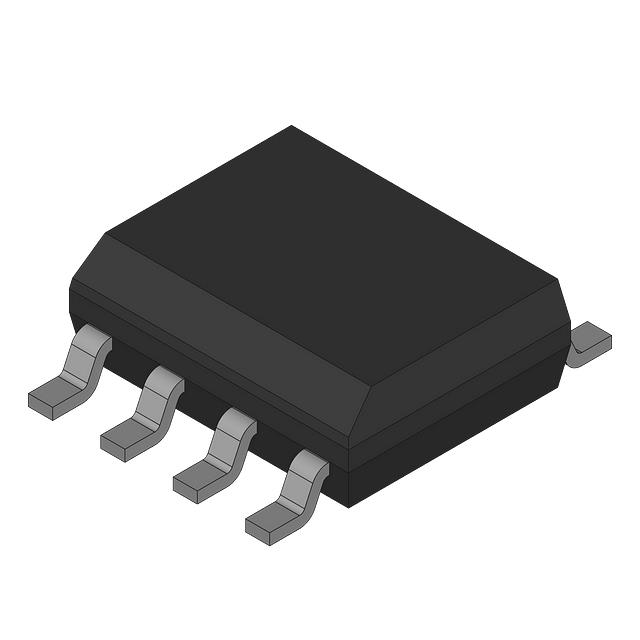
ICE1PCS02G vs TEA1716T/2,518: Component Comparison for PFC Applications
Quick verdict
For continuous conduction mode (CCM) PFC designs targeting mid-power offline supplies with through-hole assembly or retrofit needs, the ICE1PCS02G is the stronger candidate due to its explicit CCM control and well-defined switching frequency. Conversely, the TEA1716T/2,518 excels in discontinuous conduction mode (DCM) designs requiring surface-mount packaging, higher maximum operating temperature, and broad universal input voltage compatibility, making it preferable for compact, cost-sensitive consumer electronics.
Spec comparison table
| Spec | ICE1PCS02G | TEA1716T/2,518 | Notes |
|---|---|---|---|
| Mode | Continuous Conduction (CCM) | Discontinuous Conduction (DCM) | CCM suits higher power and lower ripple; DCM simplifies control and EMI but less efficient at high load. |
| Switching frequency (typ) | 65 kHz | Not specified | Known fixed switching frequency (ICE1PCS02G) eases EMI filtering design; TEA1716T frequency unspecified adds uncertainty. |
| Voltage supply | 10.2 V – 21 V | 70 VAC – 276 VAC | TEA1716T supports universal mains input range directly; ICE1PCS02G requires external supply voltage regulation. |
| Current startup | 100 µA | Not specified | Low startup current in ICE1PCS02G reduces power loss during startup and standby operation. |
| Operating temperature range | -40°C to 125°C | -40°C to 150°C | TEA1716T supports 25°C higher maximum temperature, beneficial for thermally constrained designs. |
| Mounting type | Through Hole | Surface Mount | Through-hole (ICE1PCS02G) eases prototyping and repair; surface mount (TEA1716T) supports automated high-volume assembly. |
| Package case | 8-DIP (0.300”, 7.62 mm) | 24-SOIC (0.295”, 7.50 mm width) | TEA1716T’s smaller, thinner SOIC package saves PCB space; ICE1PCS02G’s DIP package is bulkier but easier to handle. |
| Qualification | Not specified | Not specified | No clear advantage; check vendor-specific qualifications if relevant. |
Design trade-offs
The ICE1PCS02G is tailored for CCM PFC implementations, which generally enable better power factor correction and lower input current ripple at moderate to high loads. Its fixed 65 kHz switching frequency simplifies EMI filter design and reduces audible noise risk. The downside is the necessity of a stable auxiliary supply voltage between 10.2 V and 21 V, which adds complexity to startup and standby circuits compared to the TEA1716T’s direct mains voltage operation.
In contrast, the TEA1716T/2,518 operates in DCM mode, which simplifies the control loop and often reduces the number of external components. DCM inherently results in higher peak currents and more switching losses at elevated loads but allows for simpler gate drive and control strategies. The TEA1716T’s ability to handle universal mains voltages (70 VAC to 276 VAC) without an external auxiliary supply makes it attractive for compact, low-cost designs. The higher maximum junction temperature rating (150°C) offers more thermal margin, which can reduce heatsink size or improve reliability in thermally constrained environments.
From a layout standpoint, the ICE1PCS02G’s through-hole PG-DIP-8 package is easier to hand-solder and prototype but occupies more PCB area and complicates automated assembly. Conversely, the TEA1716T’s 24-pin SOIC package demands tighter layout discipline and good thermal dissipation practices but enables smaller board footprint and higher assembly throughput.
Regarding cost, the TEA1716T’s surface-mount package and DCM operation generally translate to lower BoM costs in high volumes, especially since fewer external components are required for startup and voltage regulation. The ICE1PCS02G may incur additional costs due to the auxiliary supply and larger PCB real estate but could be justified in designs where CCM performance gains are critical.
Use-case fit
Choose ICE1PCS02G when…
- Designing offline PFC stages for power supplies above ~100 W where continuous conduction mode is required for efficiency and reduced EMI.
- You have an existing auxiliary supply rail between 10.2 V and 21 V available and want a fixed switching frequency to simplify EMI filtering.
- Through-hole components are preferred for prototyping, repairability, or low-volume production.
- The design demands operation up to 125°C with moderate thermal design margins.
- Precise control over conduction mode and switching frequency is needed to optimize efficiency and power factor.
Choose TEA1716T/2,518 when…
- Designing low-to-mid power universal input PFC stages for compact, consumer-grade electronics with strict cost and size constraints.
- Surface-mount assembly is mandatory to meet automated production and PCB size targets.
- The design requires operation over a wide AC mains voltage range (70 VAC to 276 VAC) without auxiliary voltage regulation.
- Thermal design needs to accommodate higher ambient temperatures up to 150°C.
- Simpler control and fewer external components are prioritized over absolute CCM efficiency gains.
Drop-in compatibility
The two devices are not pin- or footprint-compatible. The ICE1PCS02G uses an 8-pin PG-DIP through-hole package, while the TEA1716T is a 24-pin SOIC surface-mount device. Beyond package differences, their control modes (CCM vs DCM), supply voltage requirements, and pin functions differ significantly. Substituting one for the other would require a complete redesign of the PCB, power stage, and firmware control logic. No direct drop-in replacement is possible without redesign.
Alternatives to consider
- STMicroelectronics L6562A: CCM PFC controller with integrated high-voltage startup and robust fault protections, widely used for mid-power offline supplies.
- Texas Instruments UCC28019: Flexible CCM PFC controller with adjustable switching frequency and extensive protection features, suitable for high-efficiency designs.
- ON Semiconductor NCP1654: DCM PFC controller optimized for low-cost universal input applications, similar in use case to TEA1716T but with integrated protections.