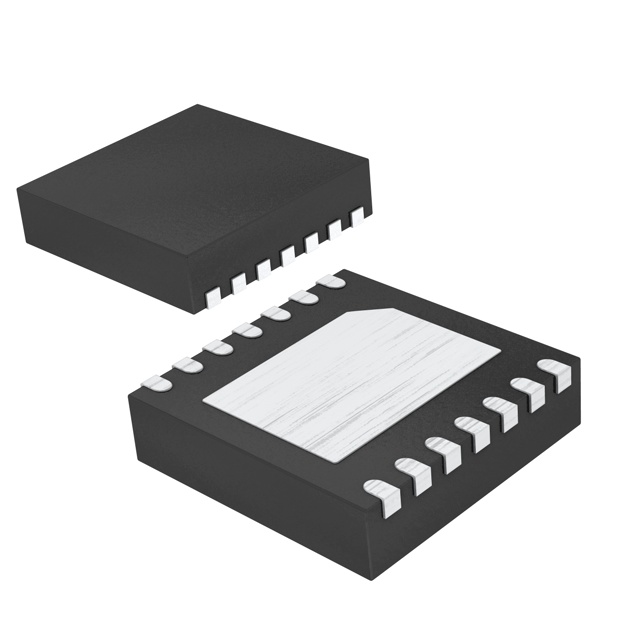
Key Specs
| Spec | Value | Condition | Source |
|---|---|---|---|
| Function | Fuel Gauge | Digi-Key | |
| Battery Chemistry | Lithium Ion/Polymer | Digi-Key | |
| Number Of Cells | 1 | Digi-Key | |
| Fault Protection | Over Current, Over Temperature, Over/Under Voltage, Short Circuit | Digi-Key | |
| Interface | I2C | Digi-Key | |
| Operating Temperature Range | -40°C ~ 85°C (TA) | Digi-Key | |
| Mounting Type | Surface Mount | Digi-Key | |
| Package Case | 14-WFDFN Exposed Pad | Digi-Key | |
| Supplier Device Package | 14-TDFN (3x3) | Digi-Key |
When To Use
-
Use the MAX17303G+ in single-cell Lithium Ion/Polymer battery applications requiring accurate fuel gauging with integrated fault protection (Over Current, Over Temperature, Over/Under Voltage, Short Circuit). Its low quiescent current (24μA typical active, 0.5μA deep ship) and integrated SHA-256 authentication make it ideal for portable, battery-powered devices where security and battery longevity are critical.
-
Use in applications that require I2C communication interface and where a 14-WFDFN Exposed Pad package (3mm x 3mm) is suitable for surface mount assembly.
-
When not to use: Avoid using the MAX17303G+ in multi-cell battery packs (more than one cell in series) as it is designed for single-cell configurations. For multi-cell applications, consider other Analog Devices fuel gauge ICs specifically supporting multiple cells.
-
Avoid in applications demanding output currents significantly above 100mA or operating temperatures beyond -40°C to +85°C ambient, as these exceed the device’s absolute maximum ratings.
When Not To Use
-
Battery management for multi-cell packs (>1 cell): The MAX17303G+ supports only 1-cell Li-ion/polymer chemistries and cannot handle series cell balancing or multiple cell monitoring. Use a multi-phase buck controller or dedicated multi-cell fuel gauge for packs beyond single cell count.
-
Applications demanding output currents over 100mA: Its absolute max output current is 100mA, which limits direct power delivery or gate drive capabilities for higher loads. Use a high-current synchronous buck with external FETs when current exceeds this rating and efficiency is critical.
-
Systems requiring switching frequency above 5MHz or very high-frequency control: The switching frequency max is 5MHz, typical at 2MHz. For switching beyond this, a high-frequency buck controller is required to keep inductor size minimal and maintain regulation.
Application Notes
-
Switching Node and Loop Area: The MAX17303G+ integrates internal FETs; however, careful PCB layout is essential. Minimize the loop area of the current sense path around the sense resistor to reduce noise and improve measurement accuracy.
-
Noise-Sensitive Pins: The TH (thermistor) pin is sensitive to noise and requires proper
Gotchas
-
Incorrect Sense Resistor Value or Tolerance:
- Mistake: Engineer uses a sense resistor value other than the recommended 10mΩ or one with poor tolerance.
- Failure Mode: This leads to inaccurate current measurements causing erroneous fuel gauge readings, improper overcurrent protection triggering, or failure to detect faults.
- Fix: Use a precision 10mΩ resistor with low temperature coefficient and ensure it is placed close to the IC to minimize parasitic resistance.
-
Insufficient Bypass Capacitor or Poor Placement:
- Mistake: Engineer omits the 0.1μF bypass capacitor or places it far from the IC power pins.
- Failure Mode: This causes voltage regulator instability and increased noise susceptibility, resulting in erratic operation or communication errors.
- Fix: Place a 0.1μF ceramic capacitor as close as possible to the IC’s power supply pins with short, low-inductance traces.
-
Thermistor Selection and Connection Errors:
- Mistake: Engineer uses a thermistor with resistance or beta value incompatible with the IC’s thermistor parameters or fails to connect the thermistor to the TH pin properly.
- Failure Mode: Leads to inaccurate temperature measurement, causing incorrect temperature compensation and potential false fault triggering.
- Fix: Use a 10kΩ NTC thermistor matching the device’s thermistor characteristics and connect it correctly to the TH pin with the internal pull-up enabled during temperature measurement.
-
Incorrect I2C Pull-up Resistor Values:
- Mistake: Engineer uses pull-up resistors outside the recommended 2kΩ to 5kΩ range on SDA and SCL lines.
- Failure Mode: Results in bus timing violations, communication errors, or inability to detect acknowledge bits.
- Fix: Use pull-up resistors within 2kΩ to 5kΩ range and verify bus timing per the device’s I2C specifications.