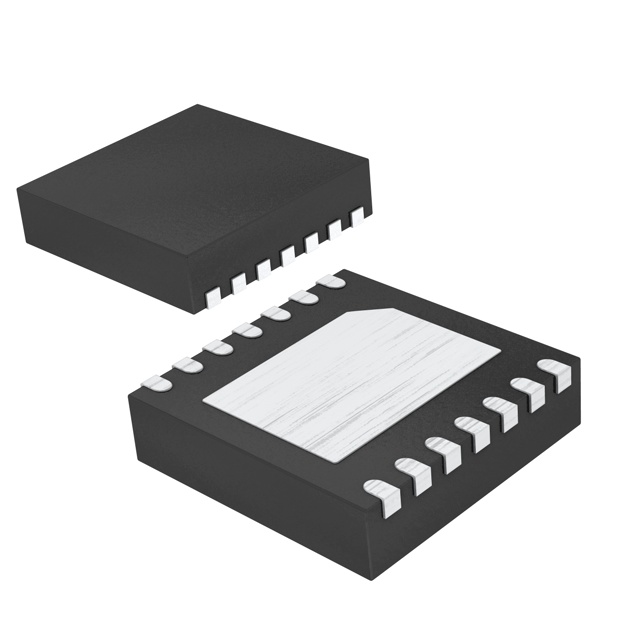
MAX17303G+ vs MAX17301G+ Battery Fuel Gauge ICs: A Component Comparison
1. Quick verdict
For applications requiring a single-cell lithium-ion/polymer fuel gauge with comprehensive programmable fault protection and low quiescent current, the MAX17303G+ is the superior choice due to its detailed specification and advanced features like internal self-discharge detection and SHA-256 authentication. The MAX17301G+ is a simpler fuel gauge option suitable for basic single-cell monitoring where fewer advanced features and protection configurability are acceptable, and cost or simplicity is prioritized.
2. Spec comparison table
| Spec | MAX17303G+ | MAX17301G+ | Notes |
|---|---|---|---|
| Function | Fuel Gauge | Fuel Gauge | Both serve as fuel gauges for single-cell batteries. |
| Battery chemistry | Lithium Ion/Polymer | Lithium Ion/Polymer | Identical chemistry support. |
| Number of cells | 1 | 1 | Both support single-cell applications only. |
| Fault protection | Over Current, Over Temperature, Over/Under Voltage, Short Circuit | Over Current, Over Temperature, Over/Under Voltage, Short Circuit | Both offer same fault protection types. |
| Interface | I2C | I2C | Both use I2C interface, standard for fuel gauges. |
| Operating temperature range | -40°C to 85°C (TA) | -40°C to 85°C (TA) | Identical operating temperature ranges. |
| Mounting type | Surface Mount | Surface Mount | Same mounting type. |
| Package case | 14-WFDFN Exposed Pad | 14-WFDFN Exposed Pad | Identical package case and size (14-TDFN, 3x3 mm). |
| Typical active current | 24 μA | Not specified in source data | MAX17303G+ provides explicit low active current figure; unknown for MAX17301G+. |
| Typical hibernate current | 18 μA | Not specified | Same as above. |
| Typical ship mode current | 5 μA | Not specified | Same as above. |
| Deep ship mode current | 0.5 μA / 0.02 μA | Not specified | MAX17303G+ supports deep ship modes with very low current. |
| Memory size | 122 Bytes (nonvolatile) | Not specified | MAX17303G+ offers defined memory size for configuration and logging. |
| Absolute max input voltage | 40 V | Not specified | MAX17303G+ rated for 40 V max input, useful for protection margin. |
| Max output current | 100 mA | Not specified | MAX17303G+ can source/sink up to 100 mA, useful for FET gate drive or alarms. |
| Input voltage range | 4.5 V min to 4.2 V max | Not specified | MAX17303G+ supports typical Li-ion cell voltage range. |
| Switching frequency | 500 kHz min, 2 MHz typ, 5 MHz max | Not specified | Relevant for internal switching regulators or ADC sampling in MAX17303G+. |
| Temperature threshold range | -40°C to 85°C | Not specified | MAX17303G+ programmable thresholds. |
| Programmable voltage/current thresholds | Yes (multiple registers for thresholds) | Not specified | MAX17303G+ supports detailed programmable thresholds for protection. |
| SHA-256 Authentication | Yes | Not specified | MAX17303G+ supports SHA-256 authentication for security. |
| Internal self-discharge detection | Yes | Not specified | MAX17303G+ includes this feature, useful for battery health monitoring. |
| Firmware task execution time | 351 ms (active), 1.4 s (hibernate) | Not specified | MAX17303G+ specifies firmware timing impacting polling intervals and responsiveness. |
| Quiescent current modes | Active: 24 μA; Hibernate: 18 μA; Ship: 5 μA | Not specified | MAX17303G+ offers detailed power modes for low power design. |
| Temperature measurement | Internal die temperature + thermistor input (TH pin) | Not specified | MAX17303G+ supports thermistor monitoring for battery temperature. |
| Package pitch | 0.5 mm | Not specified | MAX17303G+ package pitch typical. |
| Memory registers | Extensive register map (0x000–0x1FF) | Not specified | MAX17303G+ has extensive register map for fuel gauge and protection configuration. |
| Design capacity (typical) | 1000 mAh | Not specified | MAX17303G+ example design capacity. |
| Operating voltage minimum | 2.16 V | 2.3 V | MAX17303G+ supports slightly lower min voltage, useful for deeply discharged cells. |
| Package size | 3 mm x 3 mm | 3 mm x 3 mm | Identical. |
| Supplier device package | 14-TDFN (3x3) | 14-TDFN (3x3) | Identical. |
| Mounting and footprint | Surface mount, 14-WFDFN exposed pad | Surface mount, 14-WFDFN exposed pad | Identical. |
Note: The MAX17301G+ datasheet provides less detailed information publicly; many specs are unspecified or unavailable in the provided data.
3. Design trade-offs
The MAX17303G+ clearly targets applications requiring sophisticated battery management with a strong emphasis on precision, configurability, and security. Its low active and hibernate currents (24 μA and 18 μA respectively) enable power-sensitive designs, extending battery life during idle periods. The support for deep ship modes with ultra-low currents (down to 0.02 μA) is particularly valuable for devices shipped with batteries installed but needing minimal drain, such as IoT or medical devices. In contrast, the MAX17301G+ lacks detailed current consumption specs in the data available, suggesting either simpler power modes or less emphasis on ultra-low power states.
The extensive register map and programmable protection thresholds in MAX17303G+ allow firmware engineers to fine-tune fault protection parameters (overcurrent, over/under voltage, temperature limits) to the specific battery chemistry and application load profile. The inclusion of SHA-256 authentication adds a layer of security in battery authentication, which can be critical for preventing counterfeit battery usage and ensuring safety in regulated products. The MAX17301G+ does not explicitly document these features, indicating a more basic fuel gauge functionality.
From a PCB layout perspective, both devices share the same 14-TDFN 3x3 mm package with exposed pad for thermal dissipation, simplifying mechanical and thermal design considerations. However, the MAX17303G+’s ability to handle max continuous output currents of 100 mA (likely for gate drive or alert signals) suggests it can directly control external FETs or signaling lines, reducing component count. This may translate into fewer external components, smaller BOM, and potentially improved system reliability.
The MAX17303G+ also demonstrates a wider input voltage tolerance (up to 40 V absolute max), which can provide additional margin in fault conditions or battery pack design variations. Its minimum operating voltage of 2.16 V is slightly lower than MAX17301G+’s 2.3 V, which could be meaningful in applications where cells are deeply discharged and system operation at lower voltages is required.
Cost-wise, while exact pricing isn’t provided here, the MAX17301G+ is likely positioned as a cost-effective option with fewer features, suitable for simpler designs. The MAX17303G+’s advanced features and configurability come at the expense of increased design complexity, firmware effort, and potentially higher component cost.
4. Use-case fit
Choose MAX17303G+ when…
- Your design requires advanced protection features with programmable thresholds for overcurrent, overvoltage, undervoltage, and temperature, to tightly safeguard the battery and downstream electronics.
- You need ultra-low power operation modes, including deep ship mode (<1 μA), to maximize battery shelf life in devices that spend long periods unused but must retain state.
- Your application demands battery authentication and security, leveraging the integrated SHA-256 authentication to prevent counterfeiting or unauthorized battery use.
- You want detailed battery state and health monitoring, including internal self-discharge detection, cycle count logging, and multiple aging metrics accessible via an extensive register map.
- You require a robust I2C interface with a wide register map for integration into complex embedded systems with detailed fuel gauge data.
Choose MAX17301G+ when…
- Your application is a basic single-cell lithium-ion/polymer fuel gauge with standard fault protection but does not require advanced programmability or security features.
- Power consumption specs are not critical, or you have simpler power mode requirements and do not require deep ship modes.
- Cost and design simplicity are prioritized over configurability and advanced diagnostics.
- You need a drop-in replacement or simpler fuel gauge solution for legacy designs where the full feature set of MAX17303G+ is not needed.
- You require a