MAX17303G+ vs MAX17320G22+ Battery Fuel Gauge ICs: Component Comparison
1. Quick verdict
For single-cell lithium-ion/polymer applications where ultra-low quiescent current and deep ship modes are critical to maximize battery shelf life, the MAX17303G+ is the better choice due to its detailed power modes and very low microampere consumption. For multi-cell packs (1 to 4 cells) requiring integrated protection and fuel gauge functionality combined with a larger package for better thermal dissipation and higher system complexity, the MAX17320G22+ offers a more flexible, scalable solution.
2. Spec comparison table
| Spec | MAX17303G+ | MAX17320G22+ | Notes |
|---|---|---|---|
| Function | Fuel Gauge | Fuel Gauge | Equivalent function |
| Battery Chemistry | Lithium Ion/Polymer | Lithium Ion/Polymer | Equivalent |
| Number of Cells Supported | 1 | 1 to 4 | MAX17320G22+ supports multi-cell packs, better for multi-cell systems |
| Fault Protection | Over Current, Over Temperature, Over/Under Voltage, Short Circuit | Over Current, Over Temperature, Over/Under Voltage, Short Circuit | Equivalent protection set |
| Interface | I2C | I2C | Equivalent |
| Operating Temperature Range | -40°C to +85°C (TA) | -40°C to +85°C (TA) | Equivalent |
| Mounting Type | Surface Mount | Surface Mount | Equivalent |
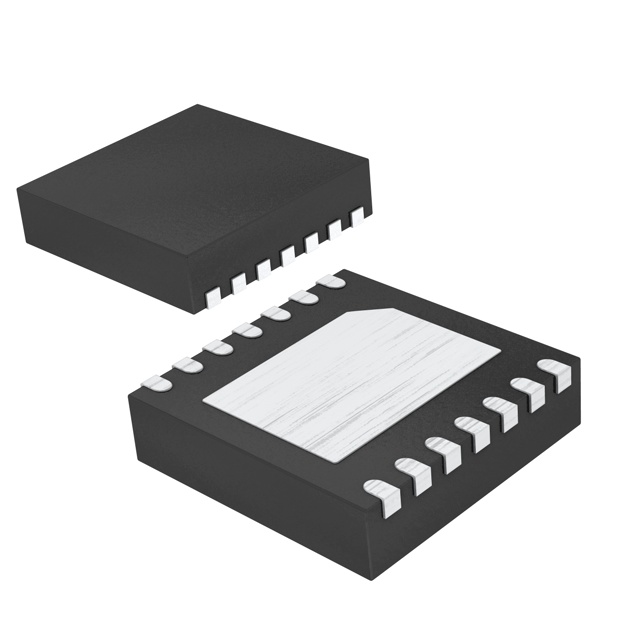
| Package Case | 14-WFDFN Exposed Pad (3x3mm) | 24-WFQFN Exposed Pad (4x4mm) | MAX17320G22+ larger package allows better thermal management |
| Typical Quiescent Current (Active) | 24 μA | Not specified | MAX17303G+ provides detailed low-power specs; MAX17320G22+ data not provided |
| Typical Quiescent Current (Hibernate) | 18 μA | Not specified | Same as above |
| Typical Ship Mode Current | 5 μA | Not specified | MAX17303G+ supports very low ship mode current critical for long storage |
| Deep Ship Mode Current | 0.5 μA (typ), 0.02 μA (min) | Not specified | MAX17303G+ excels in ultra-low power deep ship modes |
| Absolute Max Input Voltage | 40 V | Not specified | MAX17303G+ supports up to 40V input, useful for protection margin |
| Switching Frequency | 500 kHz to 5 MHz (typ 2 MHz) | Not specified | MAX17303G+ provides switching frequency for internal regulator, data missing for MAX17320G22+ |
| Memory Size (User/Nonvolatile) | Up to 122 Bytes | Not specified | MAX17303G+ user memory size documented; MAX17320G22+ not specified |
| SHA-256 Authentication | Yes | Not specified | MAX17303G+ supports SHA-256 for battery authentication |
| Design Capacity Range | Typical 1000 mAh | Not specified | MAX17303G+ datasheet lists example capacity; MAX17320G22+ capacity range not detailed |
| Protection Features | Programmable overcurrent, overvoltage, undervoltage, overtemperature, short circuit, charge done, charger communication timeout, overcharge capacity fault | Equivalent | Both provide comprehensive protection, specifics not detailed for MAX17320G22+ |
| Temperature Measurement | NTC Thermistor input (TH pin) with internal pull-up | Not specified | MAX17303G+ supports temperature sensing via TH pin |
| Package Pitch | 0.5 mm | Not specified | MAX17303G+ smaller pitch aids in compact designs |
| Package Size | 3 mm x 3 mm | 4 mm x 4 mm | MAX17320G22+ larger package aids thermal and routing |
| Interface Protocols | I2C, Maxim 1-Wire (for MAX17310-MAX17313 variants) | I2C only | MAX17303G+ offers 1-Wire variants, MAX17320G22+ limited to I2C |
| Fault Logging & History | Yes, with detailed registers | Not specified | MAX17303G+ provides extensive fault logging |
| Power Modes | Multiple low power modes: active, hibernate, ship, deep ship, deep ship 2 | Not specified | MAX17303G+ detailed power modes allow aggressive power savings |
| Programming Supply Current | 2 mA to 10 mA | Not specified | Relevant for flash programming, MAX17303G+ documented |
| Operating Voltage | 2.16 V min, 4.9 V typ | Not specified | MAX17303G+ supports lower operating voltages beneficial for low voltage packs |
| Reset Command Delay | 10 ms | Not specified | MAX17303G+ reset timing specified |
| Package Leads | Pb-free/RoHS-compliant | Pb-free/RoHS-compliant | Equivalent |
Note: The MAX17320G22+ datasheet provides fewer detailed electrical specs publicly; where data is missing, it cannot be directly compared. The MAX17303G+ datasheet is significantly more detailed, reflecting its use in simpler, single-cell applications that demand precise control and low power.
3. Design trade-offs
The MAX17303G+ is optimized for single-cell lithium-ion/polymer battery packs, emphasizing ultra-low current consumption, especially in ship and deep ship modes. This makes it suitable for devices where battery longevity in storage is critical, such as wearables or IoT sensor nodes. The availability of detailed power modes and extremely low quiescent current (down to 0.02 μA in deep ship 2 mode) means designers can achieve minimal battery drain when the device is off or in storage. However, this comes with the trade-off of a smaller package and a single-cell focus, limiting its use in multi-cell configurations.
The MAX17320G22+ supports from 1 to 4 cells, which immediately makes it more flexible for larger battery packs or more complex systems requiring multi-cell balancing and monitoring. Its larger 4x4 mm QFN package allows for better thermal dissipation and easier routing of signals, which is important in higher power or more complex battery applications. However, the lack of publicly available detailed power consumption figures suggests that it may not be as optimized for ultra-low power states as the MAX17303G+. This could impact battery lifetime in low-power or disconnected states.
From a firmware perspective, the MAX17303G+ offers a rich set of registers and protection features with detailed timing and threshold configurability, which can increase firmware complexity but offers precise control. The MAX17320G22+ likely supports similar protection features but with less granularity exposed publicly, which might simplify firmware but limit fine-tuning.
Thermally, the larger package of the MAX17320G22+ and its multi-cell capability imply it is designed for higher currents and power scenarios, whereas the MAX17303G+ is tailored to lower-power, single-cell environments. The MAX17303G+‘s smaller package can present layout challenges due to tighter pitch, but also enables smaller PCB footprints in compact designs.
Cost-wise, the MAX17303G+ is expected to be less expensive due to smaller package and single-cell support, suitable for cost-sensitive, low-power designs. The MAX17320G22+ trades cost for flexibility and multi-cell support, which is justified in more demanding, multi-cell battery management systems.
4. Use-case fit
Choose MAX17303G+ when…
- Designing ultra-low power, single-cell battery-powered devices where battery shelf life during long storage is critical (e.g., medical wearables, trackers).
- You require detailed programmable protection thresholds and fault logging for a single-cell pack.
- Your design demands the smallest possible footprint and lowest quiescent current.
- Your application benefits from SHA-256 authentication for battery pack security and anti-counterfeiting.
- Operating voltage is close to the lower range (~2.16 V min), and the system needs reliable fuel gauge accuracy with minimal power consumption.
Choose MAX17320G22+ when…
- Designing battery packs with 1 to 4 cells in series, requiring integrated fuel gauge and protection in one device.
- Your system requires a larger package for better thermal handling or easier PCB routing.
- You need a scalable solution for different battery pack sizes without changing the IC.
- The application involves moderate to high current loads where thermal and electrical stress are higher.
- Your firmware or system complexity favors a simpler interface with I2C only and less detailed power mode management.
5. Drop-in compatibility
The MAX17303G+ comes in a 14-TDFN 3x3 mm package, while the MAX17320G22+ uses a 24-TQFN 4x4 mm package. These are not pin- or footprint-compatible. Substituting one for the other requires PCB redesign and likely