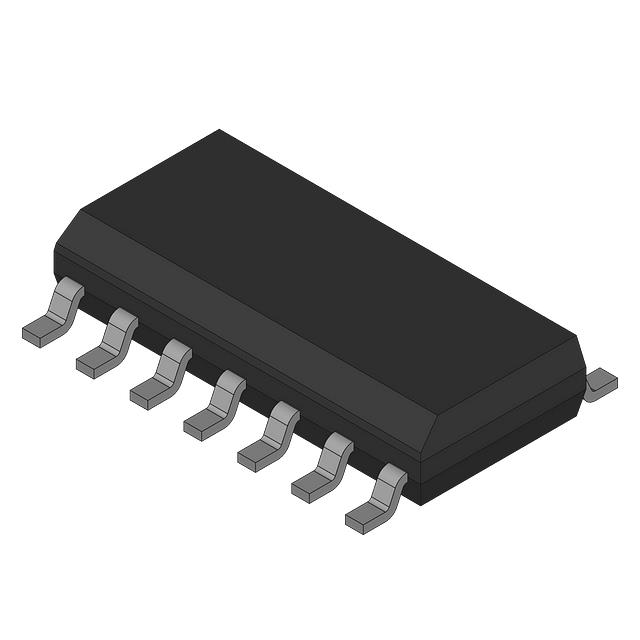
Key Specs
| Spec | Value | Condition | Source |
|---|---|---|---|
| Clock Sync | No | Digi-Key | |
| Control Features | Frequency Control | Digi-Key | |
| Duty Cycle (Max) | 96% | Digi-Key | |
| Function | Step-Up, Step-Down, Step-Up/Step-Down | Digi-Key | |
| Mounting Type | Surface Mount | Digi-Key | |
| Number Of Outputs | 1 | Digi-Key | |
| Operating Temperature Range | -40°C ~ 85°C (TA) | Digi-Key | |
| Output Configuration | Positive, Isolation Capable | Digi-Key | |
| Output Phases | 1 | Digi-Key | |
| Output Type | Transistor Driver | Digi-Key | |
| Package Case | 14-SOIC (0.154”, 3.90mm Width) | Digi-Key | |
| Serial Interfaces | - | Digi-Key | |
| Supplier Device Package | 14-SOIC | Digi-Key | |
| Supply Voltage (Typ) | 7.6V ~ 20V | Digi-Key | |
| Switching Frequency (Typ) | 500kHz | Digi-Key | |
| Synchronous Rectifier | Yes | Digi-Key | |
| Topology | Buck, Boost, Flyback, Forward Converter | Digi-Key |
When To Use
-
12V battery rail → 5V @ 3A: The MIC38C43-1BM’s synchronous rectifier and up to 96% duty cycle maximize efficiency and support single-phase buck operation at 500kHz, ideal for tight inductor size and thermal margins. A diode-based controller would waste power in the rectifier stage, causing excessive heat and possible thermal runaway at 3A continuous load.
-
9V to 15V input → isolated 12V output: Its isolation-capable output configuration and support for forward and flyback topologies enable galvanic isolation while maintaining synchronous rectification. A standard synchronous buck controller cannot provide isolation; using one would risk output ground referencing errors and possible latch-up.
-
7.6V to 20V input → 3.3V @ 2A with step-up/down: The wide supply voltage range and combined buck-boost topologies accommodate input voltages both above and below output, with frequency control for EMI optimization at 500kHz. A fixed-frequency synchronous buck-only controller would fail during input brownouts, causing output voltage collapse.
When Not To Use
-
> 20A output current rail: Maximum current rating implied by single-phase, 14-SOIC package and internal transistor driver limits output current and thermal dissipation. Use a multi-phase buck controller to distribute current and reduce RMS losses.
-
Battery-powered sensor with μA sleep mode: Quiescent current is not optimized for ultra-low standby power; the device is designed for switching at 500kHz with no PFM or pulse-skipping mode. Use a low-IQ PFM buck for minimal battery drain in sleep.
-
Input voltage ripple-sensitive analog rail with <1V dropout: The switching nature and 500kHz frequency cause output noise and ripple unsuitable for sensitive analog loads requiring low noise and close tracking. Use an LDO regulator to maintain low noise and minimal dropout.
Application Notes
-
The switching node (SW) sees high dV/dt and must have short, low-inductance traces to the external MOSFETs and catch diode to minimize EMI and voltage spikes.
-
Pins 4 and the feedback and compensation pin are noise-sensitive; route feedback traces away from SW and gate drive signals and keep the compensation network close to the IC to prevent loop instability.
-
Guard ring or ground flood around the IC’s exposed pads and sensitive analog pins is recommended to reduce coupling from the high-current switching node.
-
The synchronous rectifier timing is internally controlled; external timing synchronization is not supported, so avoid clock synchronization inputs or external frequency forcing.
-
Ensure proper thermal vias and copper area under the 14-SOIC package to maintain junction temperatures within -40°C to 85°C ambient range, especially at continuous high load.
Gotchas
-
[Underrated maximum duty cycle derating at high temperature]: The 96% max duty cycle is specified under typical conditions; at elevated temperatures near 85°C, internal MOSFET on-resistance rises, reducing effective duty cycle margin. Symptoms include output voltage droop under heavy load and thermal cycling. Fix by verifying duty cycle margin with temperature derating curves and increasing switching frequency or input voltage headroom.
-
[Feedback loop instability due to output capacitor ESR]: Using low-ESR ceramic capacitors exclusively can cause loop oscillations since the internal compensation assumes moderate ESR. This manifests as high-frequency ringing or output voltage ripple beyond expected levels. Fix by adding a small ESR capacitor in parallel or adjusting compensation components per the datasheet guidelines.
-
[Startup failure under no-load or very light load]: Because the MIC38C43-1BM drives a transistor output and relies on load current for stable regulation, very light or no load conditions can cause output voltage overshoot and erratic switching at startup. Fix by adding a minimum load resistor or dummy load to ensure stable regulation during startup.
-
[Poor switching node layout causing shoot-through]: Excessive parasitic inductance on the SW node can cause delayed MOSFET turn-off signals, leading to cross-conduction (shoot-through) and excessive power dissipation. Symptoms include abnormal heating on the package and distorted switching waveforms. Fix by minimizing SW trace length and using low-inductance PCB layout techniques.