MIC38HC42BM TR vs MIC38C43-1BM TR: Component Comparison for Power Electronics Engineers
Quick verdict
For compact, cost-sensitive designs requiring a simple synchronous DC-DC controller with standard frequency control and moderate switching frequency (up to 500kHz), the MIC38HC42BM TR is more suitable due to its smaller 8-SOIC package and straightforward feature set. For applications needing enhanced pin functionality, more complex control options, or potentially easier PCB routing with additional pins—such as designs requiring more robust gate drive control or additional feedback signals—the MIC38C43-1BM TR in a 14-SOIC package is preferable.
Spec comparison table
| Spec | MIC38HC42BM TR | MIC38C43-1BM TR | Notes |
|---|---|---|---|
| Topology | Boost, Buck, Flyback, Forward | Buck, Boost, Flyback, Forward | Equivalent topologies; no functional difference here. |
| Function | Step-Up, Step-Down, Step-Up/Step-Down | Step-Up, Step-Down, Step-Up/Step-Down | Identical application scope. |
| Output Configuration | Positive, Isolation Capable | Positive, Isolation Capable | Equivalent. |
| Output Type | Transistor Driver | Transistor Driver | Equivalent. |
| Number of Outputs | 1 | 1 | Equivalent. |
| Output Phases | 1 | 1 | Equivalent. |
| Switching Frequency Typ. | Up to 500 kHz | 500 kHz | Comparable max frequency; MIC38C43-1BM TR specifies fixed 500kHz typical, MIC38HC42BM up to 500kHz. |
| Duty Cycle Max | 96% | 96% | Equivalent. |
| Control Features | Frequency Control | Frequency Control | Equivalent basic control method. |
| Synchronous Rectifier | Yes | Yes | Both support synchronous rectification. |
| Clock Sync | No | No | Neither supports clock synchronization, limiting noise and EMI control options. |
| Supply Voltage Typical | 7.6V ~ 20V | 7.6V ~ 20V | Equivalent operating voltage range. |
| Operating Temperature | -40°C to 85°C (TA) | -40°C to 85°C (TA) | Equivalent. |
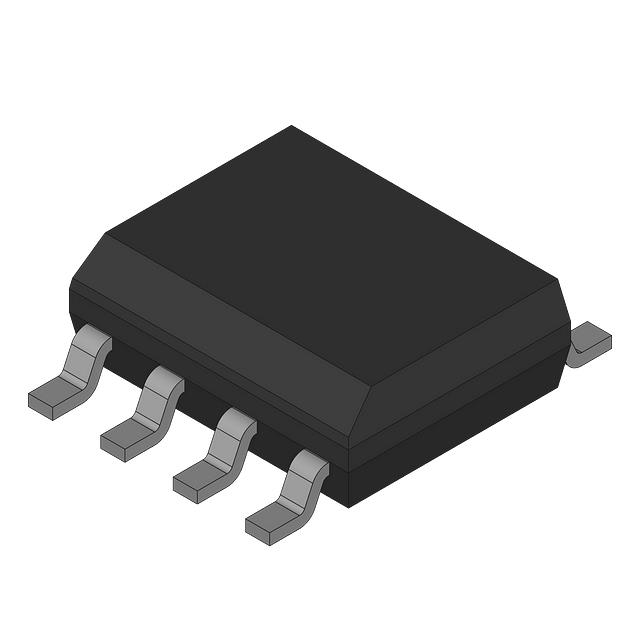
| Package Case | 8-SOIC (3.90mm width) | 14-SOIC (3.90mm width) | MIC38HC42BM TR smaller footprint; MIC38C43-1BM TR offers more pins for external connections. |
| Mounting Type | Surface Mount | Surface Mount | Equivalent. |
| Serial Interfaces | None | None | Neither part includes serial interfaces. |
Design trade-offs
The most immediately obvious difference between these controllers is the package size and pin count: the MIC38HC42BM TR comes in an 8-SOIC, while the MIC38C43-1BM TR is housed in a 14-SOIC. This impacts PCB real estate and routing complexity. The 8-pin device simplifies layout and reduces BOM cost slightly but may limit flexibility for additional features or monitoring signals. The 14-pin device provides more pins, which can be used for enhanced control signals, feedback loops, or additional compensation elements, improving fine-tuning of the power stage.
Both controllers support synchronous rectification, which is crucial for efficiency improvements in buck and synchronous flyback topologies. Their maximum duty cycle of 96% is high enough for most step-up and step-down converter designs, allowing for a wide output voltage range relative to input voltage.
Switching frequency is specified as “up to 500kHz” for the MIC38HC42BM TR and exactly 500kHz for the MIC38C43-1BM TR. In practice, this means both can handle high-frequency switching, but the MIC38C43-1BM TR’s fixed switching frequency could simplify EMI filtering and timing design, while the MIC38HC42BM TR might allow more flexible frequency adjustment depending on circuit conditions.
Neither device supports clock synchronization, which limits options for multi-phase interleaved operation or EMI spread spectrum techniques. From a firmware perspective, both devices lack serial interfaces, so control and monitoring must be done via analog signals or external microcontroller ADCs, increasing design complexity if dynamic control is needed.
Thermal considerations should be similar because both operate over the same ambient temperature range (-40°C to 85°C) and share the same synchronous rectification capability. However, the larger 14-SOIC package of the MIC38C43-1BM TR may provide marginally better heat dissipation due to increased pin count and package size, useful in designs where thermal management is tight.
Finally, cost at volume typically favors the smaller 8-pin MIC38HC42BM TR due to fewer pins and smaller package size, but this depends on vendor pricing and availability. The MIC38C43-1BM TR’s larger package and pin count could increase PCB cost and assembly time.
Use-case fit
Choose MIC38HC42BM TR when…
- Designing space-constrained DC-DC converters where PCB area and BOM cost must be minimized.
- Implementing simple synchronous buck or boost converters that do not require extensive external control or monitoring signals.
- Working with a power stage that benefits from flexible switching frequency control up to 500kHz.
- Thermal dissipation is manageable within a smaller package footprint.
- Targeting designs where a smaller pin count reduces routing complexity and risk of layout errors.
Choose MIC38C43-1BM TR when…
- The application demands additional external control or feedback signals enabled by extra pins (e.g., separate compensation, enable, or fault reporting).
- Designing converters with a fixed 500kHz switching frequency to simplify EMI management and timing synchronization with other system components.
- Needing a slightly improved thermal path due to the larger 14-SOIC package in higher power applications.
- Requiring a more complex control loop that benefits from the expanded pin functions.
- Implementing designs where the PCB layout can accommodate a larger footprint for improved signal integrity or easier debugging.
Drop-in compatibility
Based on the data, these parts are not pin-compatible or footprint-compatible. The MIC38HC42BM TR in 8-SOIC and MIC38C43-1BM TR in 14-SOIC have different package sizes and pin counts, which means a direct substitution requires PCB redesign. No information is available about pin mapping similarity or electrical compatibility, so swapping one for the other without redesign is not recommended.
Alternatives to consider
- MIC38100: A synchronous buck controller with integrated MOSFET drivers, suitable for compact, high-efficiency step-down designs.
- TPS54360 (Texas Instruments): A wide input voltage synchronous buck converter controller with adjustable frequency and enhanced fault protections.
- LM5116 (Texas Instruments): A wide input range synchronous buck controller with robust gate drive capability and flexible compensation options, ideal for high current applications.
These alternatives provide different feature sets that might better match specific design requirements such as integrated drivers or enhanced control features.