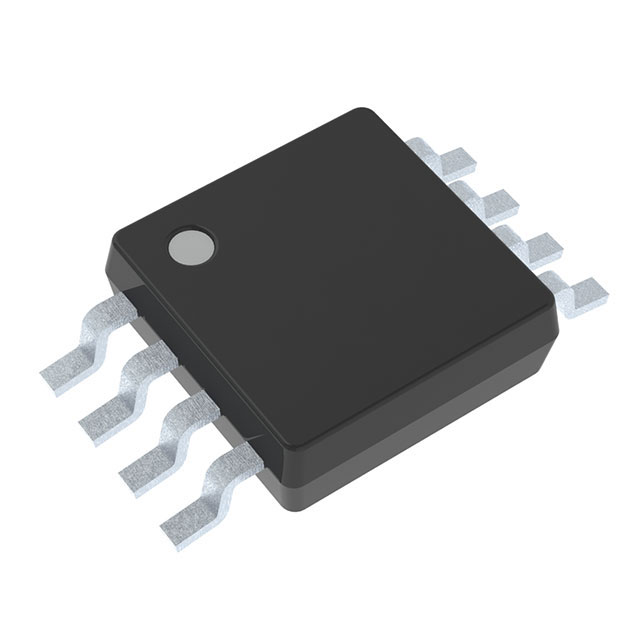
MIC38C43BMM TR vs MIC38C43-1BM TR: Component Comparison for Hardware Engineers
Quick verdict
For compact, cost-sensitive designs requiring a small footprint and simplified layout, the MIC38C43BMM TR in the 8-MSOP package is preferable. For applications where board space is less constrained and thermal dissipation is critical, the MIC38C43-1BM TR in the larger 14-SOIC package offers better heat spreading and easier layout, making it the better choice.
Spec comparison table
| Spec | MIC38C43BMM TR | MIC38C43-1BM TR | Notes |
|---|---|---|---|
| Topology | Boost, Buck, Flyback, Forward | Buck, Boost, Flyback, Forward | Identical topologies, no difference in functionality. |
| Function | Step-Up, Step-Down, Step-Up/Step-Down | Step-Up, Step-Down, Step-Up/Step-Down | Identical functionality. |
| Control Features | Frequency Control | Frequency Control | Same control method; no difference. |
| Clock Sync | No | No | Both lack synchronization input. |
| Duty Cycle Max | 96% | 96% | Equal maximum duty cycle limit. |
| Number of Outputs | 1 | 1 | Single output controller for both. |
| Output Configuration | Positive, Isolation Capable | Positive, Isolation Capable | Same output configuration. |
| Output Phases | 1 | 1 | Single-phase output on both devices. |
| Output Type | Transistor Driver | Transistor Driver | Same output driver architecture. |
| Synchronous Rectifier | Yes | Yes | Both support synchronous rectification, aiding efficiency. |
| Supply Voltage (typical) | 7.6 V to 20 V | 7.6 V to 20 V | Identical operating voltage range. |
| Switching Frequency (typical) | 500 kHz | 500 kHz | Same switching frequency target. |
| Operating Temperature Range | -40°C to 85°C (TA) | -40°C to 85°C (TA) | Equal operating temperature range. |
| Mounting Type | Surface Mount | Surface Mount | Both intended for SMT assembly. |
| Package Case | 8-MSOP (0.118”, 3.00 mm width) | 14-SOIC (0.154”, 3.90 mm width) | Smaller footprint on MIC38C43BMM; larger package on MIC38C43-1BM allows better thermal. |
| Supplier Device Package | 8-MSOP | 14-SOIC | Same as package case. |
| Serial Interfaces | None | None | No digital interfaces on either. |
Design trade-offs
The primary difference between these two MIC38C43 variants is the package size and pin count: 8-MSOP for the MIC38C43BMM TR versus 14-SOIC for the MIC38C43-1BM TR. This impacts thermal performance and PCB layout significantly. The 14-SOIC package offers a larger thermal pad and more copper area under the device, which can improve heat dissipation by reducing junction temperature under high load. This is critical in designs pushing current limits or operating at elevated ambient temperatures.
The smaller 8-MSOP package reduces PCB space footprint, which benefits compact or densely populated boards. However, its smaller thermal mass means that careful layout and thermal vias are mandatory to avoid overheating. The narrower body also limits the size of internal bonding wires and the die attach area, potentially affecting long-term reliability under thermal stress.
Both devices share identical electrical specs—switching frequency, maximum duty cycle, synchronous rectification, and operating voltage—meaning efficiency curves will largely track each other assuming similar external components and operating conditions. The synchronous rectifier support reduces conduction losses on the low-side MOSFET, which is especially useful in buck and forward converter topologies.
From a gate drive perspective, both devices are transistor drivers with no mention of internal gate drivers or integrated MOSFETs, so external MOSFET selection and gate drive circuitry remain design-dependent. The larger package on the MIC38C43-1BM TR may facilitate slightly easier routing of gate drive and feedback signals due to increased pin count and spacing, which can improve noise immunity and layout flexibility.
Cost-wise, the 8-MSOP package typically costs less due to smaller size and fewer pins, but this advantage can be negated if additional thermal management measures are required. Volume pricing should be checked with suppliers, but generally, the MIC38C43BMM TR is favored in high-density, cost-sensitive applications, while the 14-SOIC MIC38C43-1BM TR suits robust, thermally demanding designs.
Use-case fit
Choose MIC38C43BMM TR when…
- Designing a compact power supply where PCB area is at a premium, such as portable or handheld devices.
- Cost constraints prioritize a smaller package to reduce BOM and assembly costs.
- The thermal load is moderate and can be managed with PCB copper and adequate airflow.
- The system environment is controlled within typical commercial temperature ranges (-40°C to 85°C).
- The application requires standard topologies like buck or boost without need for external synchronization or additional control interfaces.
Choose MIC38C43-1BM TR when…
- High power levels or continuous high current operation demand superior thermal performance.
- The PCB layout benefits from a larger package with more pins for improved routing and noise margin.
- The design requires easier manual or automated inspection and rework due to larger package size.
- The product operates in harsher thermal environments or requires better reliability margins.
- The slightly larger footprint is tolerable in exchange for improved heat dissipation and mechanical robustness.
Drop-in compatibility
Based on the package and pin count difference (8-MSOP vs 14-SOIC), these parts are not pin-compatible or footprint-compatible. Substituting one for the other requires a PCB redesign to accommodate the different package outlines and pin assignments. Pin functions may differ due to the different number of pins; the datasheets should be consulted to verify signal mapping before attempting substitution. No information provided indicates any pin-to-pin compatibility or direct drop-in replacement capability.
Alternatives to consider
- MIC3823: A similar synchronous buck controller with integrated MOSFET drivers, which can simplify gate drive design.
- LM5116 (Texas Instruments): A wide input synchronous buck controller with a flexible switching frequency and robust thermal performance.
- LT3748 (Analog Devices/Linear Technology): A versatile flyback and forward controller with integrated features for isolated power supplies and enhanced control flexibility.
Each alternative offers different feature sets and package options that may better fit specific power levels or design constraints.