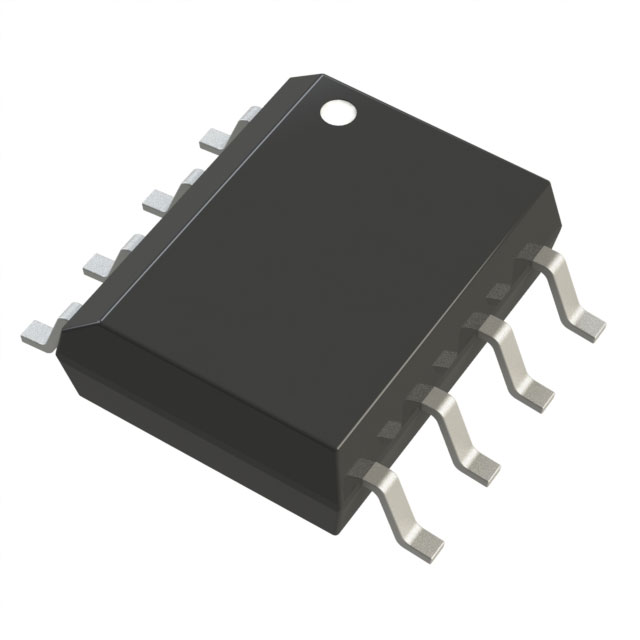
Key Specs
| Spec | Value | Condition | Source |
|---|---|---|---|
| Function | Step-Up, Step-Down, Step-Up/Step-Down | Digi-Key | |
| Input Voltage (Max) | 40V | Digi-Key | |
| Input Voltage (Min) | 3V | Digi-Key | |
| Mounting Type | Surface Mount | Digi-Key | |
| Number Of Outputs | 1 | Digi-Key | |
| Operating Temperature Range | 0°C ~ 100°C (TJ) | Digi-Key | |
| Output Configuration | Positive or Negative | Digi-Key | |
| Output Current (Max) | 1.25A (Switch) | Digi-Key | |
| Output Type | Adjustable | Digi-Key | |
| Output Voltage (Max) | 65V (Switch) | Digi-Key | |
| Output Voltage (Min) | 1.244V | Digi-Key | |
| Package Case | 8-SOIC (0.154”, 3.90mm Width) | Digi-Key | |
| Supplier Device Package | 8-SO | Digi-Key | |
| Switching Frequency (Typ) | 100kHz | Digi-Key | |
| Synchronous Rectifier | No | Digi-Key | |
| Topology | Buck, Boost, Cuk, Flyback, Forward Converter | Digi-Key |
When To Use
-
3.0V to 40V input → 5V @ 600mA: The 40V maximum input rating with a typical switch current of 2.7A and 0.24Ω on-resistance suits low-to-mid power boost or buck converters in this voltage range. Using a part with lower input rating risks breakdown under transient spikes, causing permanent device damage.
-
Flyback converter, isolated output, 7V minimum input: With flyback reference voltage typ at 18.0V and isolated flyback max input at 55V, this device supports isolated flyback topologies up to moderate input voltages. Choosing a part without proper flyback threshold control can cause uncontrolled switch conduction and latch-up.
-
Battery-powered system with moderate quiescent current: The typical quiescent current around 6mA plus a small load-dependent term fits applications where moderate battery life is acceptable. A low-IQ PFM buck would be better if standby currents need to stay in the μA range, otherwise battery drain will be noticeable.
When Not To Use
-
Output current > 1.25A continuous: The maximum switch current rating of 2.7A and output current max of 1.25A limits sustained high current output. Use a multi-phase buck controller for higher current to avoid thermal runaway and device overstress.
-
Quiescent current critical for μA sleep modes: With a typical supply current of 6mA and shutdown current around 50µA, this device is unsuitable for ultra-low power battery applications. A low-IQ PFM buck regulator is needed to prevent excessive battery drain during standby.
-
Switching frequency above 112kHz: The maximum switching frequency of about 112kHz limits use in designs requiring >500kHz to shrink inductor size or reduce output ripple. A high-frequency buck controller is required to avoid unstable operation or excessive EMI.
Application Notes
-
The switching node (SW) is a high dV/dt point and must be routed with short, wide traces to minimize parasitic inductance and ringing. Place the catch diode (1N4148 type) as close as possible to the SW pin to reduce EMI.
-
Feedback pin current is in the low nA range (typ 750nA), but resistors R1 and R2 should be sized carefully (typ R1 = 500Ω, R2 = 200kΩ) to maintain stable voltage feedback without loading errors.
-
Pins controlling error amplifier signals (including clamp voltages between 0.25V and 2.3V typical) are sensitive to noise; keep these traces short and shielded from the switching node to avoid erratic regulation.
-
The flyback amplifier source and sink currents are low (typ ~30–40µA), so the external compensation network components must be chosen to balance loop stability without inducing oscillations, especially in isolated flyback topologies.
-
Ensure that the control pin voltage stays within 0.8V to 1.08V thresholds (typ 0.9V) during startup to avoid premature switching or latch-up; use a clean, well-regulated reference for this pin.
Minimum External Components
Catch diode — Schottky, Vr ≥ 60V, If ≥ 1A Selection: Schottky forward recovery < 10ns vs 200–500ns for silicon. At 100kHz (period = 10.0µs), a 500ns-recovery diode is off for only 9.5µs before the next switch-on — it never fully turns off. Failure mode: Standard silicon rectifier: 200–500ns reverse recovery at 100kHz causes shoot-through current spikes every cycle — IC switch current exceeds rating, causing thermal runaway or immediate failure.
Input capacitor — ≥100µF electrolytic + 100nF ceramic (parallel) Selection: Electrolytic handles bulk ripple current; ceramic bypasses switching spikes. Voltage rating ≥ 60V with 20% margin. Failure mode: Insufficient input capacitance: supply rail collapses during switch-on current demand → output droops → erratic regulation and potential latch-up.
Gotchas
-
[Open E2 pin increasing dissipation]: Leaving the E2 pin open during normal load operation causes chip dissipation to increase significantly and the switch on-resistance to double, resulting in thermal stress and reduced efficiency. Fix: Tie E2 to the appropriate reference or ground per datasheet guidance and verify with thermal imaging.
-
[Output capacitor ESR affecting stability]: Using an output capacitor with ESR outside the recommended 10µF to 2000µF range or with excessively low ESR can cause instability or excessive output ripple, as the device relies on a certain ESR profile for loop compensation. Fix: Select capacitors within the specified range and verify output ripple with an oscilloscope during prototyping.
-
[Feedback pin voltage excursions beyond ±15V]: Applying feedback pin voltages outside the ±15V rating, even momentarily during startup or transient events, can cause permanent damage or unpredictable regulator behavior. Fix: Add clamping diodes or voltage dividers to ensure feedback voltage stays within safe limits.
-
[Minimum switch on-time violation at low duty cycle]: The device requires a minimum switch on-time of approximately 0.6µs; operating at too low a duty cycle or very high switching frequency can cause erratic switching or incomplete energy transfer. Fix: Confirm switching frequency and duty cycle margins in the design phase and adjust inductor or timing components accordingly.