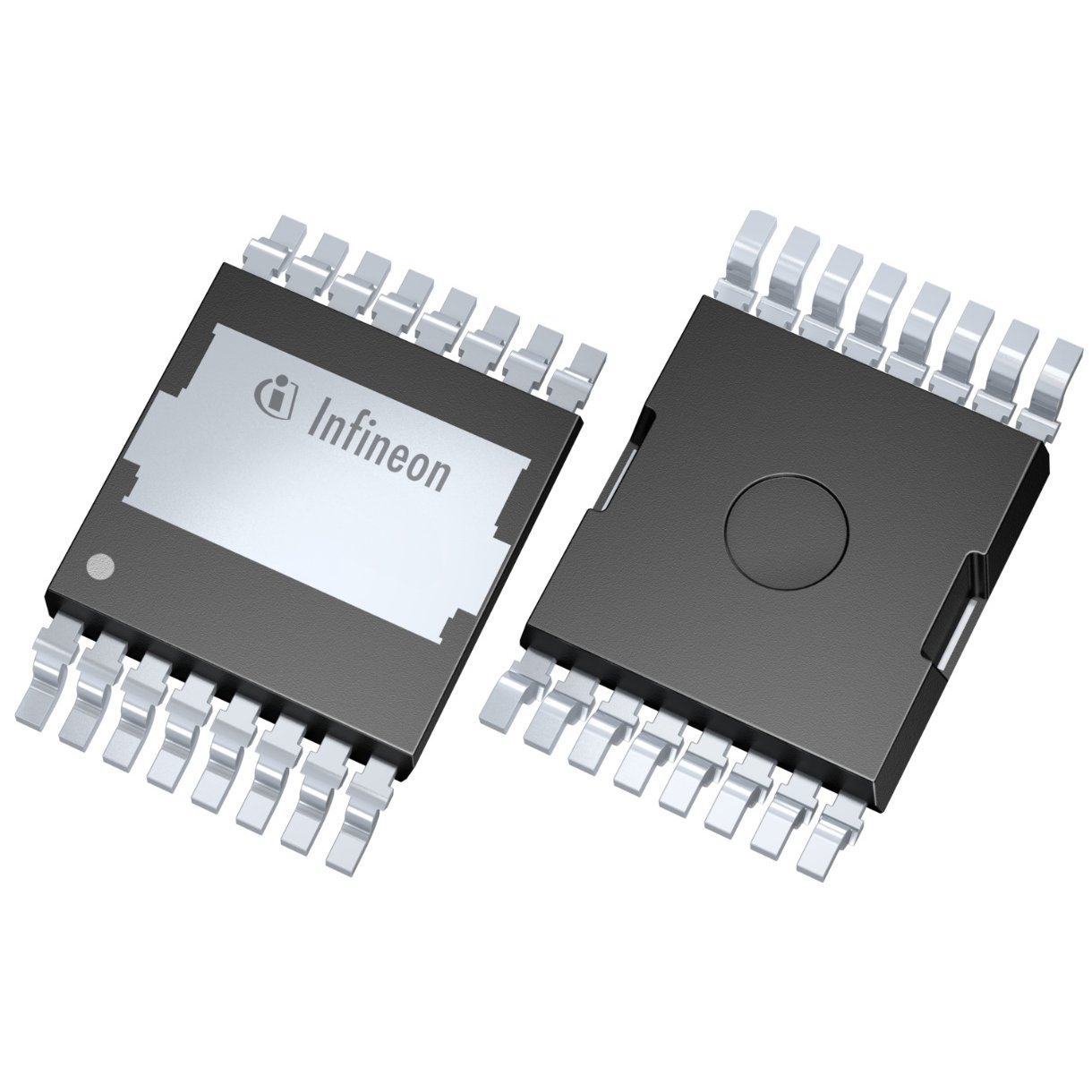
Key Specs
| Spec | Value | Condition | Source |
|---|---|---|---|
| Current Continuous Drain ID 25 C | 107A (Tc) | Digi-Key | |
| Drain-source Voltage (Max) | 650 V | Digi-Key | |
| Drive Voltage Max RDS On Min RDS On | 15V, 18V | Digi-Key | |
| FET Feature | - | Digi-Key | |
| FET Type | N-Channel | Digi-Key | |
| Gate Charge Qg Max VGS | 57 nC @ 18 V | Digi-Key | |
| Gate-source Voltage (Max) | +23V, -7V | Digi-Key | |
| Grade | - | Digi-Key | |
| Input Capacitance Ciss Max VDS | 2038 pF @ 400 V | Digi-Key | |
| Mounting Type | Surface Mount | Digi-Key | |
| Operating Temperature Range | -55°C ~ 175°C (TJ) | Digi-Key | |
| Package Case | 16-PowerSOP Module | Digi-Key | |
| Power Dissipation (Max) | 454W (Tc) | Digi-Key | |
| Qualification | - | Digi-Key | |
| RDS On Max ID VGS | 24mOhm @ 46.9A, 18V | Digi-Key | |
| Supplier Device Package | PG-HDSOP-16-6 | Digi-Key | |
| Technology | SiCFET (Silicon Carbide) | Digi-Key | |
| VGS Th Max ID | 5.6V @ 9.5mA | Digi-Key |
When To Use
-
650 V bus → 100 A DC motor drive: The 650 V max drain-source rating combined with a 107 A continuous drain current at Tc makes this part ideal for high-voltage, high-current motor drives where Si devices would struggle with avalanche or thermal runaway. Using a MOSFET with lower voltage rating risks destructive avalanche breakdown under motor back-EMF spikes.
-
Hard-switching boost converter, 400 V output @ 50 A: The SiC technology and low gate charge of 57 nC at 18 V enable fast switching with reduced switching losses. A silicon MOSFET with higher gate charge would suffer excessive shoot-through losses and thermal stress at these power levels, leading to premature failure.
-
High-temperature industrial inverter stage, 175°C TJ max: The 16-PowerSOP package rated to 175°C junction temperature supports operation in harsh thermal environments without derating. A standard silicon MOSFET rated only to ~150°C TJ would face accelerated parameter drift or latch-up at these temperatures.
When Not To Use
-
Output current > 107 A continuous: The continuous drain current rating of 107 A at Tc is a hard limit. For loads exceeding this, use a multi-phase buck controller or a high-current synchronous buck with external FETs to distribute current and maintain safe junction temperatures.
-
Battery-powered, ultra-low standby power device: Gate charge and input capacitance are relatively high (57 nC, 2038 pF), causing increased gate drive losses and quiescent current. For μA-level sleep currents use a low-IQ PFM buck instead.
-
Switching frequency above 500 kHz for miniature magnetics: The gate charge and input capacitance limit switching speed and increase losses at high frequencies. Use a high-frequency buck controller optimized for low gate charge and gate resistance instead.
Application Notes
-
The switching node (SW) is a high dV/dt node; keep SW loop area minimal to reduce EMI and ringing. Use wide, low-inductance copper for SW and source return paths.
-
Pins 3 and the gate and source pin are sensitive to noise injection; route gate drive traces away from SW node and use low-inductance gate resistors to prevent parasitic turn-on.
-
The module’s 16-PowerSOP package has multiple source pins; connect all source pins to a low-impedance ground plane to ensure uniform current sharing and minimize thermal gradients.
-
Guard routing around the gate driver pins is recommended to reduce capacitive coupling from the switching node and avoid false gating or oscillations.
-
The maximum gate-source voltage is +23 V / -7 V, so gate drivers must be designed with clamps or regulated supplies to avoid overvoltage stress during transient conditions.
Gotchas
-
[Underestimating TJ at high switching frequency]: Designers may assume the 454 W max power dissipation at Tc applies directly at high switching frequencies, ignoring increased switching losses and thermal impedance at pulse durations. Result: device junction overheats despite average power within limits, causing intermittent thermal shutdown or parameter shift. Fix: Perform transient thermal simulations including switching loss profiles and measure TJ with IR thermography or junction temperature sensors.
-
[Gate drive ringing due to high input capacitance]: The large input capacitance (2038 pF at 400 V) combined with fast gate drivers can cause high-frequency oscillations on the gate node if layout parasitic inductance is not minimized. Symptom: oscillatory gate voltage waveform, increased EMI, and potential device shoot-through. Fix: add small gate resistors (5–10 Ω), optimize gate drive loop inductance, and use Kelvin source connections.
-
[False turn-on from negative gate voltage transients]: The -7 V maximum gate-source rating is often overlooked; negative voltage spikes from switching node ringing can exceed this limit, causing gate oxide stress or permanent damage. Symptom: sudden increase in leakage or device failure after switching transient. Fix: include negative voltage clamps or diode clamps on the gate drive line and verify gate voltage waveforms on scope.
-
[Insufficient source pin paralleling causes uneven heating]: Using only a subset of source pins for grounding can create hot spots due to uneven current distribution in the 16-PowerSOP package. Symptom: localized overheating, early package delamination, or bond wire lift-off observed in thermal imaging. Fix: connect all source pins with low-impedance copper to a solid ground plane and check current density with thermal camera during prototype testing.