MMBF5485 vs IMLT65R020M2HXTMA1: Component Comparison for Power Electronics Engineers
Quick verdict
For low-current, high-frequency RF switching or amplification up to a few hundred MHz, the MMBF5485 JFET is the clear choice due to its low noise figure and small SOT-23 package. For high-voltage, high-current power conversion and motor drive applications requiring robust thermal handling and low R_DS(on), the Infineon IMLT65R020M2HXTMA1 SiC MOSFET dominates, offering a 650 V rating and continuous current capability over 100 A.
Spec comparison table
| Spec | MMBF5485 | IMLT65R020M2HXTMA1 | Notes |
|---|---|---|---|
| Configuration | N-Channel JFET | N-Channel SiC MOSFET | Both N-Channel; different technologies impacting drive and conduction behavior |
| Current rating (continuous) | 10 mA | 107 A (Tc) | IMLT65R020M2HXTMA1 supports 10,700× higher current, suitable for power stages |
| Frequency | 400 MHz | Not specified (power MOSFET) | MMBF5485 suited for RF applications; IMLT65R020M020M2HXTMA1 not intended for RF |
| Gain | Not specified | Not specified | Gain not relevant for power MOSFET vs JFET comparison |
| Noise figure | 4 dB | Not specified | MMBF5485 designed for low-noise RF front ends, IMLT65R020M2HXTMA1 not optimized for noise |
| Output power max | Not specified | 454 W (Tc) | IMLT65R020M2HXTMA1 handles high power dissipation, MMBF5485 not intended for power stages |
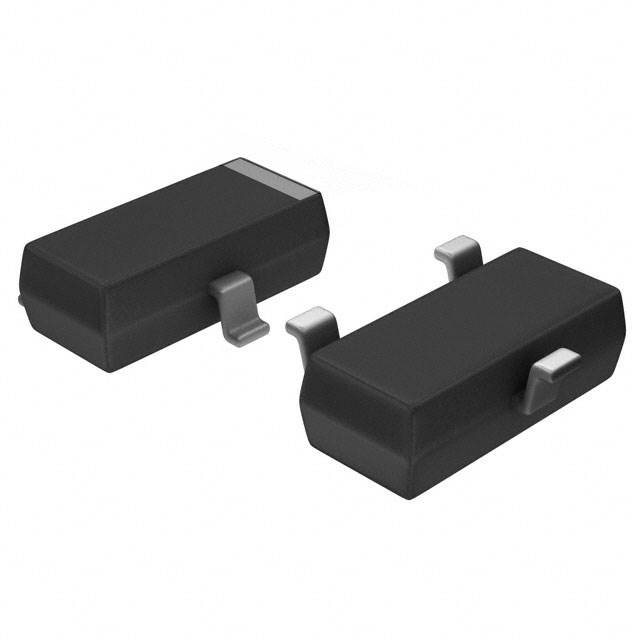
| Mounting type | Surface Mount (SOT-23-3) | Surface Mount (PG-HDSOP-16-6) | Both SMT, but very different package sizes and thermal capabilities |
| Package case | TO-236-3 / SC-59 / SOT-23-3 | 16-PowerSOP Module | MMBF5485 is a tiny 3-pin package, IMLT65R020M2HXTMA1 is a large multi-pin power module |
| Technology | JFET | Silicon Carbide (SiC) MOSFET | JFET suitable for RF and signal-level; SiC MOSFET for high-voltage, high-efficiency power conversion |
| Voltage rated (V_DS or V) | 25 V | 650 V | IMLT65R020M2HXTMA1 has 26× higher voltage rating, critical for power electronics |
| Voltage test | 15 V | Not specified | MMBF5485 test voltage lower, consistent with low-voltage RF use |
| Continuous drain current I_D @25°C | 10 mA | 107 A (Tc) | See above, major difference in conduction capability |
| Gate charge Qg max @ Vgs | Not specified | 57 nC @ 18 V | IMLT65R020M2HXTMA1 requires significant gate drive current, impacting driver design |
| Gate-source voltage max | Not specified | +23 V / -7 V | IMLT65R020M2HXTMA1 can tolerate wider gate voltage swings, requires robust gate driver |
| Input capacitance C_iss max | Not specified | 2038 pF @ 400 V | High input capacitance for IMLT65R020M2HXTMA1 increases switching losses |
| Operating temperature range | Not specified | -55°C to 175°C (TJ) | IMLT65R020M2HXTMA1 supports wide temperature range for industrial applications |
| Power dissipation max | Not specified | 454 W (Tc) | Power module designed for high dissipation, MMBF5485 limited by tiny package |
| R_DS(on) max @ Id, Vgs | Not specified | 24 mΩ @ 46.9 A, 18 V | Low R_DS(on) critical for high-efficiency power stages; no equivalent data for MMBF5485 |
| Vgs_th max @ Id | Not specified | 5.6 V @ 9.5 mA | Threshold voltage relevant for MOSFET gate drive design |
Design trade-offs
The MMBF5485 and IMLT65R020M2HXTMA1 serve fundamentally different design niches, reflected in their technology, electrical ratings, and packaging. The MMBF5485 is a low-voltage JFET optimized for RF front-end applications up to 400 MHz, with a tiny SOT-23-3 package that minimizes parasitics and supports low-noise operation (4 dB noise figure). Its extremely low current rating (10 mA) and voltage rating (25 V) restrict it to signal-level switching or amplification, not power conversion. The JFET structure simplifies gate drive but offers no R_DS(on) or gate charge specs, implying it’s not designed for hard switching.
In contrast, the IMLT65R020M2HXTMA1 is a Silicon Carbide MOSFET power module rated for 650 V and 107 A continuous current at case temperature, with 454 W maximum power dissipation capability. The 16-pin PG-HDSOP-16-6 package facilitates efficient thermal management and low inductance layout, critical for high-frequency, high-current switching in power converters or motor drives. The relatively high gate charge (57 nC @ 18 V) demands a robust gate driver capable of supplying substantial transient currents to switch efficiently. Its low R_DS(on) of 24 mΩ at 46.9 A and 18 V gate drive supports low conduction losses critical in high-efficiency designs.
Thermal considerations dominate when using the IMLT65R020M2HXTMA1; the large power dissipation means careful PCB layout with sufficient copper area and possibly heatsinking is mandatory. The MMBF5485’s tiny package limits thermal conduction and power dissipation, but its low current and voltage ratings mean this is less of a concern. Gate drive complexity differs sharply: the JFET MMBF5485 requires minimal drive circuitry, while the SiC MOSFET demands carefully designed gate drivers to manage switching speed and prevent device damage.
From a cost perspective, the MMBF5485 is a low-cost discrete for RF signal paths, while the IMLT65R020M2HXTMA1 is a specialized, high-cost power module justified only in high-voltage, high-current systems. PCB footprint and layout complexity also differ significantly, with the MMBF5485 offering a tiny 3-pin footprint versus a large 16-pin power module for the IMLT65R020M2HXTMA1.
Use-case fit
Choose MMBF5485 when…
- Designing RF front-end switches or low-noise amplifiers operating near 400 MHz, where minimizing noise figure and package parasitics is critical.
- Implementing low-voltage analog signal switching or buffering with current demands below 10 mA.
- Space-constrained designs requiring small SOT-23-3 packages.
- Applications where gate drive simplicity and minimal power dissipation are priorities.
- Prototyping or low-power RF designs with modest voltage requirements under 25 V.
Choose IMLT65R020M2HXTMA1 when…
- Designing high-voltage (up to 650 V) power converters, such as PFC stages, DC-DC converters, or motor drives requiring over 100 A continuous current.
- Systems needing low conduction losses and efficient thermal dissipation at high power levels (up to 454 W dissipation).
- Applications requiring rugged devices with wide operating temperature ranges (-55°C to 175°C junction).
- Switching frequencies where gate charge (57 nC) can be driven effectively, typically tens to low hundreds of kHz in power electronics.
- Designs where a power module with integrated thermal management and low inductance layout is preferred.
Drop-in compatibility
These devices are not pin-compatible or footprint-compatible. The MMBF5485 is a 3-pin SOT-23-3 JFET designed for RF signal paths, while the IMLT65R020M2HXTMA1 is a 16-pin PG-HDSOP power module with multiple pins for source, gate, drain, and thermals. Substituting one for the other is not feasible without significant redesign of PCB layout, gate drive circuitry, and thermal management. No direct drop-in compatibility exists.
Alternatives to consider
- BFR93A (NXP): A low-noise NPN RF transistor in SOT-23 for low-power RF amplification, an alternative to MMBF5485 for RF front-ends.
- C3M0065090J (Cree/Wolfspeed): A 650 V SiC MOSFET with comparable voltage rating and similar R_DS(on), suitable for high-power applications like the IMLT65R020M2HXTMA1.
- 2N4856 (ON Semiconductor): A JFET transistor alternative for low-noise, low-voltage RF switching with similar frequency capabilities