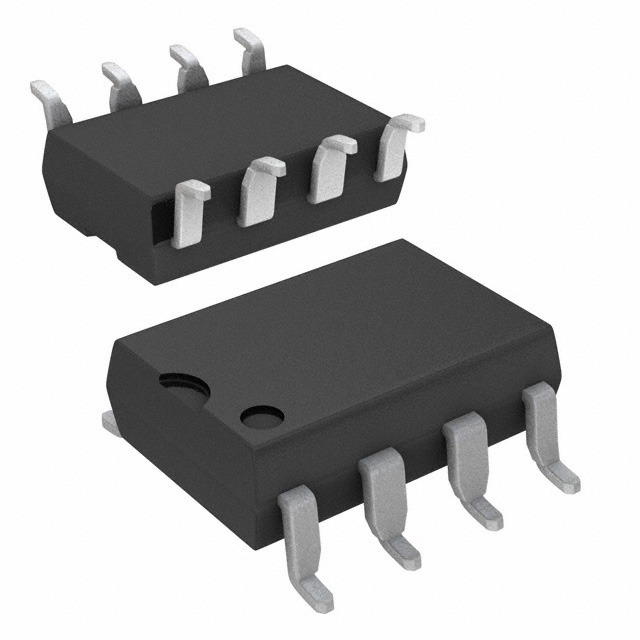
Key Specs
| Spec | Value | Condition | Source |
|---|---|---|---|
| Approval Agency | CSA, UR | Digi-Key | |
| Common Mode Transient Immunity (Min) | 15kV/µs | Digi-Key | |
| Current DC Forward If (Max) | 25 mA | Digi-Key | |
| Current Output High Low | 500mA, 500mA | Digi-Key | |
| Current Peak Output | 600mA | Digi-Key | |
| Grade | - | Digi-Key | |
| Mounting Type | Surface Mount | Digi-Key | |
| Number Of Channels | 1 | Digi-Key | |
| Operating Temperature Range | -40°C ~ 100°C | Digi-Key | |
| Package Case | 8-SMD, Gull Wing | Digi-Key | |
| Propagation Delay Tplh Tphl (Max) | 500ns, 500ns | Digi-Key | |
| Pulse Width Distortion (Max) | 300ns | Digi-Key | |
| Qualification | - | Digi-Key | |
| Rise Fall Time (Typ) | 100ns, 100ns | Digi-Key | |
| Supplier Device Package | 8-DIP Gull Wing | Digi-Key | |
| Technology | Optical Coupling | Digi-Key | |
| Voltage Forward Vf (Typ) | 1.5V | Digi-Key | |
| Voltage Isolation | 3750Vrms | Digi-Key | |
| Voltage Output Supply | 15V ~ 30V | Digi-Key |
When To Use
-
Motor drive gate driver @ 15–30V supply: The 500mA continuous and 600mA peak output current capability supports driving MOSFET or IGBT gates with fast switching, ensuring clean turn-on/off transitions. Using a part with lower peak current would cause slow gate charging, leading to excessive switching losses and potential shoot-through in the half-bridge stage.
-
Isolated feedback in industrial inverter control: The 3750Vrms isolation rating combined with a 15kV/µs minimum common mode transient immunity enables reliable signal transfer across high-voltage barriers without spurious triggering. A non-isolated driver or one with lower CMTI would experience latch-up or false switching during fast dv/dt events from the inverter output.
-
High-speed PWM gate drive with tight timing: Propagation delays of 500ns max and rise/fall times around 100ns minimize timing uncertainty and pulse distortion (max 300ns), critical for synchronous rectification and dead-time control. Using a slower or non-optically coupled driver risks timing mismatch, causing shoot-through and increased EMI.
When Not To Use
-
Output current exceeding 500mA continuous: The 500mA continuous output current limits peak gate drive capability for large MOSFETs or paralleling. Use a high-current synchronous buck with external FETs to handle higher gate charge without excessive distortion or thermal stress.
-
Switching frequency above 500kHz: The combined propagation delay and rise/fall time limit switching speed; at frequencies >500kHz, timing errors and switching losses increase significantly. Use a high-frequency buck controller designed for sub-100ns delay and sub-50ns rise/fall times.
-
Battery-powered, ultra-low power standby applications: The forward LED current minimum and no ultra-low bias current spec make this unsuitable for μA-level sleep modes. Use a low-IQ PFM buck controller optimized for minimal quiescent current.
Application Notes
-
Keep the LED input side (pin 1 anode, pin 2 cathode) wiring short and shielded from high dv/dt nodes to avoid false triggering caused by capacitive coupling.
-
the output emitter pin and the output collector pin must be routed with low-inductance paths to the gate and supply, respectively, to preserve the fast rise/fall times and avoid voltage overshoot.
-
The device must have a dedicated 15–30V supply decoupled close to pin 6 to maintain stable output current; supply dips cause output distortion or incomplete gate drive.
-
Common-mode transient immunity depends heavily on board-level layout: isolate noisy power ground returns from the device input side ground to maintain the specified 15kV/µs rating.
-
The optical coupling requires a minimum LED forward current of 25mA for guaranteed switching, so ensure the input drive source can supply this without voltage droop or timing jitter.
Pin numbers are package-specific. Verify against the datasheet pinout diagram before routing.
Gotchas
-
[LED current derating at high temperature]: Designers often assume the 25mA max forward current applies across the full -40°C to 100°C range. In reality, LED forward current must be derated at elevated temperatures to prevent accelerated aging and output degradation. Symptom: gradual loss of output drive strength and increased propagation delay during long-term operation above 85°C. Fix: consult detailed LED derating curves and limit continuous forward current below max at high ambient temps.
-
[Capacitive coupling causing false triggering]: Routing the LED input line near high dv/dt switching nodes without guard traces or ground shielding leads to capacitive feedthrough, causing intermittent output glitches unrelated to input drive signals. Symptom: unexpected gate pulses visible on scope with no LED activation. Fix: physically separate LED input traces, add ground guard rings, and keep LED wiring twisted or shielded.
-
[Insufficient output supply decoupling]: The device’s output stage sources/sinks 500mA with 100ns rise/fall times; inadequate local bulk capacitance on the 15–30V supply line causes voltage dips and ringing. Symptom: distorted output waveform, increased propagation delay, or unstable switching during transient load steps. Fix: place low-ESR ceramic capacitors within 5mm of pin 6 and verify with scope probing under worst-case switching.
-
[Startup sequencing with no LED current]: Applying the output supply voltage before LED forward current causes the output transistor to remain off, leading to no gate drive and a failed startup. Symptom: gate remains low, inverter MOSFETs never turn on, system lockout. Fix: ensure LED drive current is present and stable before or simultaneously with output supply ramp.