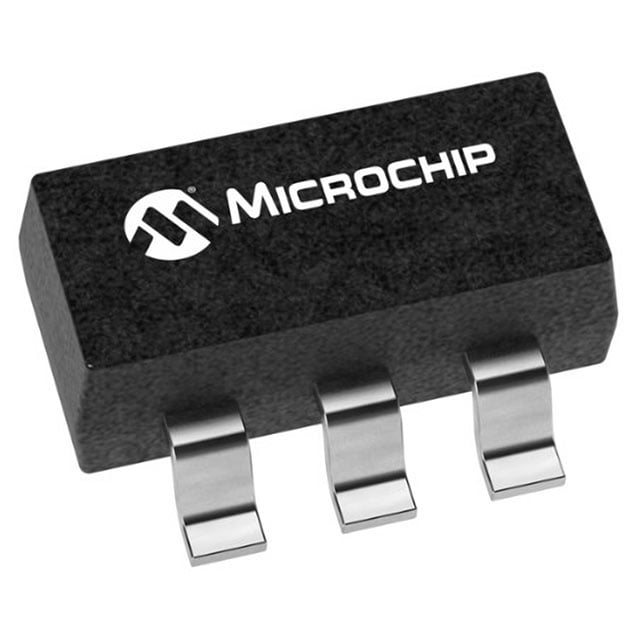
MCP14A0052T-E/CH vs HCPL-3150-500E Gate Driver ICs: A Technical Comparison
Quick verdict
For isolated gate driving in applications requiring high common-mode transient immunity and galvanic isolation, the HCPL-3150-500E is the preferred choice due to its 3750 Vrms isolation rating and optical coupling technology. Conversely, for compact, cost-sensitive designs where isolation is not required, the MCP14A0052T-E/CH offers a smaller footprint, faster switching edges, and wider operating temperature range, making it better suited for direct MOSFET driving in high- and low-side configurations.
Spec comparison table
| Spec | MCP14A0052T-E/CH | HCPL-3150-500E | Notes |
|---|---|---|---|
| Channel type | Single | Single | Equal |
| Current peak output source/sink | 500 mA / 500 mA | 600 mA peak, 500 mA continuous | HCPL-3150 offers slightly higher peak current (600 mA vs 500 mA), beneficial for fast switching load. |
| Driven configuration | High-Side, Low-Side | Single channel | MCP14A0052T-E/CH explicitly supports both; HCPL-3150 is a single channel driver. |
| Gate type supported | MOSFET (N-Channel, P-Channel) | MOSFET (implied) | MCP14A0052T-E/CH specifies MOSFET types; HCPL-3150 datasheet does not explicitly specify. |
| Input type | Non-Inverting | Optical input | MCP14A0052T-E/CH is direct logic input, HCPL-3150 uses optical isolation input. |
| Logic voltage (V_IL, V_IH) | 0.8 V (max low), 2.0 V (min high) | N/A (optical input) | MCP14A0052T-E/CH compatible with standard logic levels; HCPL-3150 requires LED drive current. |
| Mounting type | Surface Mount (SOT-23-6) | Surface Mount (8-SMD Gull Wing) | MCP14A0052T-E/CH has smaller footprint and package. |
| Number of drivers | 1 | 1 | Equal |
| Operating temperature range | -40°C to 150°C (TJ) | -40°C to 100°C | MCP14A0052T-E/CH supports wider temperature range, suitable for harsher environments. |
| Package case | SOT-23-6 | 8-DIP Gull Wing (8-SMD) | MCP14A0052T-E/CH is smaller, more modern package. |
| Rise/Fall time (typical) | 40 ns / 28 ns | 100 ns / 100 ns | MCP14A0052T-E/CH switches faster, reducing switching losses. |
| Supply voltage range | 4.5 V to 18 V | 15 V to 30 V | MCP14A0052T-E/CH supports lower supply voltages, more flexible. |
| Approval agency | N/A | CSA, UR | HCPL-3150-500E certified, may be required for some safety standards. |
| Common mode transient immunity | N/A | 15 kV/µs | HCPL-3150-500E provides high immunity, critical for isolated applications with noisy environments. |
| DC forward current (LED input) | N/A | 25 mA max | Relevant only for HCPL-3150 optical input LED, affects drive current budget. |
| Propagation delay (max TPLH/TPHL) | N/A | 500 ns / 500 ns | HCPL-3150-500E has significantly higher delay, must be considered in timing-critical designs. |
| Pulse width distortion (max) | N/A | 300 ns | HCPL-3150-500E has non-negligible pulse distortion, affecting timing accuracy. |
| Voltage isolation | None | 3750 Vrms | HCPL-3150-500E provides galvanic isolation, critical for safety and noise immunity. |
Design trade-offs
The MCP14A0052T-E/CH and HCPL-3150-500E serve fundamentally different design niches due to their isolation approach and packaging. The MCP14A0052T-E/CH is a compact, non-isolated gate driver IC with direct logic-level input, making it suitable for low-side or high-side MOSFET driving in systems where the driver and power stage share a common reference. Its low supply voltage range (4.5 V to 18 V) and fast switching edges (rise time 40 ns typical) allow for efficient switching with reduced losses and EMI. The SOT-23-6 package is compact, easing dense PCB layouts, and the wide junction temperature rating (-40°C to 150°C) suits automotive or industrial environments.
In contrast, the HCPL-3150-500E is an optocoupler-based isolated gate driver. Its defining feature is the 3750 Vrms isolation barrier, enabling safe interfacing between high-voltage power stages and low-voltage control circuitry. This isolation comes with a trade-off: slower propagation delay (up to 500 ns) and longer rise/fall times (100 ns typical), which can limit switching frequency and increase switching losses. The 15 V to 30 V supply voltage requirement typically aligns with standard gate drive voltages for IGBTs or MOSFETs in isolated applications but restricts flexibility for lower-voltage gate drive rails.
Thermally, the MCP14A0052T-E/CH’s smaller package and high peak current capability (500 mA) require careful layout to manage power dissipation, especially at high switching frequencies. The HCPL-3150-500E, with its optical input LED and galvanic isolation, incurs additional power dissipation in the LED drive current (up to 25 mA) and slightly higher output voltage drop, which can impact efficiency in tight power budgets.
From a layout standpoint, the MCP14A0052T-E/CH demands careful attention to minimizing loop areas and ensuring clean ground references due to its non-isolated nature. The HCPL-3150-500E simplifies isolation but requires separate isolated grounds and careful routing to maintain the isolation barrier and meet safety standards. The HCPL-3150-500E’s larger package and gull-wing leads can be easier to handle in prototyping and manual assembly but less suitable for high-density automated assembly compared to the SOT-23.
Cost-wise, MCP14A0052T-E/CH is generally less expensive at volume because it lacks the isolation barrier and uses a simpler manufacturing process. The HCPL-3150-500E’s isolation adds cost and complexity but is essential where regulatory isolation or noise immunity is mandated.
Use-case fit
Choose MCP14A0052T-E/CH when…
- Designing compact high- or low-side MOSFET gate drivers in non-isolated DC-DC converters or motor drives.
- Operating in harsh thermal environments requiring junction temperatures up to 150°C.
- Targeting low-voltage gate drive rails (4.5 V to 18 V) with fast switching speeds to minimize switching losses.
- Cost-sensitive applications where isolation is not mandatory.
- Implementing designs where PCB space is at a premium and SOT-23 packaging is preferred.
Choose HCPL-3150-500E when…
- Isolation between control and power stages is required for safety or noise immunity, such as in industrial inverters or grid-tied solar inverters.
- The system must meet regulatory safety standards requiring certified galvanic isolation (CSA, UR approvals).
- Operating in high common-mode transient noise environments needing immunity of at least 15 kV/µs.
- Driving IGBTs or MOSFETs at standard 15–30 V gate drive voltages with isolated power supplies.
- Accepting some propagation delay and slower switching speeds in exchange for isolation and noise robustness.
Drop-in compatibility
These parts are not pin- or footprint-compatible. The MCP14A0052T-E/CH uses a 6-pin SOT-23 package with direct logic inputs, whereas the HCPL-3150-500E is an 8-pin surface-mount device with a gull-wing lead frame and optical isolation input requiring an LED drive current. Substituting one for the other would require PCB redesign, power supply adjustments, and signal interface changes. Additionally, the HCPL-3150-500E requires an isolated power supply and isolated grounds, while the MCP14A0052T-E/CH does not.
Alternatives to consider
- UCC37322 (Texas Instruments): Non-isolated high-speed MOSFET driver with up to 9 A peak current, suitable for high-power motor drives.
- Si8233 (Silicon Labs): Isolated gate driver with integrated isolated DC-DC converter and SPI interface, offering a more integrated solution for isolated gate driving.
- TLP350 (Toshiba): Another optocoupler-based isolated gate driver with similar isolation ratings but different propagation delay and packaging options.