Key Specs
| Spec | Value | Condition | Source |
|---|---|---|---|
| Output Configuration | - | [Digi-Key] | |
| Applications | Synchronous Buck Converters | [Digi-Key] | |
| Interface | PWM | [Digi-Key] | |
| Load Type | Inductive | [Digi-Key] | |
| Technology | Power MOSFET | [Digi-Key] | |
| RDS On (Typ) | - | [Digi-Key] | |
| Current Output Channel | 60A | [Digi-Key] | |
| Current Peak Output | 90A | [Digi-Key] | |
| Voltage Supply | 4.5V ~ 5.5V | [Digi-Key] | |
| Voltage Load | 4.5V ~ 16V | [Digi-Key] | |
| Operating Temperature Range | -55°C ~ 150°C (TJ) | [Digi-Key] | |
| Features | Bootstrap Circuit, Diode Emulation, Status Flag | [Digi-Key] | |
| Fault Protection | Current Limiting, Over Temperature | [Digi-Key] | |
| Mounting Type | Surface Mount | [Digi-Key] | |
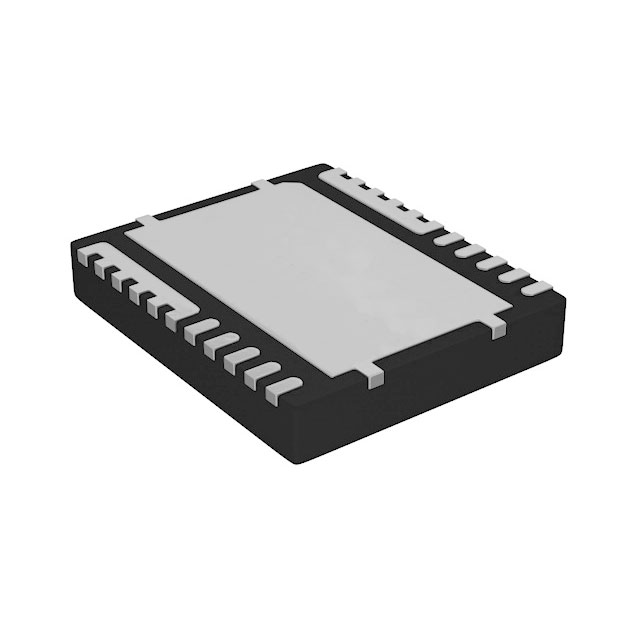
| Package Case | 12-PowerTFDFN | [Digi-Key] | |
| Supplier Device Package | 12-VSON (5x6) | [Digi-Key] |
When To Use
-
12V input → 5V @ 60A synchronous buck: The CSD95472Q5MC supports up to 60A continuous output current with a max input supply of 16V, making it ideal for high-current point-of-load converters stepping down 12V rails. Using a part with lower current capability risks thermal runaway due to excessive power dissipation at these currents.
-
High-frequency synchronous buck at 1250 kHz → 1.2V @ 60A: This device supports switching frequencies up to 1.25 MHz, enabling smaller magnetics and faster transient response. Lower-frequency parts would require larger inductors and capacitors, increasing board space and potentially causing instability or shoot-through due to slower switching transitions.
-
Automotive or industrial load with wide junction temperature range (−55°C to 150°C): The extended operating temperature range with junction ratings from −55°C up to 150°C supports harsh environments. Using a device rated only to 125°C or less risks latch-up or permanent damage under thermal cycling or high ambient temperature conditions.
When Not To Use
-
Load current demand above 60A continuous: The max continuous output current is 60A, so this part is unsuitable for higher current applications. Use a high-current synchronous buck with external FETs to handle elevated current while maintaining efficiency.
-
Switching frequency requirements above 1.25 MHz: The max rated switching frequency is 1.25 MHz, so designs requiring higher frequencies for minimal inductor size or EMI control should use a high-frequency buck controller designed specifically for >1.25 MHz operation.
-
Applications prioritizing ultra-low quiescent current for battery-powered systems: The part is not optimized for low IQ or sleep modes, which can drain small batteries rapidly. Use a low-IQ PFM buck controller instead for μA-level standby current.
Application Notes
-
The switching node (SW) pin voltage swings between −0.3 V and 20 V transiently; layout must minimize parasitic inductance here to prevent voltage overshoot beyond the 23 V transient rating.
-
Pins associated with bootstrap and gate drive circuits (BOOT_R, VDD) must have low-inductance routing and proper decoupling to ensure stable gate drive voltage between 4.5 V and 5.5 V.
-
The status flag pin should be routed with guard traces and noise filtering since it signals fault conditions like over-temperature or current limiting, which can otherwise be corrupted by switching noise.
-
The package is a 12-PowerTFDFN (12-VSON 5x6 mm) with thermal pad; ensure the PCB land pattern matches the 0.410 mm typical pad pitch and includes multiple thermal vias beneath the exposed pad for effective heat dissipation.
-
Avoid routing sensitive analog temperature output traces near high di/dt nodes like SW or gate drive to prevent measurement errors; shield or separate the 600 mV @ 0°C analog temperature output line accordingly.
Gotchas
-
[Bootstrap voltage droop during high-frequency switching]: The bootstrap voltage (BOOT_R) can drop below the minimum gate drive threshold during prolonged high-frequency operation near 1.25 MHz, causing incomplete MOSFET turn-on and increased RDS(on). This leads to elevated conduction losses and thermal hot spots.
Fix: Measure bootstrap voltage under worst-case load and switching conditions; use low-ESR bootstrap capacitors with sufficient capacitance and minimize bootstrap trace loop area. -
[Status flag false triggers due to layout noise coupling]: The status flag output can falsely indicate over-temperature or current limit faults if routed too close to the switching node or gate drive signals, resulting in erratic system shutdown or fault states.
Fix: Use guard traces and low-pass filtering on the status flag line; physically separate it from high di/dt nodes. -
[Minimum PWM on-time violation causing partial switching]: With a 40 ns minimum PWM on-time, attempting duty cycles below this at high switching frequencies can cause incomplete MOSFET conduction, increasing switching losses and output ripple.
Fix: Validate PWM timing parameters in the controller firmware and ensure duty cycles respect the minimum on-time; increase switching frequency only if the controller supports the required timing. -
[Thermal pad solder voids leading to unexpected junction temperature rise]: Incomplete solder under the thermal pad can cause elevated junction-to-board thermal resistance beyond the 1.5 °C/W typical rating, resulting in thermal runaway at high 60A loads.
Fix: Implement X-ray inspection for solder voids and design PCB with sufficient thermal vias to ensure uniform heat spreading.