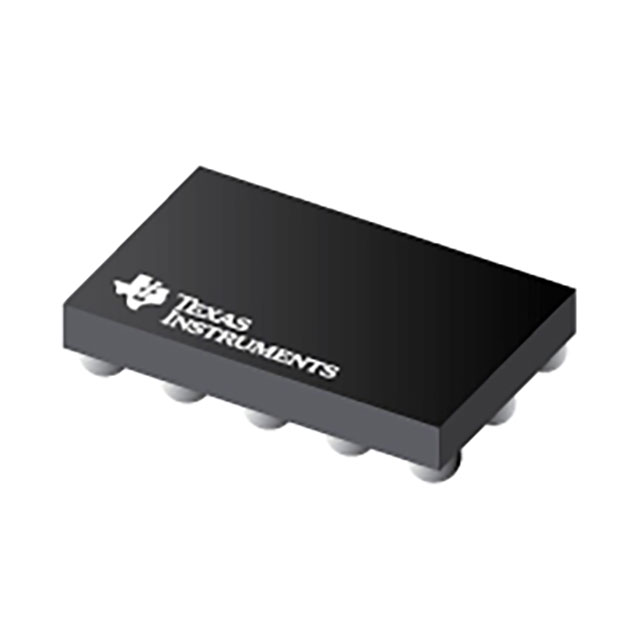
Key Specs
| Spec | Value | Condition | Source |
|---|---|---|---|
| Function | Fuel Gauge | Digi-Key | |
| Battery Chemistry | Lithium Ion/Polymer | Digi-Key | |
| Number Of Cells | 1 | Digi-Key | |
| Fault Protection | Over Current, Over Temperature, Over/Under Voltage, Short Circuit | Digi-Key | |
| Interface | I2C | Digi-Key | |
| Operating Temperature Range | -40°C ~ 85°C (TA) | Digi-Key | |
| Mounting Type | Surface Mount | Digi-Key | |
| Package Case | 15-XFBGA, DSBGA | Digi-Key | |
| Supplier Device Package | 15-DSBGA (1.7x2.6) | Digi-Key |
When To Use
Use the BQ27Z746YAHR in single-cell Lithium Ion or Lithium Polymer battery management applications where precise fuel gauging and comprehensive fault protection (over current, over temperature, over/under voltage, and short circuit) are required. Its I2C interface operating up to 400 kHz and low power consumption (sleep mode at 20μA typ) make it suitable for portable and battery-powered devices needing accurate state-of-charge monitoring within an operating temperature range of -40°C to 85°C.
Do not use this device for multi-cell battery packs exceeding 1 cell in series, or in applications requiring input voltages above 6 V or pack voltages above 24 V. For multi-cell or higher voltage systems, consider alternative fuel gauges designed for those conditions, as the BQ27Z746YAHR’s absolute maximum input voltage is 40 V and its recommended operating voltage range is limited to 2.0 V minimum and 6 V maximum input voltage.
When Not To Use
-
Multi-cell battery packs (≥2 cells): The device supports only single-cell configurations, disqualified by the number_of_cells spec. Use a multi-phase buck controller or specialized multi-cell fuel gauge that can manage cell balancing and higher pack voltages.
-
Applications demanding output current above 1A max: The absolute max output current is 1000mA. For loads requiring sustained current beyond this, switch to a high-current synchronous buck with external FETs to handle the power without device damage or thermal runaway.
-
Systems requiring switching frequencies above 2MHz: The max switching frequency is 2MHz, insufficient for designs targeting >2MHz to shrink inductors or reduce EMI. Use a high-frequency buck controller to meet those demands and avoid erratic switching or instability.
Application Notes
The BAT_SP and BAT_SN pins are the most noise-sensitive nodes, as they measure the battery voltage and sense resistor voltage, respectively. These pins require careful PCB layout to minimize noise pickup; the sense resistor and its connections should be placed as close as possible to the device to reduce loop area and inductive coupling.
The PACK pin must be powered with VPACK > VBAT + 0.7 V for proper internal operation and fault protection.
The device contains an internal regulator outputting 1.8 V (typ), which should be decoupled with a 100nF capacitor on the VDD pin to ensure stable operation.
The switching nodes within the device operate at frequencies ranging from 500 kHz (min) to 2 MHz (max), so minimizing the switching loop area on the PCB is critical to reduce EMI and voltage spikes.
Given the device’s maximum operating junction temperature of 85 °C and a junction-to-ambient thermal resistance of 70 °C/W, no additional heatsink is required under typical operating conditions, assuming proper PCB thermal design and airflow. However, ensure the device is operated within the recommended temperature limits to maintain reliability.
Gotchas
-
Incorrect Supply Voltage Range
Mistake: Applying a supply voltage (VDD) outside the recommended range of 2.0 V (min) to 5.5 V (typ) and not exceeding 6 V (max).
Failure Mode: Device malfunction or permanent damage due to overvoltage or undervoltage conditions.
Fix: Ensure the power supply feeding VDD remains within the specified voltage range and use proper voltage regulators or protection circuits. -
Improper I2C Bus Frequency Setting
Mistake: Operating the I2C bus above the supported 400 kHz frequency or ignoring the minimum timing parameters (e.g., start condition hold time, clock rise/fall times).
Failure Mode: Communication errors, data corruption, or inability to access fuel gauge registers.
Fix: Configure the I2C bus frequency to 400 kHz or below and adhere to the timing specifications, including minimum hold and setup times. -
Neglecting Proper PCB Layout for Noise-Sensitive Pins
Mistake: Routing sensitive analog pins (such as BAT_SP and BAT_SN) near noisy switching nodes or without proper grounding and shielding.
Failure Mode: Erroneous voltage and current measurements leading to inaccurate fuel gauging and false fault triggers.
Fix: Follow recommended PCB layout guidelines to minimize loop area on switching nodes and shield sensitive pins with proper ground planes.