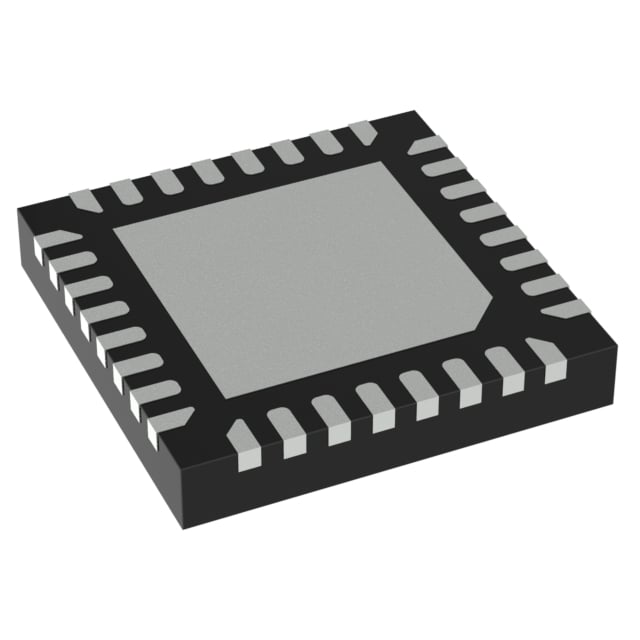
RAJ240057A20DNP#HC1 vs BQ27Z746YAHR Battery Fuel Gauge ICs: A Detailed Comparison
Quick verdict
For multi-cell battery packs (2–4 cells) requiring dual communication interfaces and basic fault protections, the Renesas RAJ240057A20DNP#HC1 is the practical choice, simplifying integration and system monitoring. Conversely, for single-cell packs demanding advanced fault protections—including over-temperature, over/under-voltage, and configurable thresholds—and very low power consumption modes, the Texas Instruments BQ27Z746YAHR is more appropriate, especially when tight power budgets and safety features are critical.
Spec comparison table
| Spec | RAJ240057A20DNP#HC1 | BQ27Z746YAHR | Notes |
|---|---|---|---|
| Battery chemistry | Lithium Ion/Polymer | Lithium Ion/Polymer | Equivalent support for Li-ion/polymer chemistry. |
| Number of cells | 2 ~ 4 | 1 | RAJ240057 supports multi-cell packs; BQ27Z746 limited to single-cell packs. |
| Fault protection | Over Current, Short Circuit | Over Current, Over Temperature, Over/Under Voltage, Short Circuit | BQ27Z746 offers broader and more configurable fault protection. |
| Interface | I2C, UART | I2C | RAJ240057 offers UART in addition to I2C, useful for flexible communication options. |
| Operating temperature range | -40°C ~ 85°C (TA) | -40°C ~ 85°C (TA) | Equivalent operating temperature range. |
| Package case | 32-VFQFN Exposed Pad | 15-XFBGA, DSBGA | RAJ240057 larger package (32 pins) vs BQ27Z746 smaller (15 pins), impacts PCB layout. |
| Supplier device package | 32-HVQFN (4x4) | 15-DSBGA (1.7x2.6) | BQ27Z746 smaller footprint (1.7x2.6 mm) beneficial for space-constrained designs. |
| Supply voltage range min | Not specified | -0.3 V | BQ27Z746 supports negative voltages slightly below ground, useful for certain fault conditions. |
| Supply voltage range max | Not specified | 6 V | BQ27Z746 supports up to 6 V supply, suitable for 1 cell Li-ion (max ~4.2 V). |
| Absolute max input voltage | Not specified | 40 V | BQ27Z746 can tolerate high transient voltages, helpful for robustness. |
| Maximum output current | Not specified | 2 A | BQ27Z746 supports up to 2 A output current for FET driver, relevant for protection circuits. |
| Output current typical | Not specified | 500 mA | BQ27Z746 drives moderate FET currents with typical 500 mA capability. |
| Output current max | Not specified | 1000 mA | BQ27Z746 max output current higher, allowing stronger FET control if needed. |
| ADC resolution | Not specified | 16-bit | BQ27Z746’s 16-bit ADC enables fine voltage and current resolution. |
| I2C bus frequency | Not specified | 400 kHz | BQ27Z746 supports fast I2C mode, better for high-speed communication. |
| Power consumption sleep mode | Not specified | 20 μA | BQ27Z746’s 20 μA sleep current supports battery-powered designs better. |
| Power consumption ship mode | Not specified | 10 μA | Lower ship mode current reduces battery drain during storage. |
| Power consumption shelf mode | Not specified | 5 μA | BQ27Z746 offers ultra-low shelf mode current for long-term storage. |
| Power consumption shutdown mode | Not specified | 0.2 μA | Very low shutdown current on BQ27Z746 benefits deep power-saving. |
| Input voltage min | Not specified | 2.0 V | BQ27Z746 supports operation down to 2 V, suitable for near-empty battery states. |
| Operating junction temperature | Not specified | -40°C to 85°C | Matches operating ambient temperature; junction spec useful for thermal design. |
| Thermal resistance (junction-to-ambient) | Not specified | 70 °C/W | BQ27Z746’s thermal resistance indicates moderate heat dissipation; no RAJ240057 data. |
| Package size (nominal) | 4x4 mm | 1.7x2.6 mm | RAJ240057 is physically larger, increasing PCB footprint. |
| Number of pins | 32 | 15 | RAJ240057 has more pins, increasing routing complexity but enabling more functions. |
| Fault detection configurable | Not specified | Yes (configurable thresholds and delays) | BQ27Z746 allows firmware-configurable fault thresholds, increasing system safety. |
| Communication interface voltage levels | Not specified | High-level input voltage min 1.26 V | BQ27Z746 compatible with typical I2C voltage levels, with integrated ESD protection. |
| ESD ratings (HBM/CDM) | Not specified | 2000 V HBM / 500 V CDM | BQ27Z746 has specified ESD robustness, important for manufacturing and field reliability. |
| Data flash cycles | Not specified | 20,000 | BQ27Z746 flash endurance suitable for firmware updates and logging. |
| Instruction flash cycles | Not specified | 1,000 | Limited instruction flash cycles on BQ27Z746 require careful firmware update planning. |
| Design capacity typical | Not specified | 5300 mAh | BQ27Z746 example capacity, relevant for scaling and modeling accuracy. |
| Design voltage typical | Not specified | 4.0 V | BQ27Z746 nominal cell voltage, consistent with Li-ion chemistry. |
| Sense resistor typical | Not specified | 10 mΩ | BQ27Z746 optimized for low-value sense resistors, minimizing power loss. |
| Sense resistor voltage threshold | Not specified | -2.0 mV (typ) | BQ27Z746’s low threshold enables accurate current sensing. |
| Authentication method | Not specified | SHA-256 | BQ27Z746 supports cryptographic authentication for secure system design. |
| Firmware and device modes | Not specified | 5 modes | BQ27Z746 offers multiple operational modes allowing power and performance trade-offs. |
| Package mounting type | Surface Mount | Surface Mount | Both parts are surface mount, compatible with standard SMT processes. |
Design trade-offs
The most significant design difference is the supported number of cells: RAJ240057A20DNP#HC1 supports 2 to 4 cells, whereas the BQ27Z746YAHR is limited to a single cell. This means RAJ240057 is inherently better suited for multi-cell battery packs without additional hardware or complex external circuitry. In contrast, BQ27Z746 requires external methods or multiple ICs for multi-cell packs, increasing cost and complexity.
RAJ240057’s dual-interface capability (I2C and UART) offers flexibility in communication design. UART can be advantageous in noisy environments or long-distance communication where I2C limitations become problematic, or when a microcontroller lacks multiple I2C buses. BQ27Z746’s single I2C interface is standard but less versatile.
Fault protection is more comprehensive on the BQ27Z746, which includes over-temperature, over/under-voltage, and programmable thresholds with configurable delays. This level of protection is critical in safety-focused applications or where battery management must prevent damage under a wide range of fault conditions. RAJ240057 only lists overcurrent and short circuit protection, implying fewer integrated protections and likely requiring external supervisory circuits.
Power consumption data is only available for the BQ27Z746, showing ultra-low currents down to 0.2 μA in shutdown mode, which is essential in battery-powered devices requiring long shelf life or minimal parasitic drain. Without RAJ240057 power data, it’s unclear if it can compete in ultra-low-power scenarios.
The package size and pin count also differ markedly: RAJ240057’s 32-pin 4x4 mm HVQFN is physically larger and more complex to route but allows more functionality and signal pins. The BQ27Z746’s 15-pin 1.7x2.6 mm DSBGA is smaller and simpler to integrate in space-constrained designs, but with fewer signals and potentially less flexibility.
No thermal resistance or detailed gate drive specs are available for RAJ240057, but the BQ27Z746’s output current up to 2 A and FET driver timings (rise/fall times in hundreds of microseconds) imply it can actively control external MOSFETs for protection, adding complexity to the layout but improving safety. RAJ240057’s fault protection does not mention FET drivers, suggesting a simpler protection scheme.
Cost at volume is not provided but can be inferred: RAJ240057’s larger package and