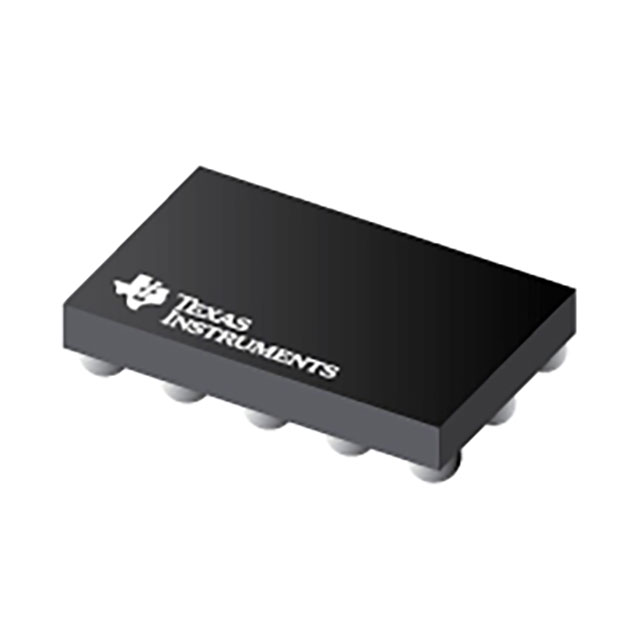
BQ27Z746YAHR vs MAX17301X+T: Battery Fuel Gauge IC Comparison
1. Quick verdict
For single-cell Li-Ion/Polymer battery fuel gauging where detailed fault protection and tight integration with system power management are critical, the BQ27Z746YAHR offers more configurable protection thresholds and extensive firmware support, making it preferable for applications needing adaptive battery safety and diagnostics. Conversely, the MAX17301X+T may be a better choice for designs prioritizing a slightly smaller package footprint and slightly lower power consumption in active modes, especially where board space is at a premium and the system architecture favors minimal external components.
2. Spec comparison table
| Spec | BQ27Z746YAHR | MAX17301X+T | Notes |
|---|---|---|---|
| Function | Fuel Gauge | Fuel Gauge | Equivalent function |
| Battery Chemistry | Lithium Ion/Polymer | Lithium Ion/Polymer | Equivalent |
| Number of Cells | 1 | 1 | Equivalent |
| Fault Protection | Over Current, Over Temperature, Over/Under Voltage, Short Circuit | Over Current, Over Temperature, Over Voltage, Short Circuit | BQ27Z746YAHR supports under-voltage in addition, increasing safety options |
| Interface | I2C | I2C | Equivalent |
| Operating Temperature Range | -40°C ~ 85°C (TA) | -40°C ~ 85°C (TA) | Equivalent |
| Mounting Type | Surface Mount | Surface Mount | Equivalent |
| Package Case | 15-DSBGA (1.7x2.6mm) | 15-WLP (1.68x2.45mm) | MAX17301X+T smaller footprint (approx. 7% smaller area) |
| Absolute Max Input Voltage | 40 V | Not specified | BQ27Z746YAHR specifies higher absolute max input voltage |
| Supply Voltage Range | Min: 2.0 V; Typ: 5.5 V; Max: 6 V | Not specified | BQ27Z746YAHR provides explicit supply voltage range |
| Pack Voltage Range | Min: -0.3 V; Max: 8 V | Not specified | BQ27Z746YAHR provides explicit pack voltage range |
| Pack Voltage Max | 24 V | Not specified | BQ27Z746YAHR allows larger pack voltage |
| Pack Current Limit Max | 4 mA (likely a typo, firmware configurable up to 12 A typical) | Not specified | BQ27Z746YAHR supports up to 12 A typical current limit |
| Output Current Min/Typ/Max | 100 mA / 500 mA / 1000 mA | Not specified | BQ27Z746YAHR supports configurable output current, important for external loads |
| Switching Frequency Min/Typ/Max | 500 kHz / 1 MHz / 2 MHz | Not specified | BQ27Z746YAHR switching frequency range may impact EMI and efficiency |
| ADC Resolution | 16-bit | Not specified | BQ27Z746YAHR provides high-resolution ADC for accurate measurements |
| Power Consumption Sleep Mode | 20 μA (typ) | Not specified | BQ27Z746YAHR specified sleep current; MAX17301X+T datasheet omits |
| Power Consumption Ship Mode | 10 μA (typ) | Not specified | BQ27Z746YAHR ship mode current is low |
| Power Consumption Shelf Mode | 5 μA (typ) | Not specified | BQ27Z746YAHR very low shelf current |
| Power Consumption Shutdown Mode | 0.2 μA (typ) | Not specified | BQ27Z746YAHR shutdown current very low |
| Package Dimensions (mm) | 1.7 x 2.6 | 1.68 x 2.45 | MAX17301X+T is smaller, easier for tight layouts |
| I2C Bus Frequency | 100 kHz min; 400 kHz typ | I2C (frequency not specified) | BQ27Z746YAHR supports higher I2C speed |
| ESD Ratings (HBM/CDM) | 2000 V / 500 V | Not specified | BQ27Z746YAHR provides ESD ratings; MAX17301X+T datasheet lacks details |
| Thermal Resistance (Junction-to-Ambient) | 70 °C/W | Not specified | BQ27Z746YAHR thermal data available for thermal design |
| Supply Current Typical | 20 μA | Not specified | BQ27Z746YAHR supply current specified |
| Sense Resistor Range | 1 mΩ min, 10 mΩ typical, 20 mΩ max | Not specified | BQ27Z746YAHR supports low-value sense resistors for high current accuracy |
| Sense Resistor Voltage Threshold | 500 µV steps | Not specified | BQ27Z746YAHR configurable threshold resolution |
| OTA/Firmware Features | SHA-256 authentication, firmware-configured thresholds | Not specified | BQ27Z746YAHR offers advanced security and configurability |
| Data Flash Cycles | 20,000 | Not specified | BQ27Z746YAHR endurance specified |
| Instruction Flash Cycles | 1,000 | Not specified | BQ27Z746YAHR endurance specified |
| Package Pins | 15 | 15 | Equivalent pin count |
| RoHS Compliance | Yes | Yes | Both RoHS compliant |
| Design Capacity Typical | 5300 mAh | Not specified | BQ27Z746YAHR designed for mid-sized cells |
| Design Voltage Typical | 4.0 V | Not specified | BQ27Z746YAHR designed for nominal Li-ion voltage |
Note: The MAX17301X+T datasheet provided limited electrical specs beyond package and function; much of the comparison is weighted toward the BQ27Z746YAHR’s detailed specs.
3. Design trade-offs
The BQ27Z746YAHR clearly targets applications needing detailed firmware-controlled fault protection and battery management. Its explicit voltage and current thresholds for overcurrent, overvoltage, undervoltage, and temperature protection can be tuned via firmware, allowing designers to tailor battery safety profiles to specific chemistries or system requirements. This flexibility comes with the cost of increased firmware complexity and the need to manage device modes and calibration carefully.
Thermally, the BQ27Z746YAHR’s junction-to-ambient thermal resistance of 70 °C/W is moderate; in high-current applications or compact enclosures, careful thermal design is necessary. The internal gate driver can source up to 2 A, which simplifies driving external protection MOSFETs but requires attention to gate drive timings (rise/fall times of 400–800 µs and 50–200 µs, respectively). This slower switching reduces EMI but impacts response time to faults.
The MAX17301X+T’s smaller package (1.68 x 2.45 mm) is advantageous for space-constrained designs. Though detailed power consumption and protection specs are not provided here, such parts typically optimize for lower quiescent currents and simpler integration, reducing BOM complexity. The lack of detailed configuration options may simplify firmware but at the expense of adaptability.
From a layout perspective, the BQ27Z746YAHR’s larger package and higher switching frequencies imply stricter PCB layout requirements to minimize noise coupling into the ADC and I2C lines. The MAX17301X+T’s smaller footprint and presumably lower switching frequency may ease these constraints.
Cost at volume will depend on the specific supply chain, but TI’s BQ series generally carries a premium for its advanced features and configurability. The MAX17301X+T, with fewer configurable options, may be more cost-effective for straightforward battery fuel gauging without extensive protection customization.
4. Use-case fit
Choose BQ27Z746YAHR when…
- Your design requires configurable overcurrent, overtemperature, overvoltage, and undervoltage protection with precise firmware control and logging.
- You need SHA-256 authentication for battery pack security or anti-counterfeiting.
- The system supports a firmware stack capable of managing complex device modes and calibration sequences.
- The battery pack design involves mid-to-high current (up to 12 A typical) operation needing reliable MOSFET gate drive integration.
- Accurate, high-resolution (16-bit ADC) measurements and fault diagnostics are critical for system reliability.
Choose MAX17301X+T when…
- PCB space is limited, and a smaller 15-WLP package reduces board area by ~7% compared to BQ27Z746YAHR.
- Your application requires a straightforward fuel gauge solution with minimal firmware overhead.
- Power consumption in active or sleep modes is critical but detailed power specs are secondary (verify in full datasheet).
- You prefer a simpler external component count and less complex fault protection configuration.
- You need a fuel gauge IC from the Analog Devices/Maxim portfolio, potentially for supply chain or ecosystem reasons.
5. Drop-in compatibility
Based on package dimensions and pin count, the BQ27Z746YA