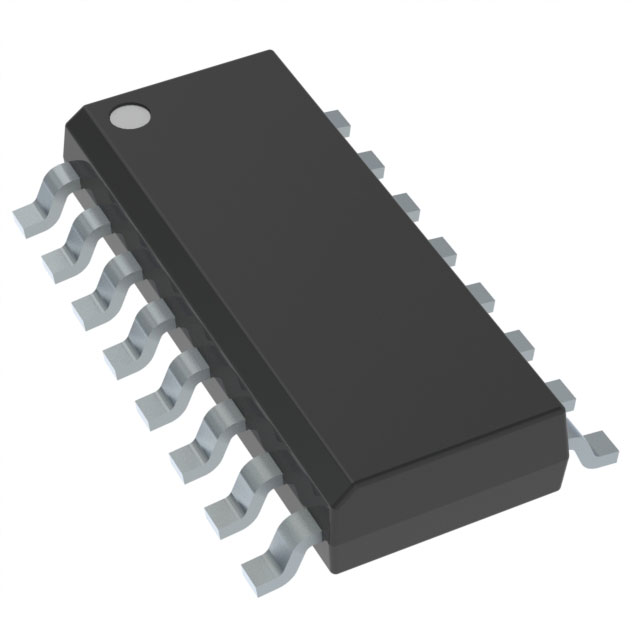
Key Specs
| Spec | Value | Condition | Source |
|---|---|---|---|
| Digikey Programmable | Not Verified | Digi-Key | |
| Driven Configuration | Half-Bridge | Digi-Key | |
| Channel Type | Independent | Digi-Key | |
| Number Of Drivers | 2 | Digi-Key | |
| Gate Type | IGBT, SiC MOSFET | Digi-Key | |
| Voltage Supply | 20V | Digi-Key | |
| Logic Voltage Vil Vih | -, 1.65V | Digi-Key | |
| Current Peak Output Source Sink | 4A, 8A | Digi-Key | |
| Input Type | Non-Inverting | Digi-Key | |
| High Side Voltage Max Bootstrap | 650 V | Digi-Key | |
| Rise Fall Time (Typ) | 6.5ns, 4.5ns | Digi-Key | |
| Operating Temperature Range | -40°C ~ 125°C (TA) | Digi-Key | |
| Mounting Type | Surface Mount | Digi-Key | |
| Package Case | 16-SOIC (0.154”, 3.90mm Width) | Digi-Key | |
| Supplier Device Package | PG-DSO-16-11 | Digi-Key |
When To Use
Use the 2EDF9275FXUMA1 in applications requiring a half-bridge gate driver with independent dual channels supporting IGBT or SiC MOSFET gate types, operating up to a maximum high-side bootstrap voltage of 650 V. Its fast rise and fall times (6.5 ns and 4.5 ns typical) and peak output currents of 4 A sourcing and 8 A sinking make it suitable for high-frequency switching applications up to 2 MHz, such as motor drives and power inverters.
Avoid using this device in systems demanding supply voltages outside the 8.5 V to 14 V input range or where logic input voltage thresholds below 1.65 V are required, as the input threshold is not specified below this level. For applications requiring integrated isolation or higher voltage ratings beyond 650 V bootstrap voltage, consider alternative drivers with isolated gate drive or higher voltage tolerance.
When Not To Use
-
Output currents > 8A continuous: The 2EDF9275FXUMA1 max peak output source of 4A and sink of 8A limits sustained high current. Use a high-current synchronous buck with external FETs to handle heavy loads without overheating or gate drive distortion.
-
Battery-powered devices with ultra-low sleep current: The typical quiescent current around 1.4 mA (input) is too high for coin cell or μA-scale standby. Use a low-IQ PFM buck to maximize battery life in always-on low-power systems.
-
Small voltage differential, noise-sensitive linear regulation (<1V dropout): The half-bridge driver architecture and switching nature are unsuitable where low noise and close-in regulation are required. Use an LDO regulator for clean, low dropout voltage rails.
Application Notes
-
The half-bridge output nodes (OUTA and OUTB) switch the power devices and must be routed with the smallest possible loop area to minimize parasitic inductance and electromagnetic interference.
-
The input pins are noise-sensitive and require proper filtering and pull-down resistors (minimum 150 kΩ) to maintain signal integrity and prevent false triggering.
-
The supply pins (VDD and VDDI) should be decoupled with ceramic capacitors (10nF to 22nF) placed close to the pins to ensure stable operation.
-
The device package (PG-DSO-16-11) with a thermal resistance junction-to-case of 50°C/W typically does not require a heatsink under normal operating conditions within the specified temperature range (-40°C to 125°C). However, thermal management should be evaluated based on actual power dissipation and ambient conditions.
-
Undervoltage lockout (UVLO) thresholds are available at 4 V, 8 V, and 13 V for the output supply; ensure the supply voltage remains above the selected UVLO threshold for reliable operation.
-
Refer to the datasheet’s Figures 6 and 7 for typical input quiescent current and switching behavior to optimize power consumption and switching performance.
Gotchas
-
[Bootstrap capacitor undervaluing]: Designers often choose bootstrap capacitors too small, assuming just enough charge for one switching cycle. At 2 MHz switching and 4A peak output current, insufficient bootstrap charge leads to gate voltage droop and incomplete MOSFET turn-on, causing elevated conduction losses and thermal stress. Fix: Verify bootstrap capacitor sizing with measured gate voltage waveform under maximum load and switching frequency.
-
[Noisy PWM input routing]: Routing PWM inputs near the high dv/dt half-bridge node causes false triggering or jitter due to capacitive coupling. Symptoms include erratic output pulses or phase shifts visible on scope. Fix: Use shielded traces or route PWM inputs on separate layers with ground guard traces to reduce noise pickup.
-
[Ignoring input UVLO hysteresis]: Some applications assume the driver will immediately restart when input supply returns above UVLO threshold. The built-in hysteresis (~0.8 V typical) can cause delayed or missed turn-on at startup, leading to partial switching or shoot-through. Fix: Design power sequencing and ramp-up profiles to exceed UVLO thresholds with margin and verify startup waveforms.
-
[Output capacitor ESR impact on switching stability]: Using output capacitors with excessively low ESR or large ceramic-only banks can introduce high-frequency resonances with the driver output impedance at 2 MHz, causing ringing or oscillations. Fix: Add a small ESR bulk capacitor or RC snubber on the output stage to damp high-frequency oscillations and stabilize switching waveforms.