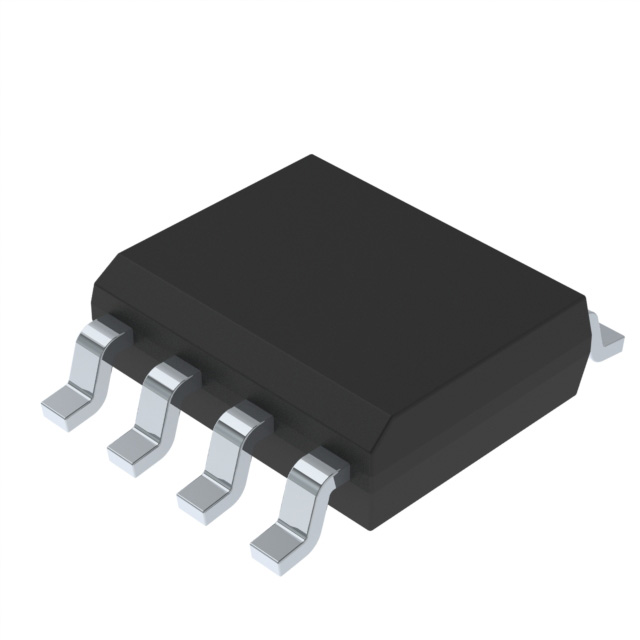
STGAP2SICSNTR vs L6498DTR: Component Comparison for Gate Driver Applications
1. Quick verdict
For isolated single-channel gate drive applications requiring very high isolation voltage (up to 4800 Vpeak) and robust capacitive coupling, the STGAP2SICSNTR is the clear choice, especially when 4 A peak drive current and a strong galvanic isolation barrier are mandatory. Conversely, the L6498DTR is better suited for dual-channel, non-isolated or bootstrap high-side/low-side gate driving, with moderate drive currents (2–2.5 A) and simpler layout requirements, making it preferable for standard half-bridge motor drives or power converters up to 500 V bootstrap voltage.
2. Spec comparison table
| Spec | STGAP2SICSNTR | L6498DTR | Notes |
|---|---|---|---|
| Number of channels | 1 | 2 | L6498DTR supports dual independent drivers, STGAP2SICSNTR is single-channel only. |
| Isolation voltage (Vrms) | 4000 Vrms | Not specified (bootstrap max 500 V HS) | STGAP2SICSNTR provides galvanic isolation; L6498DTR is non-isolated, limited to 500 V HS. |
| Isolation withstand voltage (peak) | 4800 VPEAK | Not specified | STGAP2SICSNTR supports very high isolation voltages, critical for safety requirements. |
| Coupling technology | Capacitive Coupling | None (CMOS/TTL input) | STGAP2SICSNTR uses capacitive isolation; L6498DTR uses standard gate driver inputs. |
| Output peak current (source/sink) | 4 A @ 25°C | 2 A source / 2.5 A sink | STGAP2SICSNTR can deliver up to 4 A peak, beneficial for fast switching large MOSFETs. |
| Supply voltage (output) | 16.4 V ~ 26 V | 10 V ~ 20 V | STGAP2SICSNTR supports higher output voltage range, ideal for higher gate voltages. |
| Logic input voltage (operating) | 3.1 V ~ 5.5 V | 1.45 V (VIL), 2 V (VIH) | L6498DTR supports lower logic threshold, compatible with lower voltage MCUs. |
| Input type | TTL/CMOS with hysteresis (3.3 V, 5 V) | CMOS/TTL | Both support logic inputs, STGAP2SICSNTR has input hysteresis for noise immunity. |
| Propagation delay (typical) | 75 ns | Not explicitly specified (rise/fall 25 ns) | STGAP2SICSNTR delay is moderate; L6498DTR faster rise/fall but propagation delay not stated. |
| Rise/Fall time (typical) | 30 ns / 30 ns | 25 ns / 25 ns | L6498DTR exhibits faster switching edges, beneficial for efficiency at high frequency. |
| Maximum switching frequency | 1 MHz | Not specified | STGAP2SICSNTR supports higher switching speeds, but typical recommended is ~150 kHz. |
| Operating temperature range | -40°C to 125°C | -40°C to 125°C | Equivalent thermal range for both. |
| Package | 8-SOIC (3.90 mm width) | 8-SOIC (3.90 mm width) | Both share identical package outline. |
| Mounting type | Surface Mount | Surface Mount | Same mounting style. |
| Input-output propagation delay max | 90 ns | Not specified | STGAP2SICSNTR provides detailed timing specs, useful for timing-critical designs. |
| Creepage distance | 4 mm minimum | Not specified | STGAP2SICSNTR designed for safety isolation requirements. |
| Common mode transient immunity (min) | 100 V/ns | Not specified | STGAP2SICSNTR suitable for noisy environments with high dV/dt. |
| Quiescent current standby mode | Not explicitly specified | Not specified | Insufficient data to compare. |
| Voltage clamp (SafeClp) | Defined in datasheet | Not applicable | STGAP2SICSNTR includes clamp for protection; L6498DTR does not specify. |
| Thermal resistance junction-to-ambient | 123 °C/W (typ) | Not specified | STGAP2SICSNTR thermal resistance is relatively high; L6498DTR data unavailable. |
| ESD HBM rating | 2 kV | Not specified | STGAP2SICSNTR rated for 2 kV HBM. |
| High-side voltage max (bootstrap) | N/A (isolated driver) | 500 V | L6498DTR supports bootstrap high-side driving up to 500 V. |
| Safe state definition | GOFF=ON, GON=High-Z, CLAMP=ON | Not specified | STGAP2SICSNTR defines safe state behavior; L6498DTR does not detail this. |
| Wake-up time (typ) | 20 µs | Not specified | STGAP2SICSNTR wake-up time known, relevant for power-up sequencing. |
| Switching frequency typical | 150 kHz | Not specified | STGAP2SICSNTR typical switching frequency documented. |
| Voltage operating input-to-output | ±1700 V | Not specified | STGAP2SICSNTR supports high voltage isolation between input and output. |
| Voltage output supply max/min | 26 V max, 16.4 V min | 20 V max, 10 V min | STGAP2SICSNTR supports higher gate voltage swings. |
| Input hysteresis typical | 750 mV | Not specified | STGAP2SICSNTR input hysteresis improves noise immunity. |
| Safe state watchdog | Defined | Not specified | STGAP2SICSNTR supports safe state if communication lost. |
3. Design trade-offs
The STGAP2SICSNTR’s key differentiator is its capacitive coupling isolation, enabling galvanic isolation up to 4800 Vpeak and 4000 Vrms. This makes it suitable for applications requiring functional safety and high-voltage isolation barriers, such as industrial motor drives interfacing with high-voltage MOSFETs or IGBTs. However, this isolation comes at the cost of a relatively high thermal resistance (123 °C/W), meaning thermal management requires careful attention, especially since the device can source and sink up to 4 A peak. The relatively high propagation delay (up to 90 ns) and rise/fall times (30 ns) are acceptable for typical switching frequencies (~150 kHz), but less suited for very high-speed switching.
In contrast, the L6498DTR is a non-isolated, dual-channel driver designed for bootstrap high-side and low-side gate drive configurations up to 500 V. It delivers up to 2.5 A sink and 2 A source peak current, sufficient for moderate gate charge MOSFETs in half-bridge applications. Its faster rise/fall times (~25 ns) enable better efficiency at higher switching frequencies, although the datasheet does not specify maximum switching frequency or propagation delay explicitly, potentially limiting precise timing control in high-speed designs.
From a layout perspective, STGAP2SICSNTR requires careful placement of the isolation barrier and SMT capacitors close to the device pins to maintain the specified creepage and clearance distances and to ensure stable capacitive coupling. The input logic filtering capacitor must be placed as close as possible to the logic inputs, increasing board complexity. L6498DTR, lacking isolation, is simpler to lay out, with standard bootstrap supply and logic inputs.
Cost-wise, capacitive isolated drivers like STGAP2SICSNTR typically cost more due to the isolation barrier and safety approvals (UL 1577 recognized). The L6498DTR’s simpler architecture and dual-channel integration reduce BOM and PCB complexity, potentially reducing overall system cost. However, L6498DTR is limited to 20 V supply maximum, which may restrict gate voltages for some MOSFETs requiring 18–20 V drive levels.
4. Use-case fit
Choose STGAP2SICSNTR when…
- You need galvanic isolation between low-voltage control and high-voltage power stages, with a minimum isolation rating of 4000 Vrms and up to 4800 Vpeak.
- Driving large MOSFETs or IGBTs requiring high peak gate current (4 A) for fast switching and low switching losses.
- Your design must comply with UL 1577 isolation standards and IEC creepage/clearance requirements (≥4 mm).
- Operating switching frequencies up to 150 kHz with typical propagation delays of 75 ns are acceptable.
- You require a single-channel isolated driver with integrated safe-state clamp and watchdog features for safety-critical applications.