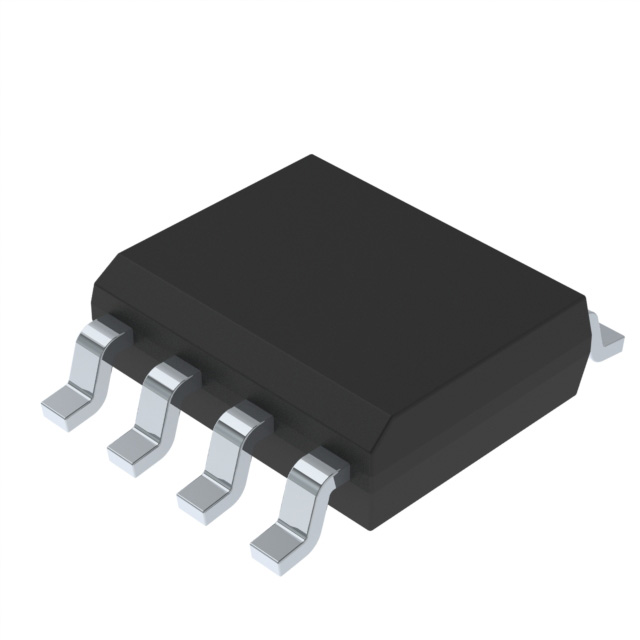
STGAP2SICSNCTR vs 1ED21271S65FXUMA1 Gate Driver ICs: A Detailed Comparison for Hardware Designers
Quick verdict
For high-voltage SiC MOSFET gate driving with stringent isolation requirements and very high transient immunity, the STGAP2SICSNCTR is the better fit due to its 4.8 kV isolation rating and ±100 V/ns common-mode transient immunity. However, for applications operating at lower voltages (up to 650 V bootstrap) that require integrated protection features, tighter propagation delays, and a more conventional high-side driver architecture, Infineon’s 1ED21271S65FXUMA1 offers a more integrated, easier-to-implement solution.
Spec comparison table
| Spec | STGAP2SICSNCTR | 1ED21271S65FXUMA1 | Notes |
|---|---|---|---|
| Number of channels | 1 | 1 | Equal |
| Technology | Capacitive Coupling | High-Side Gate Driver (non-inverting) | ST uses capacitive isolation; Infineon uses high-side bootstrap method |
| Isolation voltage (typical) | 4.8 kV peak | 650 V max bootstrap voltage | ST offers much higher isolation voltage, critical for 1.7 kV+ rails |
| Isolation voltage 100% production (typ) | 3394 Vrms / 4800 Vpeak | Not specified | ST explicitly tested for high isolation |
| Common-mode transient immunity (min) | ±100 V/ns | -50 V/ns (min) | ST offers double the immunity, better for noisy SiC environments |
| Output current (source/sink typical) | 4 A (sink typ) | 4 A / 4 A (source/sink typ) | Infineon sources and sinks symmetrically at 4 A, ST only specifies sink current |
| Peak output current (turn-on/off max) | Not specified | 4 A (max) | Infineon provides explicit peak current specs |
| Supply voltage (VDD) typical | 5 V | Not specified | ST fixed at 5 V logic supply |
| Supply voltage (VH) operating | 13.9 – 16.4 V UVLO turn on | 7.2 – 22 V | Infineon supports wider high-side supply voltage range |
| Logic input voltage operating range | 0 – 5.5 V | 0 – 5 V | Comparable |
| Input thresholds (logic 0/1) | 0.29·VDD – 0.7·VDD (typ) | 0.8 V (VIL), 2.4 V (VIH) | Infineon has fixed thresholds suitable for 3.3 V or 5 V logic |
| Propagation delay (typ) | 75 ns (on/off) | 55 ns (typ) | Infineon is faster by ~20 ns, beneficial for timing-critical applications |
| Rise/fall time (typ) | 30 ns | 12 ns | Infineon offers faster switching edges |
| Pulse width distortion (typ) | 20 ns | Not specified | ST specifies pulse-width distortion, Infineon does not |
| Safe state output voltage | SafeClp (clamping) | Not specified | ST provides active clamp to protect gate |
| Miller clamp short circuit current | 2.5 A | Not specified | ST’s clamp current helps in preventing Miller effect during switching |
| Short circuit source/sink current | IGON: 3.5 A / IGOFF: 3.5-5.5 A | Not specified | ST gives explicit short circuit current ratings |
| ESD protection (HBM) | 2 kV | 2 kV | Equal |
| CMTI (common mode transient immunity) | 100 V/ns | -50 V/ns (min) | ST doubles immunity, important for SiC switching noise |
| Operating temperature range | -40 °C to 125 °C (TJ) | -40 °C to 125 °C (TJ) | Equal |
| Junction temperature max | 150 °C | Not specified | ST specifies max TJ explicitly |
| Storage temperature | -40 °C to 125 °C | -55 °C to 150 °C | Infineon has wider storage temp range |
| Package | 8-SOIC (3.9 mm width) | PG-DSO-8 (3.9 mm width) | Similar footprint size, different package type |
| Mounting type | Surface Mount | Surface Mount | Equal |
| Isolation resistance (typ) | >10^9 Ω | Not specified | ST specifies very high resistance typical |
| Creepage distance (typ) | 4 mm | Not specified | ST specifies creepage, important for safety standards |
| Comparative tracking index (CTI) | ≥400 V DIN IEC 112 / VDE 0303 | Not specified | ST compliant with high CTI materials |
| Maximum switching frequency | 1 MHz | Not specified | ST specifies maximum switching frequency |
| Quiescent current (VDD) typical | 1.0 – 1.3 mA | Not specified | Insufficient data for Infineon |
| Standby current (VDD) | 40 – 65 µA | Not specified | ST specifies low standby current |
| UVLO thresholds (VH supply) | Turn-on: 14.6 – 15.5 V | VBS UVLO typ: 15 V | Comparable UVLO thresholds for high-side supply |
| Fault features | Safe state output, clamp voltage | Integrated OCP, RFE, fault clear times | Infineon has integrated fault detection and protection features |
| Bootstrap diode forward current (typ) | N/A | 71 mA | Infineon includes internal bootstrap diode with defined current |
| Fault clear time | Not specified | 250 – 410 ns (typ) | Infineon provides fault clear timing for protection logic |
| Thermal resistance junction-to-ambient | 123 °C/W | Not specified | ST specifies thermal resistance, useful for thermal design |
| Product lifespan | Not specified | 15 years (typ) | Infineon provides expected lifespan data |
| Human body model ESD voltage | 2 kV | 2 kV | Equal |
Design trade-offs
The STGAP2SICSNCTR leverages capacitive coupling technology to provide galvanic isolation up to 4.8 kV peak, making it suitable for SiC MOSFET gate driving in applications with rail voltages up to 1700 V. This high isolation rating is crucial in industrial and traction applications where isolation barriers must withstand high transient voltages and meet stringent safety standards. The capacitive isolation also affords excellent common-mode transient immunity (CMTI) of ±100 V/ns, effectively mitigating false triggering in noisy environments typical of SiC switching.
In contrast, the 1ED21271S65FXUMA1 is a high-side driver designed for bootstrap operation with a maximum bootstrap voltage of 650 V. While it lacks the galvanic isolation and high CMTI of the ST device, it benefits from integrated protection features such as overcurrent protection (OCP), a bootstrap diode, and fault detection with defined clear times. These features simplify system-level protection and reduce external component count, which is advantageous in less extreme voltage domains.
From a switching performance perspective, Infineon’s device offers faster propagation delays (~55 ns typical vs. 75 ns) and significantly faster rise/fall times (12 ns vs. 30 ns). This translates to sharper gate drive transitions, which can improve switching losses but may also increase EMI if not properly managed. The ST device’s slower edges may reduce EMI risk but could slightly increase switching losses, which is a classic trade-off.
Thermally, the ST device provides a specified junction-to-ambient thermal resistance of 123 °C/W, which is relatively high and suggests careful thermal management is critical, especially since quiescent currents can reach up to 1.3 mA on VDD and VH supplies. Infineon does not specify thermal resistance but rates the package for 0.625 W power dissipation max, implying similar thermal considerations.
Layout-wise, the STGAP2SICSNCTR requires careful placement of bypass capacitors close to the device pins (100 nF and 1–10 µF range) for stable operation and minimizing noise coupling, plus attention to avoid conductive areas beneath the driver to maintain isolation integrity. The 1ED21271S65FXUMA1, lacking galvanic isolation, simplifies PCB layout in that respect but demands a bootstrap circuit and adequate supply voltage management.
Cost-wise, capacitive isolation gate drivers like the ST device are generally more expensive due to the isolation barrier and internal capacitive structures, while bootstrap-based drivers like Infineon’s tend to be lower cost and more common in mid-voltage applications.
Use-case fit
Choose STGAP2SICSNCTR when…
- You need galvan