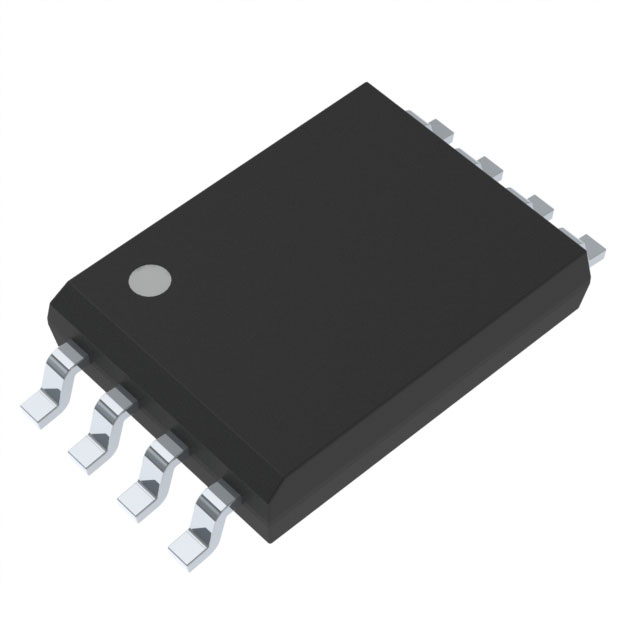
Key Specs
| Spec | Value | Condition | Source |
|---|---|---|---|
| Approval Agency | UL | Digi-Key | |
| Common Mode Transient Immunity (Min) | 100V/ns | Digi-Key | |
| Current Output High Low | 4A, 4A | Digi-Key | |
| Current Peak Output | 4A | Digi-Key | |
| Mounting Type | Surface Mount | Digi-Key | |
| Number Of Channels | 1 | Digi-Key | |
| Operating Temperature Range | -40°C ~ 125°C | Digi-Key | |
| Package Case | 8-SOIC (0.295”, 7.50mm Width) | Digi-Key | |
| Propagation Delay Tplh Tphl (Max) | 90ns, 90ns | Digi-Key | |
| Pulse Width Distortion (Max) | 20ns | Digi-Key | |
| Rise Fall Time (Typ) | 30ns, 30ns | Digi-Key | |
| Supplier Device Package | 8-SO | Digi-Key | |
| Technology | Capacitive Coupling | Digi-Key | |
| Voltage Forward Vf (Typ) | - | Digi-Key | |
| Voltage Isolation | 5000Vrms | Digi-Key | |
| Voltage Output Supply | 3V ~ 5.5V | Digi-Key |
When To Use
-
5 V logic isolation → 4 A gate drive: The 28 V max rating on VH and 4 A peak driver current capability fit perfectly driving power MOSFET gates in isolated half-bridge or motor driver stages. Lower current drivers can cause slow switching and shoot-through due to incomplete gate transitions under heavy load.
-
Industrial automation sensor interface @ 50 mA output: The UL approval and wide operating ambient range (-40°C to 125°C) ensure reliable operation in harsh environments with moderate output current. Using a device without such thermal and safety margins risks thermal runaway and premature latch-up.
-
1 MHz capacitive coupling digital isolation: The 1 MHz max switching frequency and minimum 100 V/ns common mode transient immunity ensure robust signal integrity in noisy, fast-switching environments. Lower CMTI devices will show output glitches or false triggers under high dv/dt conditions.
When Not To Use
-
Output current above 4 A peak: The 4 A max driver current disqualifies this device for high-current MOSFET gate drive beyond this threshold. Use a high-current synchronous buck with external FETs to handle higher gate drive currents safely.
-
Galvanic isolation required > 1.2 kV: The 1.2 kV absolute max isolation voltage is insufficient for systems requiring reinforced isolation or safety standards above this level. Use an isolated flyback controller instead.
-
Switching frequency > 1 MHz: The maximum switching frequency of 1 MHz limits use at higher frequencies needed for very small inductors or EMI-sensitive applications. Use a high-frequency buck controller for switching above 1 MHz.
Application Notes
-
Place the bypass capacitor (100 nF min, ideally 1 µF) as close as possible to the VDD and ground pins to minimize high-frequency noise coupling and ensure stable device operation.
-
The gate driver output pins must be routed with minimal parasitic inductance and placed close to the power transistor gate to avoid ringing and slow switching edges that cause increased losses.
-
Pins associated with input logic signals have internal deglitch filters; however, keep input traces short and shielded to prevent noise-induced false triggering during fast transient events.
-
Guard routing or ground pours near the VH and GNDISO pins reduce common mode noise injection and improve common mode transient immunity beyond the 100 V/ns minimum.
-
Ensure the PCB layout capacitor value between 1 µF and 10 µF on the supply lines to stabilize the internal logic and reduce supply voltage dips during switching events.
Gotchas
-
[Ignoring output safe state thermal threshold]: Many designs overlook that the output safe state triggers only at a specific temperature threshold and time delay, risking latent thermal stress without visible shutdown. Symptom: Device runs hot and eventually fails after long-term operation near max ambient. Fix: Implement temperature monitoring and ensure junction temperature stays below 125°C operating max.
-
[Assuming internal GOFF MOSFET fully switches off]: The internal GOFF transistor is not actively driven off at voltages below its threshold, causing leakage currents and potential shoot-through in half-bridge configurations. Symptom: Elevated standby current and unexpected cross-conduction events. Fix: Design external gate drive logic to ensure full MOSFET turn-off or add gate clamps.
-
[Underestimating propagation delay mismatch]: Input to output propagation delay typ. 75 ns with max 90 ns plus pulse width distortion up to 20 ns can cause timing skew in multi-phase or synchronous designs. Symptom: Output switching edges misaligned, causing EMI or cross-conduction. Fix: Characterize delay per batch and include timing margin in gate drive sequencing.
-
[Insufficient ESD protection margin]: The 2 kV HBM ESD rating may be exceeded during handling or in harsh environments, leading to latent damage that manifests as intermittent faults. Symptom: Device passes initial test but fails intermittently in the field. Fix: Use external ESD protection components and proper ESD handling procedures during assembly.