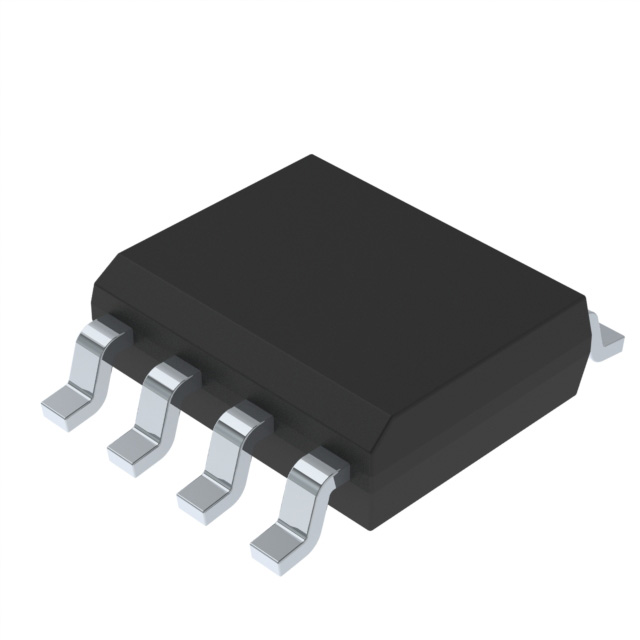
Key Specs
| Spec | Value | Condition | Source |
|---|---|---|---|
| Approval Agency | UL | Digi-Key | |
| Common Mode Transient Immunity (Min) | 100V/ns | Digi-Key | |
| Current Output High Low | - | Digi-Key | |
| Current Peak Output | 4A | Digi-Key | |
| Grade | Automotive | Digi-Key | |
| Mounting Type | Surface Mount | Digi-Key | |
| Number Of Channels | 1 | Digi-Key | |
| Operating Temperature Range | -40°C ~ 125°C | Digi-Key | |
| Package Case | 8-SOIC (0.154”, 3.90mm Width) | Digi-Key | |
| Propagation Delay Tplh Tphl (Max) | - | Digi-Key | |
| Pulse Width Distortion (Max) | 20ns | Digi-Key | |
| Qualification | AEC-Q100 | Digi-Key | |
| Rise Fall Time (Typ) | 30ns, 30ns | Digi-Key | |
| Supplier Device Package | 8-SO | Digi-Key | |
| Technology | Capacitive Coupling | Digi-Key | |
| Voltage Forward Vf (Typ) | - | Digi-Key | |
| Voltage Isolation | 2830Vrms | Digi-Key | |
| Voltage Output Supply | 3.1V ~ 5.25V | Digi-Key |
When To Use
Use the STGAP2SICSANCTR in applications requiring galvanic isolation up to 4.8 kV and a maximum switching frequency of 1 MHz, such as isolated gate drivers in automotive power electronics where a single-channel driver with a 4 A sink/source capability at 25°C is needed. Its capacitive coupling technology and automotive grade qualification (AEC-Q100) make it ideal for harsh environments with operating temperatures from -40°C to +125°C.
Avoid using this device in applications demanding multi-channel isolation or switching frequencies significantly above 1 MHz. For multi-channel isolation or higher frequency operation, consider alternative devices specifically designed for those conditions.
When Not To Use
-
Output current demand > 4 A continuous: The max continuous output current is 500 mA with 4 A peak; for higher continuous currents, this part will overheat or enter thermal shutdown. Use a high-current synchronous buck with external FETs instead.
-
Quiescent current critical, battery-powered sensor with μA sleep modes: The quiescent supply current is 1.3–1.9 mA typical; this is too high for ultra-low-power applications. Use a low-IQ PFM buck controller instead.
-
Switching frequency > 1 MHz for reduced inductor size: The max switching frequency is 1 MHz; designs requiring >500 kHz for minimal passive size and EMI must use a high-frequency buck controller.
Application Notes
The input node switches and must have the smallest possible loop area to minimize parasitic inductance and maintain the device’s rated common mode transient immunity of 100 V/ns. The input pin is noise-sensitive; therefore, careful PCB layout with a recommended land pattern (SO-8, 6.7 mm pitch, 0.6 mm gap) is essential to reduce EMI coupling.
At typical operating points (up to 4 A sink/source current at 25°C), the device does not require a heatsink due to its thermal resistance junction-to-ambient max of 123 °C/W and maximum junction temperature of 150 °C. However, ensure adequate PCB copper area for heat dissipation in high-power applications to maintain junction temperature within specified limits.
Gotchas
-
Incorrect Bypass Capacitor Selection:
Engineers may use bypass capacitors outside the recommended range (100 nF to 10 µF). Using a capacitor with too low a value can cause unstable operation and increased noise susceptibility, while too large a capacitor can slow response times.
Fix: Use a bypass capacitor within the specified range, typically 1 µF, placed as close as possible to the device power pins. -
Exceeding Maximum Input-to-Output Voltage:
Applying voltages beyond the ±1200 V input-to-output operative voltage can result in device damage or failure of galvanic isolation.
Fix: Ensure system voltages remain within ±1200 V to maintain safe operation and device integrity. -
Neglecting Proper PCB Layout for Noise Immunity:
The device’s input is noise-sensitive due to capacitive coupling. Poor PCB layout with large loop areas or improper grounding can degrade common mode transient immunity (100 V/ns typical).
Fix: Minimize loop areas around the input and output nodes, use recommended land patterns, and maintain proper grounding to preserve isolation performance.