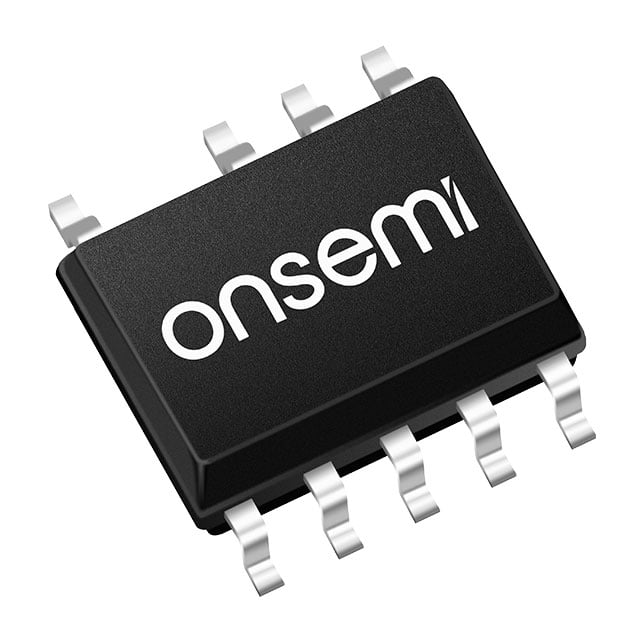
Key Specs
| Spec | Value | Condition | Source |
|---|---|---|---|
| Control Features | Frequency Control, Soft Start | Digi-Key | |
| Duty Cycle | - | Digi-Key | |
| Fault Protection | Current Limiting, Over Load, Over Power, Over Temperature, Over Voltage | Digi-Key | |
| Internal Switch S | No | Digi-Key | |
| Mounting Type | Surface Mount | Digi-Key | |
| Operating Temperature Range | -40°C ~ 125°C (TJ) | Digi-Key | |
| Output Isolation | Isolated | Digi-Key | |
| Package Case | 10-SOP (0.154”, 3.90mm Width), 9 Leads | Digi-Key | |
| Supplier Device Package | 9-SOIC | Digi-Key | |
| Supply Voltage (Typ) | 8V ~ 38V | Digi-Key | |
| Switching Frequency (Typ) | - | Digi-Key | |
| Topology | Flyback | Digi-Key | |
| Voltage Breakdown | 800V | Digi-Key | |
| Voltage Start Up | 17 V | Digi-Key |
When To Use
-
48V input isolated power module for industrial control (48V → 12V @ 3A): The 800V breakdown voltage and isolated flyback topology make this part ideal for high-voltage industrial rails with galvanic isolation requirements. Using a non-isolated buck controller here risks catastrophic shoot-through or lethal leakage currents without isolation.
-
Intermediate bus converter from 24V battery bank (24V → 5V @ 1.5A): The wide supply voltage range of 8V to 38V covers typical battery voltages with margin for transient spikes. Choosing a synchronous buck controller instead would require complex external FETs and would lack the built-in protections against overload and over-voltage found here.
-
Isolated auxiliary power supply in motor drives (24V → 15V @ 0.5A): The integrated fault protections—current limiting, over-temperature, and over-power—allow safe operation in harsh environments where transient faults occur. Using a simple flyback controller without these protections risks thermal runaway or permanent latch-up under fault conditions.
When Not To Use
-
Battery-powered sensor with μA sleep-mode current: The absence of low quiescent current specification and no PFM mode disqualify this part. Use a low-IQ PFM buck instead to maximize battery life.
-
High current (>5A) non-isolated DC-DC conversion: The internal switch is not integrated and the current ratings limit output power. Use a multi-phase buck controller to distribute current and reduce thermal stress.
-
Non-isolated point-of-load conversion from 12V bus requiring >500kHz switching: No specified switching frequency and flyback topology limit frequency scaling and size reduction. Use a high-frequency buck controller for smaller inductors and capacitors.
Application Notes
-
The switching node (SW) pin is internally connected to the transformer primary and must be routed with minimal loop area to reduce EMI and voltage spikes, especially critical in flyback designs.
-
Pins 4 and the feedback and voltage sense pin are noise sensitive; keep their traces short and shielded from the switching node to prevent erratic regulation or false fault triggering.
-
Implement a solid ground plane under the IC and transformer return to minimize common-mode noise coupling into the control circuitry.
-
Because the device has built-in over-voltage and over-temperature protection, ensure thermal vias and heatsinking are adequate near the package to avoid nuisance trips from PCB hot spots.
-
Guard routing or copper pours around the high-voltage transformer pins are recommended to maintain creepage and clearance distances consistent with the 800V breakdown rating.
Gotchas
-
[Startup voltage margin]: The startup voltage is 17 V; designs powering from borderline supplies (e.g., 16–18 V) may fail to start or exhibit intermittent startup behavior, appearing as dead or stuck fault mode. Measure the actual input voltage at device pins during startup and add a voltage margin or pre-bias stage.
-
[Output capacitor ESR impact]: Low ESR capacitors reduce output ripple but may destabilize the internal control loop, causing subharmonic oscillations or output voltage ringing. Validate loop stability with realistic ESR values and add a small series resistor if necessary.
-
[Feedback pin noise pickup]: Long or poorly routed feedback traces pick up switching noise from SW, causing false over-voltage or over-current trips that manifest as erratic output voltage or intermittent shutdown. Keep feedback traces short, twisted, and physically separated from the switching node.
-
[Thermal derating at TJ > 125°C]: The absolute maximum operating junction is 125°C; designs operating near this limit risk sudden thermal shutdown or device degradation not obvious from steady-state thermal calculations. Use thermal imaging during prototype testing to confirm sufficient margin under worst-case load and ambient conditions.