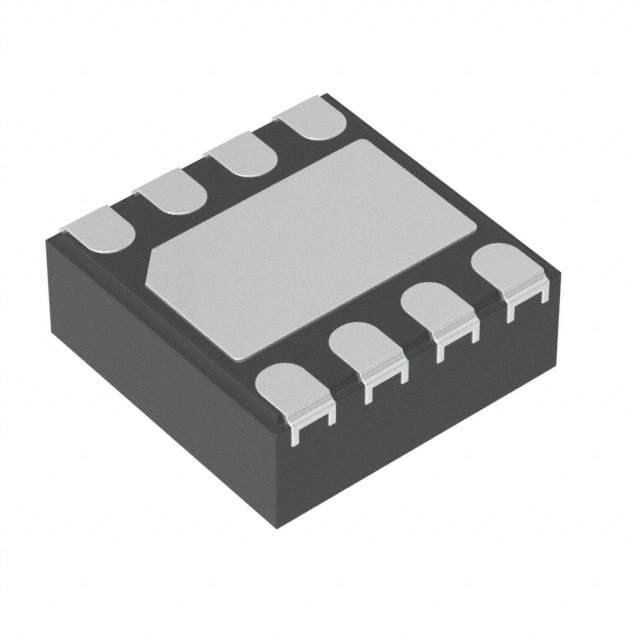
Key Specs
| Spec | Value | Condition | Source |
|---|---|---|---|
| Channel Type | Single | Digi-Key | |
| Current Peak Output Source Sink | 3A, 3A | Digi-Key | |
| Digikey Programmable | Not Verified | Digi-Key | |
| Driven Configuration | High-Side, Low-Side | Digi-Key | |
| Gate Type | IGBT | Digi-Key | |
| Input Type | Non-Inverting | Digi-Key | |
| Logic Voltage Vil Vih | 0.8V, 2V | Digi-Key | |
| Mounting Type | Surface Mount, Wettable Flank | Digi-Key | |
| Number Of Drivers | 1 | Digi-Key | |
| Operating Temperature Range | -40°C ~ 125°C (TA) | Digi-Key | |
| Package Case | 8-WFDFN Exposed Pad | Digi-Key | |
| Rise Fall Time (Typ) | 13ns, 12ns | Digi-Key | |
| Supplier Device Package | 8-WDFN (2x2) | Digi-Key | |
| Voltage Supply | 4.5V ~ 18V | Digi-Key |
When To Use
-
3.3V gate drive for IGBT @ 3A peak: The 3A peak source and sink current capability matches the typical gate charge and switching speed required by IGBTs, preventing slow turn-on/off and associated excessive switching losses. Using a lower current driver risks incomplete gate transitions, causing excessive device heating or latch-up.
-
High-side and low-side gate driving in a half-bridge: The device supports both high-side and low-side configurations, enabling symmetric drive in bridge topologies without separate high-voltage level shifters. A driver limited to low-side only would cause shoot-through or deadtime issues when used in high-side positions.
-
4.5V to 18V supply rail in automotive or industrial environments: The wide supply voltage range covers 12V nominal systems with margin for load-dump and cold-crank transients. Drivers restricted to <5V supply risk undervoltage lockout or permanent damage under these conditions.
When Not To Use
-
Load current >3A continuous at high duty cycle: The 3A peak source/sink limit is insufficient for sustained high current; thermal and electrical stress risk device failure. Use a multi-phase buck controller instead to spread current across multiple drivers and FETs.
-
Battery-powered sensor node with μA sleep current: The lack of verified low quiescent current specifications means this driver will drain batteries unnecessarily. Use a low-IQ PFM buck controller designed for minimal standby power.
-
Switching frequency above 500kHz for compact magnetics: Rise/fall times around 12–13ns and unspecified high-frequency stability limit operation at very high switching speeds. Use a high-frequency buck controller optimized for >500kHz switching.
Application Notes
-
The exposed pad on the 8-WFDFN must be soldered to a large thermal land with multiple vias to the PCB inner layers to maintain junction temperature below 125°C at 3A peak current.
-
Pins associated with the input logic (logic input pin, likely pin 2 or 3) are noise-sensitive; routing should minimize coupling from the switching node (SW) to avoid false triggering.
-
The switching node (SW) connection to the IGBT gate must have a low-inductance path; use a compact gate loop and place the driver as close as possible to the gate terminal.
-
Guard routing or ground pours are recommended around the driver’s input and output pins to reduce EMI susceptibility, especially when switching at tens or hundreds of kHz with fast edges.
-
Avoid routing sensitive control signals parallel and close to the SW node trace to prevent cross-talk and logic glitches due to high dV/dt at the gate terminal.
Pin numbers are package-specific. Verify against the datasheet pinout diagram before routing.
Gotchas
-
[Underestimating junction temperature at 3A peak]: Designers often assume the 3A peak current rating is continuous without consulting the derating graph. In reality, sustained 3A pulses without adequate PCB thermal design cause junction temperature to exceed 125°C rapidly, leading to premature device failure. Fix: Measure actual PCB copper temperature rise; add thermal vias and heatsinking to maintain junction below max temperature under worst-case duty cycle.
-
[Logic input threshold margin ignored]: The input VIH minimum is 2V, but some 3.3V logic outputs with weak drive or long traces may dip below this threshold under noise or transient conditions. This causes intermittent driver switching or failure to turn on. Fix: Use a buffered logic stage or level translator to ensure input voltage consistently exceeds 2V, and scope input pin during switching to verify clean logic transitions.
-
[Gate drive loop inductance too high]: Placing the driver far from the IGBT gate or using long PCB traces increases loop inductance, causing voltage overshoot and ringing at the gate. This can trigger false turn-on or damage the gate oxide. Fix: Minimize gate loop area by placing MCP14A0302T-E/KBA within millimeters of the gate terminal and using wide, short traces.
-
[Assuming symmetrical rise/fall times regardless of layout]: The datasheet rise/fall times of 13ns/12ns rely on typical test conditions with minimal parasitic inductance and capacitance. Real circuits with higher parasitics can cause asymmetrical switching waveforms, leading to increased switching losses and EMI. Fix: Perform time-domain measurements at the gate node; optimize PCB layout and add appropriate gate resistors to balance rise/fall edges as needed.