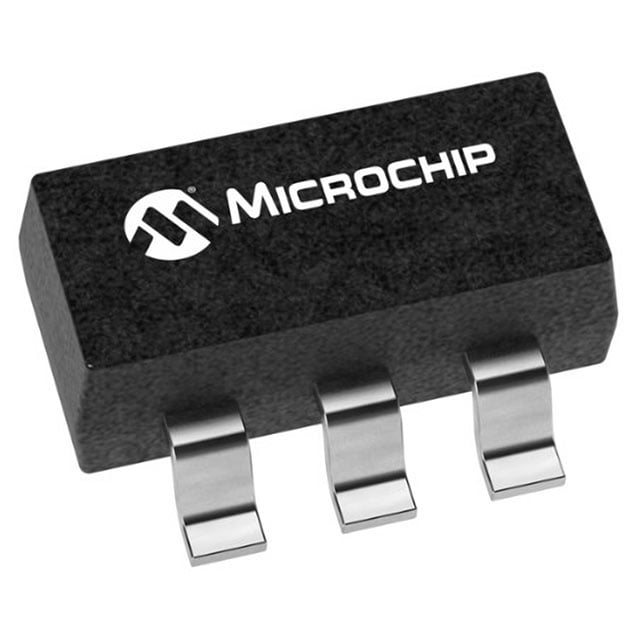
Key Specs
| Spec | Value | Condition | Source |
|---|---|---|---|
| Channel Type | Single | Digi-Key | |
| Current Peak Output Source Sink | 500mA, 500mA | Digi-Key | |
| Digikey Programmable | Not Verified | Digi-Key | |
| Driven Configuration | High-Side, Low-Side | Digi-Key | |
| Gate Type | MOSFET (N-Channel, P-Channel) | Digi-Key | |
| Input Type | Non-Inverting | Digi-Key | |
| Logic Voltage Vil Vih | 0.8V, 2V | Digi-Key | |
| Mounting Type | Surface Mount | Digi-Key | |
| Number Of Drivers | 1 | Digi-Key | |
| Operating Temperature Range | -40°C ~ 150°C (TJ) | Digi-Key | |
| Package Case | SOT-23-6 | Digi-Key | |
| Rise Fall Time (Typ) | 40ns, 28ns | Digi-Key | |
| Supplier Device Package | SOT-23-6 | Digi-Key | |
| Voltage Supply | 4.5V ~ 18V | Digi-Key |
When To Use
Use the MCP14A0052T-E/CH in applications requiring a single high-side or low-side MOSFET gate driver with peak source and sink currents of 500mA. It is ideal for driving N-Channel or P-Channel MOSFETs in low-voltage power conversion circuits operating within a supply voltage range of 4.5V to 18V and an operating temperature range of -40°C to 150°C. Typical applications include DC-DC converters, motor control, and load switch circuits where fast rise and fall times (40ns and 28ns typical) are critical for efficient switching.
When Not To Use
Do not use the MCP14A0052T-E/CH in applications requiring programmable gate drive current or logic input thresholds outside the specified 0.8V (VIL) and 2V (VIH) range. Avoid this device in high-current applications exceeding 500mA peak source or sink current. For such cases, consider drivers with higher current ratings or programmable features to ensure proper MOSFET gate drive and system reliability.
Application Notes
The MOSFET gate node switches and requires the smallest possible loop area to minimize parasitic inductance and ringing. The driver input pin is noise-sensitive; ensure proper shielding and routing to prevent false triggering. Given the device’s peak source and sink currents of 500mA and typical rise/fall times of 40ns and 28ns, a heatsink is generally not required at typical operating points within the -40°C to 150°C junction temperature range, assuming proper PCB thermal design.
Gotchas
-
Mistake: Connecting the driver input directly to a noisy logic signal without proper filtering or shielding.
Failure Mode: The driver input pin picks up noise, causing unintended switching of the MOSFET, leading to erratic circuit behavior or increased EMI.
Fix: Use proper routing, shielding, and possibly a small RC filter on the input to maintain clean logic levels within the 0.8V (VIL) and 2V (VIH) thresholds. -
Mistake: Omitting the supply decoupling capacitor near the driver’s VDD pin.
Failure Mode: Supply voltage spikes occur during switching transients, causing driver malfunction or damage.
Fix: Place a 0.1µF ceramic capacitor as close as possible to the supply pin to stabilize the voltage and prevent transient issues. -
Mistake: Using the driver to switch MOSFETs requiring gate currents exceeding 500mA peak source or sink capability.
Failure Mode: The MOSFET gate is driven too slowly, resulting in increased switching losses and potential thermal failure.
Fix: Select a gate driver with higher peak current capability suitable for the MOSFET gate charge and switching frequency.