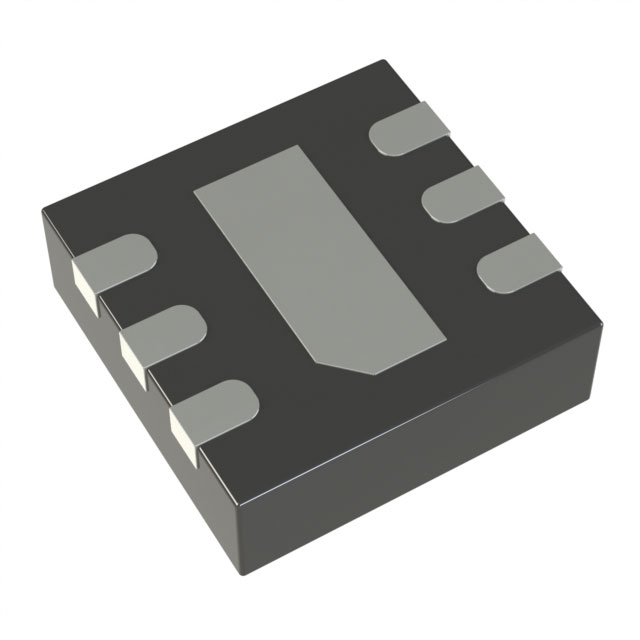
Key Specs
| Spec | Value | Condition | Source |
|---|---|---|---|
| Battery Chemistry | Lithium Ion | Digi-Key | |
| Battery Pack Voltage | 4.2V | Digi-Key | |
| Charge Current (Max) | 750mA | Digi-Key | |
| Current Charging | Constant - Programmable | Digi-Key | |
| Fault Protection | - | Digi-Key | |
| Interface | - | Digi-Key | |
| Mounting Type | Surface Mount | Digi-Key | |
| Number Of Cells | 1 | Digi-Key | |
| Operating Temperature Range | -40°C ~ 85°C (TA) | Digi-Key | |
| Package Case | 6-WFDFN Exposed Pad | Digi-Key | |
| Programmable Features | - | Digi-Key | |
| Supplier Device Package | 6-DFN (2x2) | Digi-Key | |
| Voltage Supply (Max) | 5.5V | Digi-Key |
When To Use
-
Single-cell Li-Ion battery charger @ 4.2V, up to 750mA: The 4.2V battery pack voltage and 750mA max charge current match perfectly with this part’s specs for single-cell Li-Ion charging. Using a generic linear charger without proper current programming risks thermal runaway due to excessive power dissipation.
-
USB-powered charger with 5.5V max input rail: The absolute maximum voltage supply of 5.5V suits typical USB power sources, ensuring the device stays within safe operating limits. A synchronous buck controller designed for higher voltages could suffer latch-up or damage at these low voltages without proper low-voltage protection.
-
Surface mount compact portable device with 2x2mm DFN package: The 6-WFDFN exposed pad package supports efficient PCB thermal dissipation in a small footprint. Using a larger package or discrete solution for this size constraint leads to poor thermal performance and potential thermal shutdown under 750mA charge currents.
When Not To Use
-
Battery pack requires >750mA charge current: The 750mA max charge current limits this part for higher current applications. Use a high-current synchronous buck with external FETs to safely handle larger currents and maintain efficiency.
-
Input voltage exceeds 5.5V supply max rating: If your supply rail can go above 5.5V, this device will be destroyed or latch up. Use a synchronous buck controller rated for higher input voltages.
-
System requires galvanic isolation between input and battery: This part does not support isolation and cannot protect against ground loops or high-voltage differentials. Use an isolated flyback topology for safe isolation.
Application Notes
-
The switching node (SW) pin must have a low-inductance copper area and a local ceramic bypass capacitor to minimize switching noise coupling into sensitive analog pins.
-
Pins 2 and 5 are noise-sensitive reference and feedback nodes; route their traces away from switching currents and keep them short and shielded.
-
The exposed pad must be soldered to a large ground plane connected to the battery negative terminal for effective heat sinking and stable ground reference.
-
Avoid routing noisy switching currents under or near the package to prevent erratic charge current regulation caused by coupling into the internal control circuitry.
-
The input supply capacitor should be placed as close as possible to the device to prevent voltage droop on the 5.5V max supply rail during switching transitions.
Gotchas
-
[Misreading max voltage supply as recommended operating voltage]: Engineers sometimes treat the 5.5V absolute maximum as a continuous operating voltage, but supply transients or spikes above this can cause permanent latch-up or damage. Measure transient input voltage with an oscilloscope; add input clamping or a higher voltage margin supply if needed.
-
[Ignoring layout impact on switching node noise]: Placing the switching node (SW) trace too close to the feedback or reference pins results in noise coupling causing oscillations or inaccurate charge current regulation. Verify layout with a high-bandwidth scope probe and apply guard traces or ground shielding to sensitive pins.
-
[Assuming output capacitor ESR does not affect stability]: Using an output capacitor with excessively low ESR can destabilize the internal control loop, resulting in output voltage ripple or oscillations during constant current charging. Follow recommended capacitor types and ESR ranges from the datasheet.
-
[Startup with no battery connected]: The part may exhibit unpredictable behavior or enter fault mode if powered without a battery connected, as it relies on battery voltage feedback. Always verify battery presence during bring-up and test system behavior under no-load conditions.