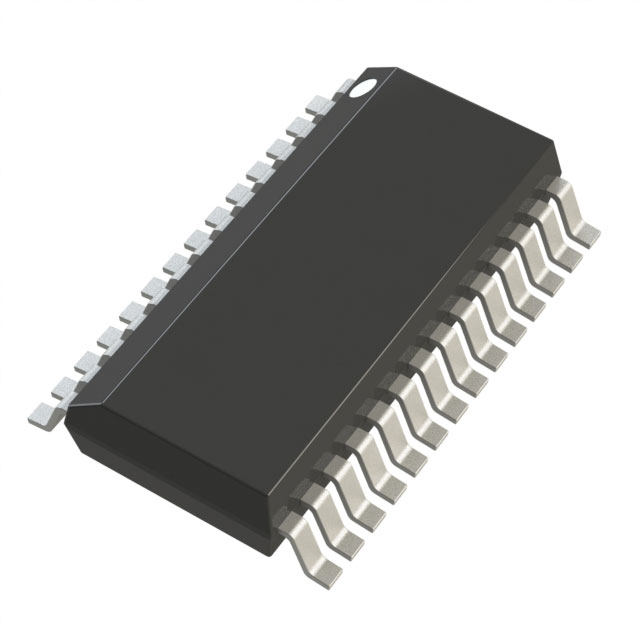
Key Specs
| Spec | Value | Condition | Source |
|---|---|---|---|
| Battery Chemistry | Lithium Iron Phosphate | Digi-Key | |
| Battery Pack Voltage | - | Digi-Key | |
| Charge Current (Max) | - | Digi-Key | |
| Current Charging | Constant - Programmable | Digi-Key | |
| Fault Protection | Reverse Current | Digi-Key | |
| Interface | - | Digi-Key | |
| Mounting Type | Surface Mount | Digi-Key | |
| Number Of Cells | - | Digi-Key | |
| Operating Temperature Range | -40°C ~ 125°C (TJ) | Digi-Key | |
| Package Case | 28-SSOP (0.154”, 3.90mm Width) | Digi-Key | |
| Programmable Features | Timer | Digi-Key | |
| Supplier Device Package | 28-SSOP | Digi-Key | |
| Voltage Supply (Max) | 60V | Digi-Key |
When To Use
Use the LTC4000IGN-1#PBF in applications requiring a programmable constant current charging profile for Lithium Iron Phosphate battery chemistries, especially where a surface mount solution is preferred. Its wide operating temperature range of -40°C to 125°C (TJ) and maximum supply voltage of 60V make it suitable for robust industrial or automotive battery charger designs.
Do not use this device in applications requiring charging of battery chemistries other than Lithium Iron Phosphate or where a fixed charge current is mandatory. For such cases, consider a charger specifically designed for the target chemistry or a device with fixed current regulation.
When Not To Use
-
Output current > LTC4000IGN-1#PBF rating: When the required charge current exceeds this controller’s maximum rating, use a high-current synchronous buck with external FETs to handle higher load without overheating or triggering overcurrent faults.
-
Efficiency critical designs with synchronous rectification: If minimizing conduction losses is essential, this part’s built-in reverse current protection may impose diode-like conduction losses. Use a synchronous buck controller that fully controls both high and low side MOSFETs for better efficiency.
-
Isolated battery charger designs: When galvanic isolation is required between input and battery, this non-isolated controller is unsuitable. Use an isolated flyback architecture designed specifically for isolation and safe high-voltage operation.
Application Notes
The switching node inside the LTC4000IGN-1#PBF requires careful PCB layout to minimize loop area and reduce EMI. The device’s current sense and control pins are noise-sensitive and should be routed away from high-current paths and switching nodes. Due to the integrated design and the package size (28-SSOP), external heatsinks are generally not required under typical operating conditions within the -40°C to 125°C junction temperature range, but thermal management should be verified in high power applications.
Gotchas
-
Incorrect battery chemistry selection: Using the LTC4000IGN-1#PBF with battery chemistries other than Lithium Iron Phosphate can result in improper charge profiles, leading to battery damage or reduced battery life. Always verify battery chemistry compatibility before implementation.
-
Exceeding maximum supply voltage: Applying a voltage supply above 60V can damage the device or cause malfunction. Ensure the input voltage stays within the specified 60V maximum rating to avoid device failure.
-
Ignoring reverse current protection: Although the device includes reverse current fault protection, improper system design that allows reverse current paths outside the device’s control can cause unexpected battery discharge or damage. Design the system to respect the device’s protection limits.