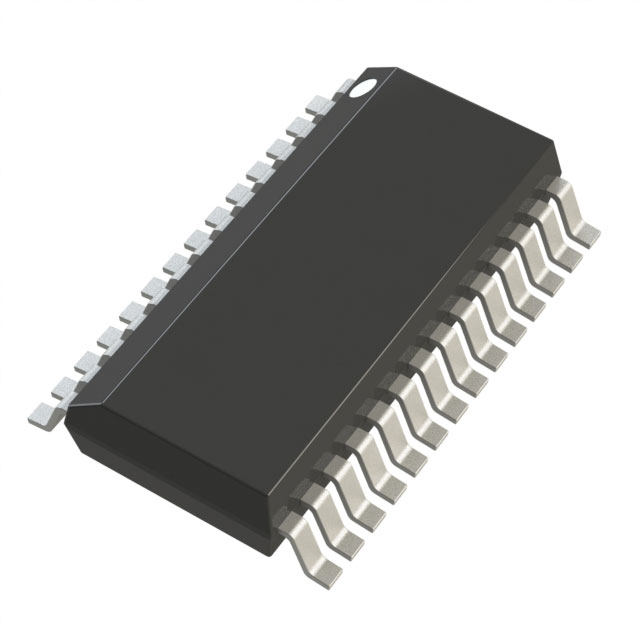
Key Specs
| Spec | Value | Condition | Source |
|---|---|---|---|
| Battery Chemistry | Lithium Iron Phosphate | Digi-Key | |
| Battery Pack Voltage | - | Digi-Key | |
| Charge Current (Max) | - | Digi-Key | |
| Current Charging | Constant - Programmable | Digi-Key | |
| Fault Protection | Reverse Current | Digi-Key | |
| Interface | - | Digi-Key | |
| Mounting Type | Surface Mount | Digi-Key | |
| Number Of Cells | - | Digi-Key | |
| Operating Temperature Range | -40°C ~ 125°C (TJ) | Digi-Key | |
| Package Case | 28-SSOP (0.154”, 3.90mm Width) | Digi-Key | |
| Programmable Features | Timer | Digi-Key | |
| Supplier Device Package | 28-SSOP | Digi-Key | |
| Voltage Supply (Max) | 60V | Digi-Key |
When To Use
Use the LTC4000EGN#PBF in applications requiring Lithium Iron Phosphate battery charging with a maximum supply voltage up to 60V, where constant programmable charging current and reverse current fault protection are essential. It is ideal for surface mount designs needing a compact 28-SSOP package and operating over a wide temperature range from -40°C to 125°C (TJ).
Do not use this part in applications requiring battery chemistries other than Lithium Iron Phosphate or where the battery pack voltage or charge current exceeds the device’s specified limits. For such cases, consider a charger controller specifically designed for the required battery chemistry or higher voltage/current ratings.
When Not To Use
-
Output current demand exceeds device rating: The datasheet limits charging current to a programmable constant current but does not support multi-phase current scaling. Use a multi-phase buck controller instead to share load current and reduce thermal stress.
-
Applications requiring switching frequencies above 500kHz: The device’s switching frequency range is not designed for very high-frequency operation needed for small inductors or tight transient response. Use a high-frequency buck controller to achieve stable operation at >500kHz.
-
Low dropout linear regulation or minimal input/output voltage differential: When the input-to-output voltage difference is less than 1V and low output noise is critical, this switching controller’s ripple and switching noise are unacceptable. Use an LDO regulator in those cases.
Application Notes
The internal switching node of the LTC4000EGN#PBF requires minimizing the loop area to reduce EMI and improve efficiency. Pay particular attention to the layout around the switching node to keep parasitic inductance low. The device’s current sensing and control pins are noise-sensitive; ensure proper filtering and grounding to maintain stable operation. Given the integrated design and efficient operation, a heatsink is generally not required at typical operating points within the specified temperature range (-40°C to 125°C TJ), but verify thermal performance under your specific load conditions.
Gotchas
-
[Timer resistor and capacitor tolerance underestimated]: Designers often assume standard 5% resistor and capacitor tolerances are sufficient for charge timer accuracy. In reality, cumulative tolerance can skew timing by 20% or more, causing early or late charge termination, which may lead to incomplete charging or battery overcharge. Fix by using 1% resistors and C0G/NP0 capacitors, and verify timer duration with bench measurements.
-
[SW node trace routed under sensitive analog pins]: Routing the switching node trace beneath or adjacent to sensitive pins like ISENSE or VFB introduces capacitive and inductive coupling, causing output voltage ripple and erratic current sensing. Fix by physically separating SW traces from analog inputs and using guard traces connected to ground.
-
[No minimum load current during startup]: The device may fail to start switching if the load current is too low or open-circuit, as the control loop requires a minimum load to establish regulation. This manifests as no output voltage rise or slow ramp-up. Fix by including a bleed resistor or a dummy load to ensure minimum current draw during startup.
-
[Reverse current protection disabled by incorrect wiring]: Reverse current protection relies on correct sense resistor placement and proper connection of current sense inputs. Miswiring can disable this feature silently, leading to battery discharge back into the supply under fault. Fix by strictly following recommended sense resistor placement and verifying polarity with bench testing.