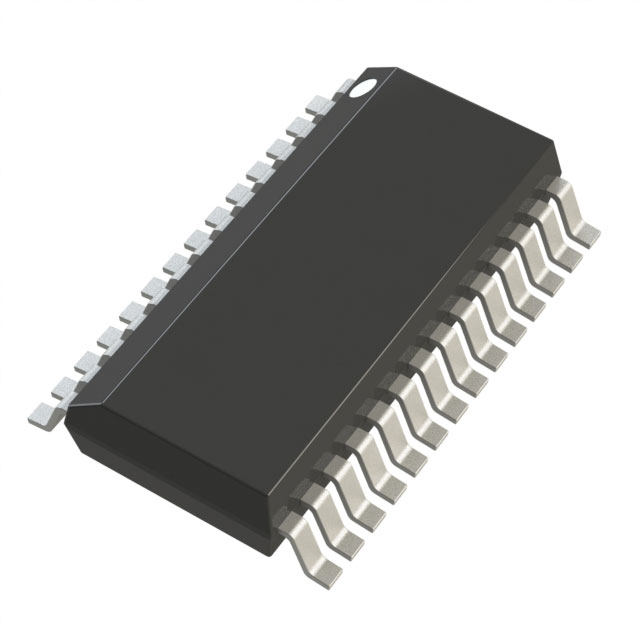
Key Specs
| Spec | Value | Condition | Source |
|---|---|---|---|
| Battery Chemistry | Lithium Iron Phosphate | Digi-Key | |
| Battery Pack Voltage | - | Digi-Key | |
| Charge Current (Max) | - | Digi-Key | |
| Current Charging | Constant - Programmable | Digi-Key | |
| Fault Protection | Reverse Current | Digi-Key | |
| Interface | - | Digi-Key | |
| Mounting Type | Surface Mount | Digi-Key | |
| Number Of Cells | - | Digi-Key | |
| Operating Temperature Range | -40°C ~ 125°C (TJ) | Digi-Key | |
| Package Case | 28-SSOP (0.154”, 3.90mm Width) | Digi-Key | |
| Programmable Features | Timer | Digi-Key | |
| Supplier Device Package | 28-SSOP | Digi-Key | |
| Voltage Supply (Max) | 60V | Digi-Key |
When To Use
Use the LTC4000EGN-1#TRPBF in lithium iron phosphate (LiFePO4) battery charging applications requiring a constant programmable charge current and reverse current fault protection. Its 60V maximum supply voltage and surface mount 28-SSOP package make it suitable for compact, high-voltage battery management systems.
Do not use this device for battery chemistries other than lithium iron phosphate or applications requiring integrated communication interfaces. For those cases, consider a dedicated charger IC designed for the specific chemistry or with required communication features.
When Not To Use
-
Output current demand > part rating: The LTC4000EGN-1#TRPBF is not intended for very high current output. For loads exceeding its rating, a multi-phase buck controller is needed to share current and maintain thermal and electrical stress within limits.
-
Applications requiring switching frequency > 500kHz: This part does not support very high switching frequencies necessary for minimal inductor size in compact designs. Use a high-frequency buck controller to avoid excessive switching losses and EMI.
-
Input to output voltage differential < 1V and low noise critical: When dropout voltage is minimal and output noise must be very low, this switching controller’s ripple is unsuitable. An LDO regulator is the better choice for low noise and tight regulation in such scenarios.
Application Notes
The internal switching node controlling charge current requires minimizing loop area to reduce EMI and improve efficiency. Pay careful attention to PCB layout around this node.
The device’s control pins are noise-sensitive; use proper filtering and layout techniques to prevent erratic operation.
At typical operating points within the -40°C to 125°C junction temperature range and up to 60V supply, a heatsink is generally not required due to the device’s integrated thermal management, but verify based on actual power dissipation in your application.
Gotchas
-
Engineer programs charge current beyond device capability: The LTC4000EGN-1#TRPBF supports constant programmable charge current but exceeding the maximum recommended current can cause device overheating or charging instability. To avoid this, ensure the programmed charge current is within the device’s safe operating limits and verify thermal conditions.
-
Ignoring reverse current fault protection limits: If the system design does not accommodate the device’s built-in reverse current protection, unexpected shutdowns or charging interruptions may occur during transient conditions. To fix this, confirm system-level compatibility with reverse current protection behavior and design accordingly.