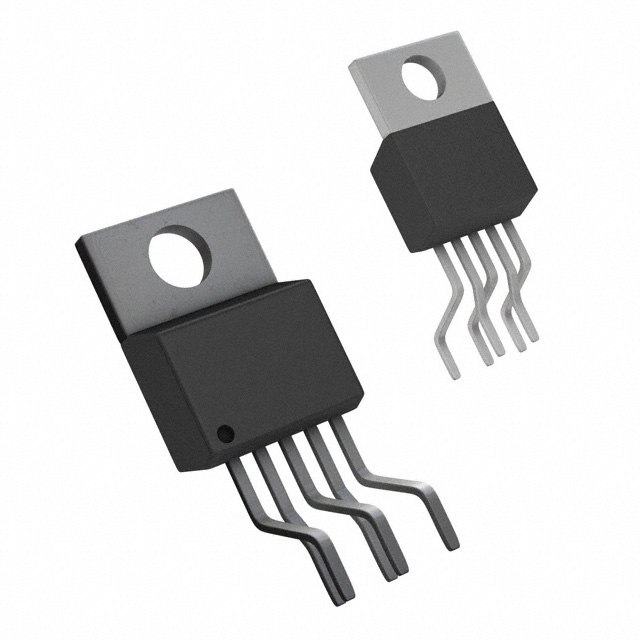
## LM2596T-ADJ/NOPB vs. RAA2230114GP3#JA0: A Practical Comparison

**Quick verdict:** For applications requiring a robust, easily-implemented, and higher-current solution (up to 3A) with a wider input voltage range, the LM2596T-ADJ/NOPB is the clear winner. However, if your design demands a smaller footprint, lower quiescent current, and integrated protection features in a power-limited, surface-mount application (under 5W), the RAA2230114GP3#JA0 offers a compelling alternative.

**Spec Comparison Table**

| Spec | LM2596T-ADJ/NOPB | RAA2230114GP3#JA0 | Notes |
|---|---|---|---|
| Function | Step-Down | Buck | Both perform the same function. |
| Output Configuration | Positive | Positive | Identical. |
| Topology | Buck | Buck | Identical. |
| Output Type | Adjustable | N/A (fixed output, requires external components to adjust) | LM2596 offers a simpler, more flexible output voltage adjustment. |
| Number of Outputs | 1 | 1 | Identical. |
| Input Voltage Min | 4.5V | 5.9V | LM2596 offers a wider input voltage range, crucial for battery-powered applications. |
| Input Voltage Max | 40V | 375V |  RAA2230114GP3 has a much higher voltage rating, enabling use in higher-voltage offline applications, but also limiting its versatility. |
| Output Voltage Min | 1.2V | N/A (fixed output, requires external components to adjust) | LM2596 offers a simpler, more flexible output voltage adjustment. |
| Output Voltage Max | 37V | N/A (fixed output, requires external components to adjust) | LM2596 offers a simpler, more flexible output voltage adjustment. |
| Output Current Max | 3A | N/A (limited by power rating, ~1A) | LM2596 handles significantly higher current. |
| Switching Frequency Typ | 150kHz | 30kHz | RAA2230114GP3's lower frequency reduces switching losses at its lower power levels, but limits transient response. |
| Synchronous Rectifier | No | No | Both lack synchronous rectification, impacting efficiency at higher currents. |
| Operating Temperature Range | -40°C ~ 125°C (TJ) | -40°C ~ 85°C (TA) | LM2596 has a wider operating temperature range, beneficial for harsh environments. |
| Mounting Type | Through Hole | Surface Mount | RAA2230114GP3’s surface mount simplifies PCB layout. |
| Package Case | TO-220-5 Formed Leads | TSOT-23-5 | LM2596's TO-220 package provides better thermal performance but takes up more space. |
| Supplier Device Package | TO-220-5 | TSOT-23-5 |  Same as Package Case. |
| Voltage Breakdown | N/A | 700V | RAA2230114GP3's higher breakdown voltage is useful for offline applications. |
| Voltage Start-up | N/A | 5.9V |  Lower startup voltage for RAA2230114GP3. |
| Supply Voltage Typ | N/A | 375V | Higher supply voltage for RAA2230114GP3. |
| Duty Cycle | N/A | N/A | N/A |
| Power Watts | N/A | 5W | RAA2230114GP3 is limited to a 5W power rating. |
| Fault Protection | No | Current Limiting, Over Load, Over Temperature, Short Circuit | RAA2230114GP3's integrated protection simplifies design and improves robustness. |
| Control Features | N/A | N/A | N/A |

**Design Trade-offs**

The most significant difference lies in the physical implementation and power handling capabilities. The LM2596T-ADJ/NOPB, housed in a TO-220 package, is designed for higher current applications (up to 3A) and offers a wider input voltage range (4.5V – 40V). This necessitates a larger PCB area for heatsinking and external component placement.  The TO-220 package also dictates a through-hole mounting approach, which can be less desirable in modern, high-density designs.  The LM2596's 150kHz switching frequency can lead to higher switching losses at higher currents, but the larger package provides better thermal dissipation.

Conversely, the RAA2230114GP3#JA0's TSOT-23-5 package significantly reduces board space, making it suitable for compact designs. However, its 5W power limit severely restricts its application. The 30kHz switching frequency, while reducing switching losses at its power level, will result in a slower transient response compared to the LM2596. The RAA2230114GP3’s integrated protection features (overload, over-temperature, short-circuit) are a major advantage, simplifying the design and improving robustness, but the fixed output voltage requires careful selection of external components for voltage regulation.

Thermal considerations are critical. The LM2596's TO-220 package requires adequate heatsinking at higher currents. The RAA2230114GP3, due to its lower power rating, is less thermally stressed, but still requires careful PCB layout to minimize thermal resistance.

Gate drive requirements are similar, both devices relying on external components to implement the gate drive circuitry.  Layout sensitivity is higher for the LM2596 due to the higher switching frequency and potential for EMI issues.

**Use-case Fit**

**Choose LM2596T-ADJ/NOPB when...**

*   You need to power a 12V motor from a 24V battery in a portable device.
*   You are designing a power supply for an embedded system requiring a 5V output from a 12V input.
*   You need to step down a 48V input to a regulated 3.3V output for a microcontroller.
*   You are building a power supply for a simple LED driver requiring up to 2A.
*   You need a robust, easily-implemented solution for a power supply application where space is not a primary constraint.

**Choose RAA2230114GP3#JA0 when...**

*   You need to power a low-power sensor from a 3.3V supply in a space-constrained module.
*   You are designing a compact power supply for a small LED indicator.
*   You need a simple, protected power supply for a microcontroller in a wearable device.
*   You are building a small, low-power power supply for a wireless sensor node.
*   You need a highly integrated solution with built-in protection features for a low-power application.

**Drop-in Compatibility**

These parts are *not* pin-compatible or footprint-compatible. The LM2596T-ADJ/NOPB uses a TO-220 package, while the RAA2230114GP3#JA0 uses a TSOT-23-5.  Substituting one for the other requires a complete PCB redesign and significant changes to the external component selection. The fixed output voltage of the RAA2230114GP3 would necessitate a complete rework of the output voltage regulation circuitry if attempting to replace the LM2596.

**Alternatives to Consider**

*   **LM2596S:** A synchronous rectifier version of the LM2596, offering improved efficiency at higher currents.
*   **TPS5430:** A smaller, synchronous buck regulator with similar functionality to the LM2596, offering improved efficiency and a smaller footprint.
*   **MP2307:** A cost-effective, compact buck regulator suitable for low-power applications.