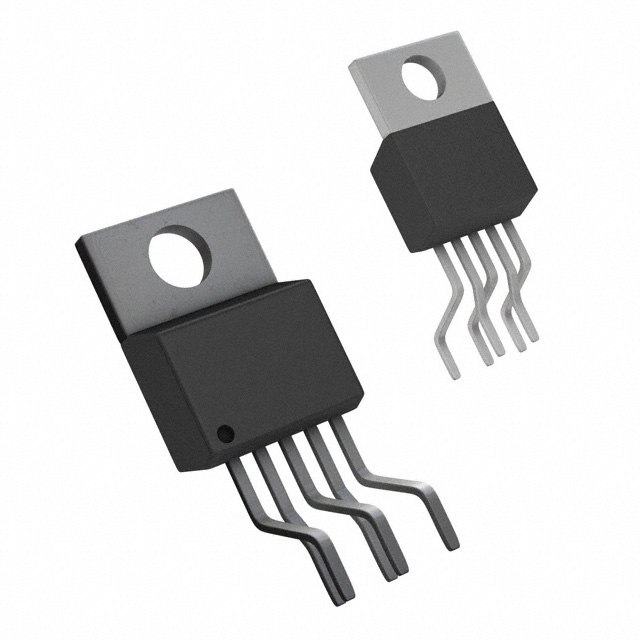
LM2596T-ADJ/NOPB vs. CLB30I1200PZ-TUB: A Practical Comparison
Quick verdict: For low-voltage, low-power applications where simplicity and adjustable output are paramount, the LM2596T-ADJ/NOPB is the clear winner. However, when dealing with higher voltages (up to 1200V) and requiring significantly higher current handling capability (30A+), the CLB30I1200PZ-TUB provides a solution, albeit with increased complexity and thermal management challenges.
Spec comparison table
| Spec | LM2596T-ADJ/NOPB | CLB30I1200PZ-TUB | Notes |
|---|---|---|---|
| input_voltage_max | 40V | 1300V | CLB30I1200PZ-TUB handles significantly higher voltage. |
| input_voltage_repetitive_max | N/A | 1200V | N/A - LM2596 is a regulator, not a thyristor. |
| reverse_current_min | N/A | 10 µA | N/A - Regulator, not a thyristor. |
| reverse_current_typ | N/A | 2 mA | N/A - Regulator, not a thyristor. |
| forward_voltage_drop_min | N/A | 1.30 V | N/A - Regulator, not a thyristor. |
| forward_voltage_drop_typ | N/A | 1.59 V | N/A - Regulator, not a thyristor. |
| forward_voltage_drop_max | N/A | 1.27 V | N/A - Regulator, not a thyristor. |
| forward_voltage_drop_typ_2 | N/A | 1.65 V | N/A - Regulator, not a thyristor. |
| average_forward_current_min | N/A | 30 A | N/A - Regulator, not a thyristor. |
| rms_forward_current | N/A | 47 A | N/A - Regulator, not a thyristor. |
| threshold_voltage_max | N/A | 0.86 V | N/A - Regulator, not a thyristor. |
| slope_resistance | N/A | 13.2 mΩ | N/A - Regulator, not a thyristor. |
| thermal_resistance_junction_to_case | N/A | 0.5 K/W | N/A - Regulator, not a thyristor. |
| thermal_resistance_case_to_heatsink | N/A | 0.25 K/W | N/A - Regulator, not a thyristor. |
| total_power_dissipation_max | N/A | 250 W | N/A - Regulator, not a thyristor. |
| forward_surge_current_typ | N/A | 300 A | N/A - Regulator, not a thyristor. |
| forward_surge_current_max_50hz | N/A | 255 A | N/A - Regulator, not a thyristor. |
| forward_surge_current_max_60hz | N/A | 275 A | N/A - Regulator, not a thyristor. |
| forward_surge_current_max_50hz_2 | N/A | 325 A | N/A - Regulator, not a thyristor. |
| i²t_for_fusing_typ_50hz | N/A | 450 A²s | N/A - Regulator, not a thyristor. |
| i²t_for_fusing_typ_60hz | N/A | 440 A²s | N/A - Regulator, not a thyristor. |
| junction_capacitance | N/A | 13 pF | N/A - Regulator, not a thyristor. |
| max_gate_power_dissipation_typ | N/A | 10 W | N/A - Regulator, not a thyristor. |
| max_gate_power_dissipation_max | N/A | 5 W | N/A - Regulator, not a thyristor. |
| critical_rate_of_rise_of_current_typ | N/A | 150 A/µs | N/A - Regulator, not a thyristor. |
| critical_rate_of_rise_of_current_max | N/A | 500 A/µs | N/A - Regulator, not a thyristor. |
| output_current_min | N/A | 1 A | N/A - Regulator, not a thyristor. |
| output_current_typ | N/A | 3 A | N/A - Regulator, not a thyristor. |
| output_current_max | 3A | 160 A2s | CLB30I1200PZ-TUB handles significantly higher surge current. |
| operating_temperature_range | -40°C ~ 125°C | -40°C ~ 150°C | CLB30I1200PZ-TUB has a higher maximum junction temperature. |
| mounting_type | Through Hole | Through Hole | Both are through-hole components. |
| package_case | TO-220-5 | TO-263D2 | Different package footprints – not directly interchangeable. |
| input_voltage_min | 4.5V | 1.78 V | LM2596 requires a higher minimum input voltage. |
| switching_frequency_typ | 150kHz | 60Hz | LM2596 operates at a much higher frequency. |
Design trade-offs
The LM2596T-ADJ/NOPB is a simple, synchronous buck regulator. Its 150kHz switching frequency necessitates careful attention to EMI mitigation, particularly in high-current applications. The TO-220 package requires a heat sink for currents exceeding 2A, and layout is relatively straightforward. The adjustable output is convenient but requires external components and careful calibration to achieve accurate voltage regulation.
The CLB30I1200PZ-TUB, a thyristor, presents a completely different design challenge. Its 60Hz operation minimizes EMI concerns but introduces significant power dissipation and thermal management requirements. The device’s high voltage rating (1200V) demands robust insulation and creepage distances on the PCB. Gate drive circuitry is critical for proper operation; insufficient drive current will result in slow switching speeds and increased losses. The thyristor’s higher forward voltage drop compared to a synchronous regulator results in lower efficiency, especially at lower currents. The i²t characteristics dictate a careful consideration of surge current handling.
Use-case fit
Choose LM2596T-ADJ/NOPB when…
- You need a simple, adjustable voltage regulator for a 5V to 12V application.
- Your input voltage is consistently above 5V and below 40V.
- You require a compact solution and are willing to manage EMI through careful layout.
- You’re building a battery-powered device requiring a regulated output voltage.
- You need to regulate a voltage from a 12V automotive system to a lower voltage for a load.
Choose CLB30I1200PZ-TUB when…
- You are designing a high-voltage DC power supply (e.g., for a 1200V DC motor).
- You need to switch a high-voltage, high-current load (e.g., in an industrial process).
- You require a solution with inherently lower EMI due to the low switching frequency.
- You are implementing a phase-angle controlled DC power supply.
- You are designing a grid-tie inverter requiring a high-voltage switching element.
Drop-in compatibility
These parts are not drop-in compatible. The package footprints are different (TO-220-5 vs. TO-263D2), and the internal functionality is completely different. Substituting one for the other would require significant redesign of the PCB layout and changes to the control circuitry. The thyristor requires a gate drive circuit, while the regulator is self-contained.
Alternatives to consider
- LM5360: A more modern synchronous buck regulator offering higher efficiency and better transient response.
- IXYS IXTH40N60C3D1: A MOSFET-based alternative to the thyristor, offering faster switching and lower losses.
- Texas Instruments TPS63020: A high-efficiency, synchronous buck regulator with a wide input voltage range.