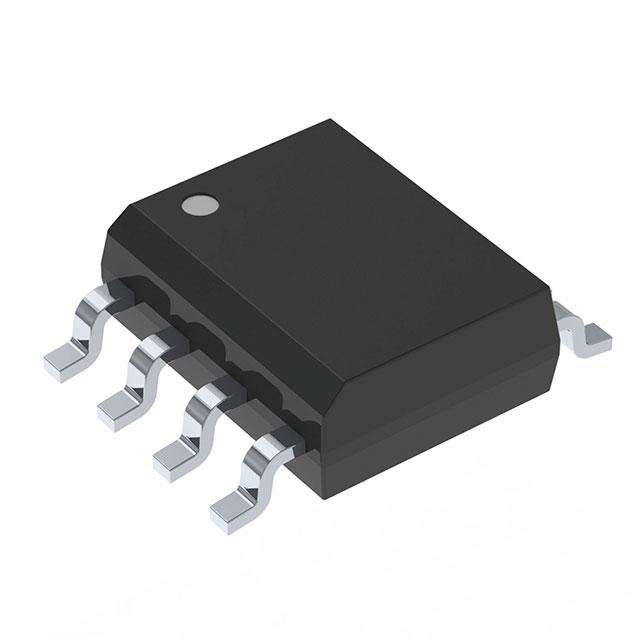
Key Specs
| Spec | Value | Condition | Source |
|---|---|---|---|
| Current Startup | 450 µA | Digi-Key | |
| Mode | Continuous Conduction (CCM) | Digi-Key | |
| Mounting Type | Surface Mount | Digi-Key | |
| Operating Temperature Range | -40°C ~ 125°C (TJ) | Digi-Key | |
| Package Case | 8-SOIC (0.154”, 3.90mm Width) | Digi-Key | |
| Supplier Device Package | PG-DSO-8 | Digi-Key | |
| Switching Frequency (Typ) | 65kHz | Digi-Key | |
| Voltage Supply | 11V ~ 25V | Digi-Key |
When To Use
-
12V automotive accessory supply @ 1.5A: The 11V to 25V input range covers the 12V battery rail including cold crank dips and load dump transients. The 65kHz switching frequency balances EMI and efficiency, avoiding thermal runaway common in linear regulators under automotive ripple conditions.
-
24V industrial sensor node @ 500mA: The continuous conduction mode (CCM) operation with 450 µA startup current ensures stable regulation under varying load without mode-hopping noise. Using a non-CCM controller here risks output voltage oscillations and shoot-through due to erratic switching at light loads.
-
5V auxiliary supply from 15V input @ 2A: The 8-SOIC package and PG-DSO-8 footprint enable compact PCB mounting in confined industrial enclosures. A discrete synchronous buck controller might improve efficiency, but without integrated protections, it risks latch-up during startup transients seen in noisy industrial environments.
When Not To Use
-
3.3V core rail @ 5A: The integrated current capability and package thermal dissipation limit sustained output current below this level. Use a high-current synchronous buck with external FETs instead to handle the higher load and maintain efficiency.
-
Battery-powered sensor with <10µA sleep current: The 450 µA startup current is too high for ultra-low-power applications where quiescent current dominates system lifetime. Use a low-IQ PFM buck to minimize battery drain during standby.
-
12V input to 5V output at 1A with <1V dropout: The minimum input voltage of 11V and continuous conduction mode make this unsuitable when input-to-output differential is less than 1V and low noise is critical. Use an LDO regulator to achieve low dropout and low output ripple.
Application Notes
-
The switching node (SW) pin must have a compact, low-inductance ground return path to minimize voltage spikes and EMI; long traces here cause erratic switching and increased radiated noise.
-
Pins 4 and the feedback and compensation pin are noise-sensitive; route feedback traces away from the SW node and avoid crossing noisy digital lines to maintain loop stability.
-
Guard routing or ground pours adjacent to the SW node are recommended to shield sensitive analog pins and reduce coupling of high dv/dt switching noise.
-
Input and output capacitors should be placed as close as possible to the IC pins to reduce parasitic inductance and ensure stable CCM operation.
-
Ensure the PCB layout includes thermal vias under the PG-DSO-8 package to improve heat dissipation and prevent junction temperature from exceeding 125°C TJ maximum.
Gotchas
-
[Startup current underestimated]: Designers may assume the 450 µA startup current applies only at power-up, but it persists during steady-state CCM operation. This can cause unexpected battery drain or regulator dropout in low-power systems. Fix: Measure quiescent current under real load conditions and verify power budget.
-
[Feedback loop instability due to output capacitor ESR]: Using ultra-low ESR ceramic capacitors without proper compensation can cause control loop oscillations despite datasheet recommended values. Symptoms include output voltage ringing and audible noise. Fix: Add small ESR or RC snubber on output, or adjust compensation network per datasheet guidance.
-
[Switching node layout causing erratic switching]: Placing the SW trace adjacent to the feedback pin or long traces increases capacitive coupling, leading to jitter and intermittent regulation failure. Fix: Maintain physical separation between SW and FB pins, use ground shielding, and minimize loop area.
-
[Startup failure under no-load or very light load]: The CCM-mode assumption means the IC may fail to start or regulate properly with minimal load current, causing output voltage droop or oscillation. Fix: Add a minimum load resistor or dummy load to ensure continuous conduction during startup.