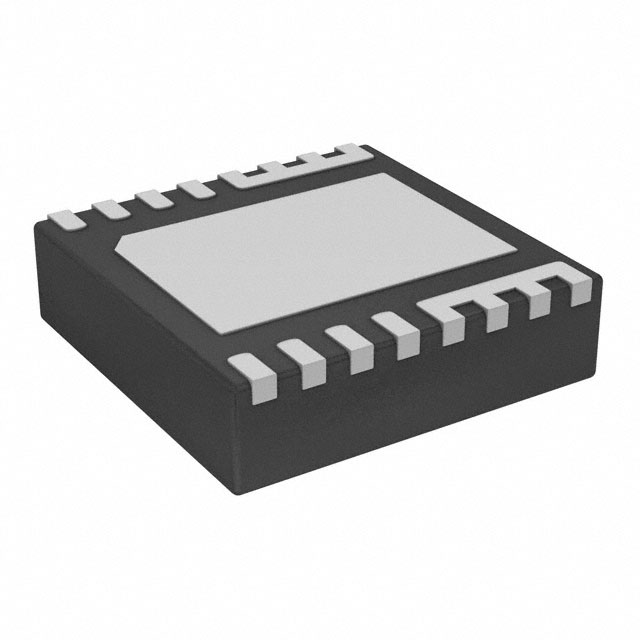
Key Specs
| Spec | Value | Condition | Source |
|---|---|---|---|
| Applications | Synchronous Buck Converters | Digi-Key | |
| Current Output Channel | 20A | Digi-Key | |
| Current Peak Output | 45A | Digi-Key | |
| Fault Protection | Shoot-Through, UVLO | Digi-Key | |
| Features | Bootstrap Circuit, Diode Emulation | Digi-Key | |
| Interface | PWM | Digi-Key | |
| Load Type | Inductive | Digi-Key | |
| Mounting Type | Surface Mount | Digi-Key | |
| Operating Temperature Range | -40°C ~ 150°C (TJ) | Digi-Key | |
| Output Configuration | Half Bridge | Digi-Key | |
| Package Case | 10-PowerVFDFN | Digi-Key | |
| RDS On (Typ) | - | Digi-Key | |
| Supplier Device Package | 10-VSON (3.3x3.3) | Digi-Key | |
| Technology | Power MOSFET | Digi-Key | |
| Voltage Load | 4.5V ~ 16V | Digi-Key | |
| Voltage Supply | 4.5V ~ 5.5V | Digi-Key |
When To Use
Use the CSD95379Q3M in synchronous buck converter applications requiring a maximum continuous output current of 20 A and peak current up to 45 A, operating within an input voltage range of approximately 4.75 V to 6 V. Its integrated bootstrap diode and diode emulation mode with FCCM make it suitable for high-efficiency power management in point-of-load converters where switching frequencies up to 1 MHz are needed.
Do not use this device in applications requiring output voltages above 12 V or where the maximum absolute voltage rating of 60 V is exceeded. For higher voltage or current applications, consider MOSFETs with higher voltage ratings or packages designed for greater power dissipation.
When Not To Use
-
> 20A Continuous Output Current Loads: The 20A maximum continuous current rating disqualifies this part for higher current rails. Use a high-current synchronous buck with external FETs, which can handle larger currents with better thermal management and scalability.
-
Quiescent Current Sensitive Battery-Powered Applications: The typical operating supply current of 5.5mA and standby current of 130µA are too high for ultra-low power or coin-cell powered devices. Use a low-IQ PFM buck to maximize battery life in those cases.
-
Switching Frequencies Above 1MHz: The maximum recommended switching frequency is 1MHz. For applications requiring >1MHz to minimize inductor size or EMI, use a high-frequency buck controller that supports stable operation and low losses at those frequencies.
Application Notes
The switched node (VSW) is the primary switching node and requires the smallest possible loop area to minimize parasitic inductance and EMI. Keep the high-current paths between the input capacitor, the MOSFETs, and the output inductor as short and wide as possible.
The BST pin is noise-sensitive; ensure the bootstrap capacitor is placed close to the BST and SW pins to maintain stable gate drive voltage.
At a typical operating point of 12 A output current, the device dissipates approximately 2.1 W of power loss. Adequate thermal management including a 6-layer PCB with 1-oz copper thickness is necessary to maintain junction temperatures below the maximum of 125°C. The junction-to-board thermal resistance minimum is 2.5 °C/W, and junction-to-case thermal resistance minimum is 22.8 °C/W; these values should guide
Gotchas
-
Incorrect Bootstrap Capacitor Value or Omission:
- Mistake: Engineer omits the bootstrap capacitor or uses a value significantly less than 0.1 µF.
- Failure Mode: The high-side MOSFET gate drive voltage drops below the required threshold, causing incomplete turn-on, increased conduction losses, and thermal stress.
- Fix: Always include a 0.1 µF bootstrap capacitor of appropriate voltage rating and low ESR to ensure reliable high-side gate drive.
-
Exceeding Maximum Input Voltage:
- Mistake: Input voltage applied exceeds the maximum input voltage rating of 6 V.
- Failure Mode: Device experiences permanent damage due to overstress, potentially causing device failure or unpredictable behavior.
- Fix: Ensure input voltage stays within 4.75 V to 6 V under all operating conditions, including transients, by proper system design and voltage clamping if necessary.
-
Ignoring Thermal Management:
- Mistake: Engineer neglects proper PCB copper area or thermal vias despite 1-oz copper and 6-layer PCB recommendations.
- Failure Mode: Excessive junction temperature rise above 125°C leads to device degradation or failure.
- Fix: Design PCB with adequate copper layers and thickness, and consider heatsinking or airflow to maintain junction temperature within specified limits.